

US, Israeli attacks disrupted nearly 230M cubic meters of daily gas output: Iranian president
Şahin Demir
06 August 2026•Update: 06 August 2026
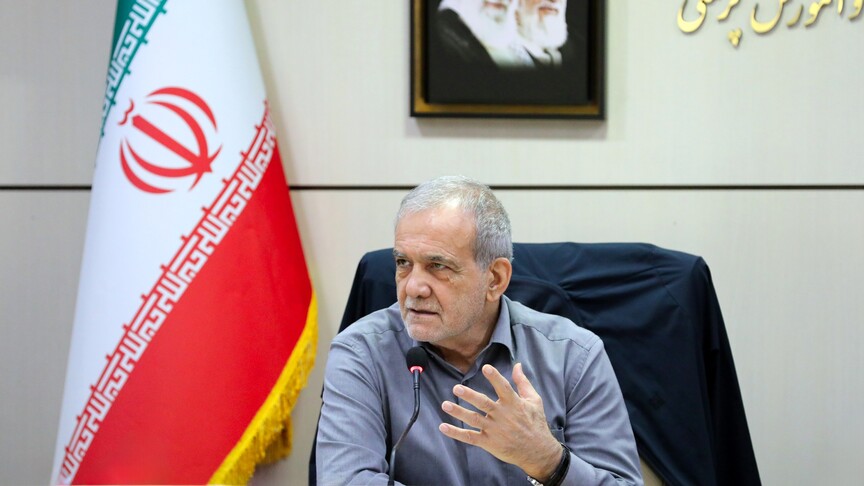
Iranian President Masoud Pezeshkian said Thursday that US and Israeli attacks damaged the country’s power plants and disrupted nearly 230 million cubic meters of daily gas production, but that the government largely avoided widespread electricity outages despite the damage, according to the Iranian presidency.
In an address to the nation, Pezeshkian said Iran had energy reserves of 1.2 billion liters when his administration took office and was warned that they would last only until November.
He said the government managed the situation through planning, management and public cooperation.
“When I speak of national unity, I mean the people,” he said, praising Iranians for reducing electricity and gas consumption.
The president said his administration had planned to install 30,000 megawatts of solar power capacity but failed to meet the target because of the war, ongoing conflict and what he described as a blockade.
He noted that Iran’s current five-year development plan calls for 12,000 megawatts of new solar capacity but said the government intends to exceed that figure.
“Although they struck our power plants and nearly 230 million cubic meters of our daily gas production, the public witnessed very few power outages,” Pezeshkian said.
He expressed hope that electricity outages would be eliminated in the future, adding that the government was working to ensure industrial facilities and workshops would not face power cuts.
Pezeshkian also said authorities were preparing for winter despite the daily gas shortfall, with plans aimed at preventing supply disruptions.
The president acknowledged that sanctions remained a reality, saying reduced oil exports limited Iran’s foreign currency earnings and created economic difficulties.
“If we cannot sell oil, we will have less foreign currency, and that creates problems. We must find ways to reduce these problems,” he said.
He added that while sanctions had closed some avenues, Iran was opening others by strengthening relations with neighboring countries.
Pezeshkian also claimed that one objective during the recent conflict had been to fuel unrest in Iran’s northwestern and southeastern regions, but said neighboring countries had helped prevent such attempts.
Regional tensions escalated Feb. 28, when Israel and the US launched coordinated attacks on Iran targeting military, nuclear and energy infrastructure. Tehran responded with missile and drone attacks against Israeli and US targets across the region.
On June 18, Iran and the US signed a memorandum of understanding through Pakistani and Qatari mediation, ending active hostilities and launching negotiations toward a final agreement.
The talks later stalled over disputes related to maritime security and freedom of navigation through the Strait of Hormuz.