

Urgent aid rushed to Congo amid Ebola outbreak as health workers battle community distrust
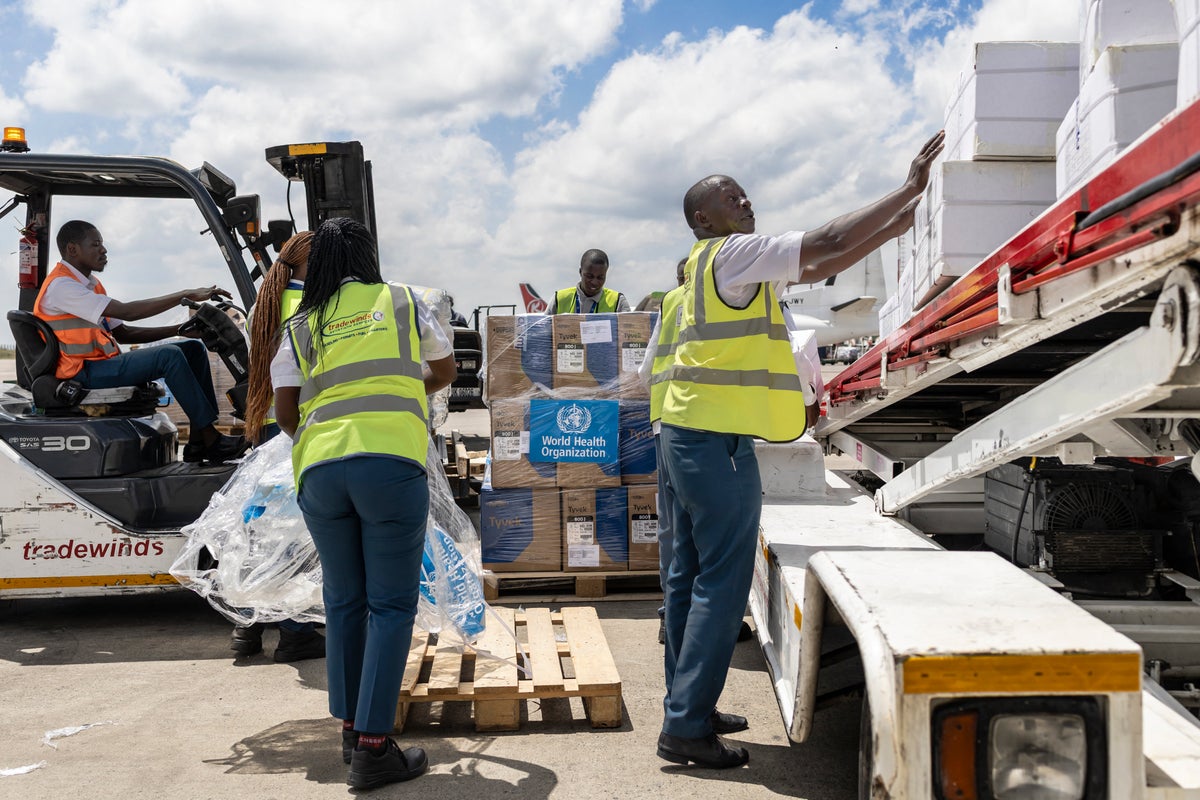
Aid workers are racing against time to deliver crucial supplies to the epicentre of a rare Ebola outbreak in Congo, as medical personnel grapple with severe equipment shortages, deep-seated community distrust, and the constant threat posed by armed groups in the volatile region.
A white cargo plane, laden with aid donated by the European Union, touched down in Bunia, a town in Congo’s northeastern Ituri province, which lies at the heart of the current outbreak.
The shipment, comprising desperately needed masks, gloves, boots, and medications, was swiftly unloaded by UN-branded forklifts into waiting trucks.
Health workers on the ground are struggling to contain the spread of the Bundibugyo virus, a strain of Ebola for which no approved treatment or vaccine currently exists. The scarcity of resources is so acute that some doctors have been forced to use expired medical masks while attending to suspected patients.
The challenges are compounded by significant community resistance. Stringent medical protocols for handling the bodies of victims, which often clash with local burial rites, have fuelled anger among residents. This resentment has escalated into at least three attacks on health centres within Ituri province.
Congolese Health Minister Samuel Roger Kamba acknowledged the difficulties, stating that remote communities can feel overwhelmed by an influx of information and personnel during outbreaks.
“We’ve seen in every epidemic that there’s always resistance,” Mr Kamba said. “Communities always ask themselves, ‘What’s going on?’ And in epidemics like this one, it is really risk communication and community engagement that ultimately change perceptions.”
Further aid from the EU is expected to arrive in batches over the next eight days, according to Jérôme Kouachi, head of emergency operations at UNICEF in Congo. The World Health Organization (WHO) Director-General, Tedros Adhanom Ghebreyesus, is en route to Congo to observe the efforts, with the WHO having declared the outbreak a public health emergency of international concern in a bid to accelerate international assistance.
The United States on Thursday said it is increasing aid to Congo and Uganda by $80 million, bringing its commitment to more than $112 million since the outbreak. This funding is earmarked for personal protective equipment for healthcare workers, Ebola test kits, support for health screening at airports, and contact tracing, the US State Department confirmed.
Dr Jean Kaseya, the Africa Centres for Disease Control director-general, said the organization on Monday believed it had secured funding pledges of nearly $500 million toward Africa’s emergency response, but as of Thursday afternoon the amount had dwindled to $290 million as partners withdrew or reduced pledges.
Despite this, the Africa CDC hopes to have treatments and a vaccine for the Bundibugyo virus available by the end of the year, with several vaccine candidates already in development.
The Congolese government has confirmed over 1,000 suspected cases and at least 220 deaths since declaring the outbreak on 15 May.
However, the WHO suspects the virus had been spreading undetected for weeks and that the true scale of the outbreak is significantly larger than reported. The virus has also reached neighbouring Uganda, which has confirmed seven cases and one fatality.
In a rare piece of positive news, the Congolese government announced on Wednesday that the first survivor to recover from the virus had been discharged from a health centre. “We are trying to catch up,” Congo Foreign Minister Thérèse Kayikwamba Wagner said earlier this week. “It is a race against the clock.”
The ground response has been severely hampered by a multitude of challenges, including customs red tape, insufficient storage facilities, poor road infrastructure, and weak telecommunications, humanitarian agencies detailed in a report on Thursday.
The ongoing conflict in the region further complicates efforts. Mr Tedros called for a ceasefire, stating: “We cannot build community trust or isolate the sick while bombs are falling.”
Ituri province, nestled near the Ugandan border, has been plagued by attacks from the Allied Democratic Force (ADF), a rebel group allied with the Islamic State, and a coalition of ethnic militias. In early May, the ADF killed at least 40 people and torched several homes in Ituri.
The illness has also been reported in the Congolese provinces of North Kivu and South Kivu, south of Ituri, where the Rwanda-backed M23 rebel group controls key cities such as Goma and Bukavu. The rebels have reported two cases.
The region’s main airport in Goma, a vital hub for humanitarian efforts, has been closed since January 2025, following M23’s seizure of the city. This protracted conflict has triggered one of the world’s largest humanitarian crises, displacing at least 7 million people across eastern Congo.
Credit: Source link