

UNESCO awards AI education projects in Finland and Brazil
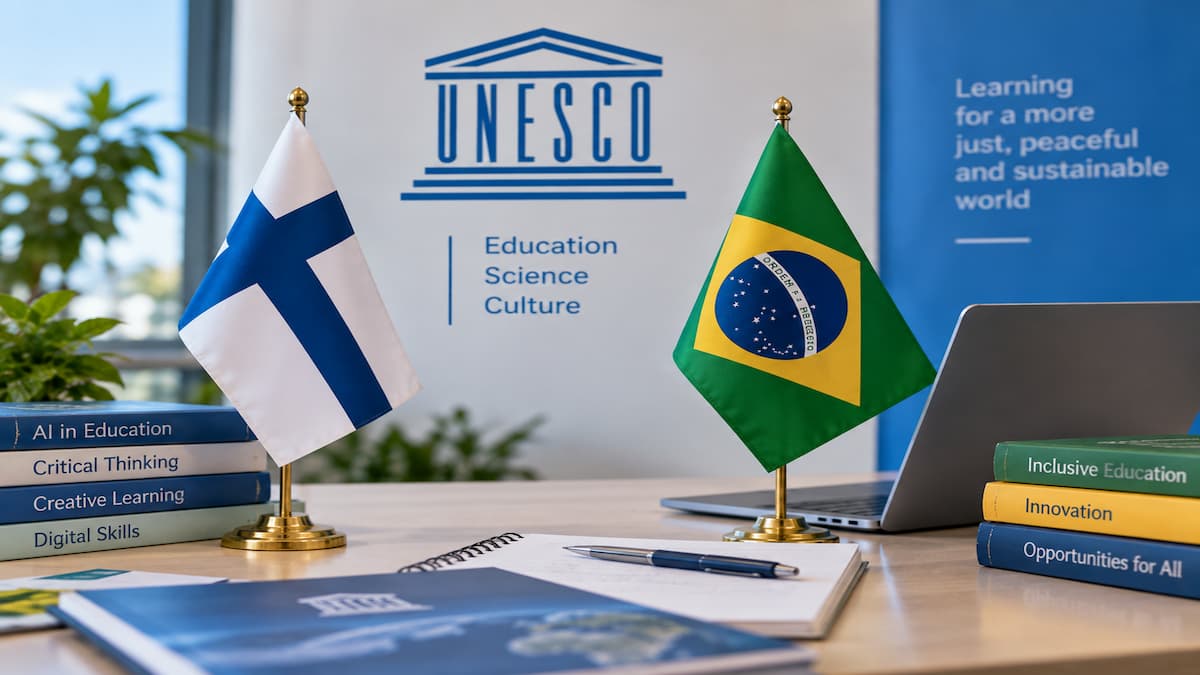
Finland’s Generation AI and Brazil’s Redação Paraná have won a UNESCO prize for their approaches to AI in education.
UNESCO has awarded its 2026 ICT in Education Prize to artificial intelligence initiatives in Finland and Brazil that use digital technologies to develop students’ critical thinking, creativity, and understanding of AI.
Finland’s Generation AI programme, developed by the University of Eastern Finland, the University of Helsinki, the University of Oulu, and other partners, provides classroom activities and tools designed to help students understand and critically assess AI systems. UNESCO said its materials have been accessed more than 200,000 times across over 50 countries, while workshops and school interventions have involved 1,500 students and teachers.
The second winner, Redação Paraná, is an AI-enabled public education programme developed by the State Secretariat of Education of Paraná in Brazil. The platform combines AI-assisted feedback with teacher involvement to support writing and revision. According to UNESCO, the programme has reached approximately 850,000 students across 2,000 schools, while teachers receive training to integrate its materials into their teaching.
The two projects were selected from more than 100 nominations and received the award during UNESCO’s Digital Learning Week in Paris on 9 September. The 2026 prize focused on approaches that use AI while encouraging learners to retain critical thinking, creativity, and independent judgement rather than outsourcing these skills to AI systems.
Why does it matter?
The two projects address a central question for AI in education: how to use automated tools without replacing students’ own reasoning. They offer different models, from teaching students to understand and critique AI systems in Finland to combining AI-generated writing feedback with teacher mediation at scale in Brazil.
Would you like to learn more about AI, tech and digital diplomacy? If so, ask our Diplo chatbot!