

UN warns sanctions chill is stopping Cuba aid
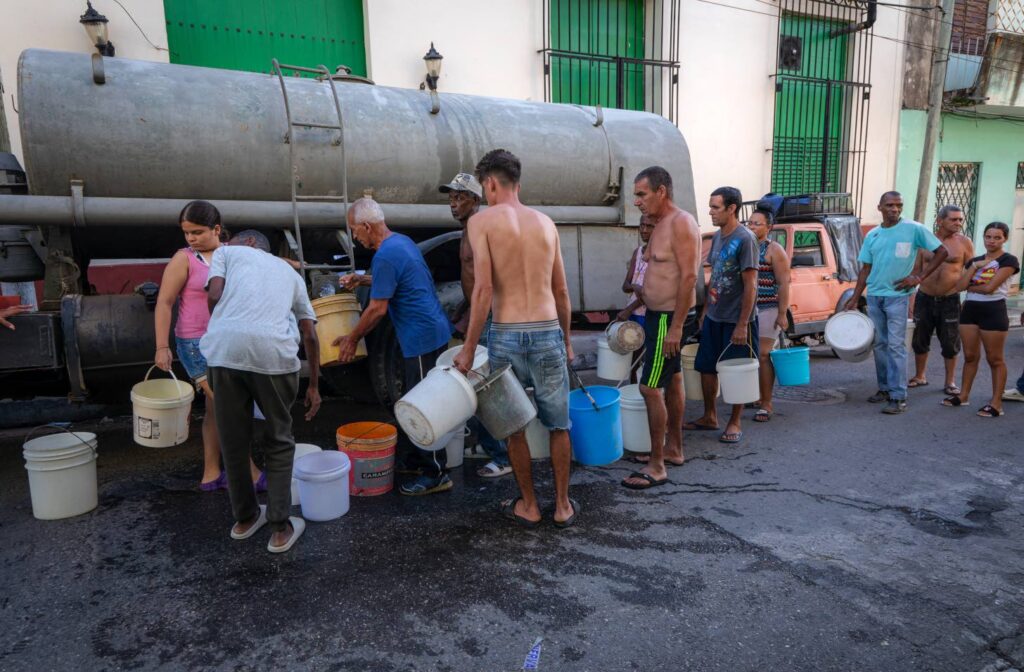
MATANZAS, Cuba — Residents carry containers while queuing for potable water from a water tanker in a neighbourhood of Matanzas, Cuba, on August 6, 2026. Recurring water shortages and power outages have forced many residents of Matanzas to rely on water deliveries and public water distribution points. Photo: AFP
HAVANA, Cuba (AFP) — The top United Nations official in Cuba has warned vital humanitarian aid is not reaching the island because shipping and financial firms fear United States (US) reprisals, stranding deliveries of cancer drugs and water-treatment equipment.
Francisco Pichon, the UN resident coordinator in Cuba, told AFP on Thursday that a climate of fear over US sanctions among shippers, insurers, and banks had led to “over compliance” that was forcing aid agencies to re-route cargo and delay deliveries intended for hospitals and schools.
“They respond to the risk of sanctions by simply withdrawing from providing those services,” he said.
Since January the US has imposed a virtual fuel blockade on the communist-run island, worsening rolling blackouts that make normal life impossible.
Washington has also threatened sanctions on companies doing business with Cuba’s Government, deepening shortages of basic goods.
“There is no food for us elderly people,” said 68-year-old Havana resident Jose Antonio Ortega, a retired truck driver.
“My pension isn’t enough for anything,” he said. “I have nothing to eat or drink in the morning.”
Only one fuel tanker is known to have arrived in Cuba in the last seven months — although limited private sales of fuel tanks from the United States have risen.
“What initially affected the most vulnerable groups is now affecting the population much more broadly,” Pichon said.
HAVANA, Cuba — People push an old car along a street in Havana on July 29, 2026. Cuba announced on July 29, 2026 that it would open up sectors of its economy such as petrol stations, pharmacies and care homes to the private sector, following Parliament’s approval of a package of 176 measures in favour of a market economy. Photo: AFP
Firms are wary of anything that may risk vital access to the US banking system or the world’s largest economy.
Pichon said one recent delivery of a medicine used to treat childhood cancer had failed to arrive because refrigerated transport could not be secured in time.
He also pointed to reproductive health kits for pregnant women that were returned to suppliers, and containers carrying medicines and school materials that were diverted rather than shipped on to Cuba.
Cuban Government data show the crisis is rapidly accelerating.
Infant deaths are believed to have more than doubled, while survival rates among children with cancer have fallen from 85 per cent to 65 per cent.
Water shortages are also worsening. According to the UN, around 3.5 million people face disruptions to drinking water supplies, while about one million depend on deliveries by tanker trucks because pumping systems lack sufficient fuel and electricity.
Pichon said the crisis is affecting not only Cuban institutions but also the UN’s own relief effort, which has been forced to rely on increasingly scarce fuel supplies obtained through private channels.
With the Atlantic hurricane season under way, UN officials are particularly concerned about the vulnerability of water and sanitation systems and the potential for disease outbreaks.
“What we are seeing is that humanitarian risks are being translated into humanitarian impacts,” Pichon said, warning that conditions had continued to deteriorate over recent months.