

UN: damage to schools in Colombia increases child recruitment risk
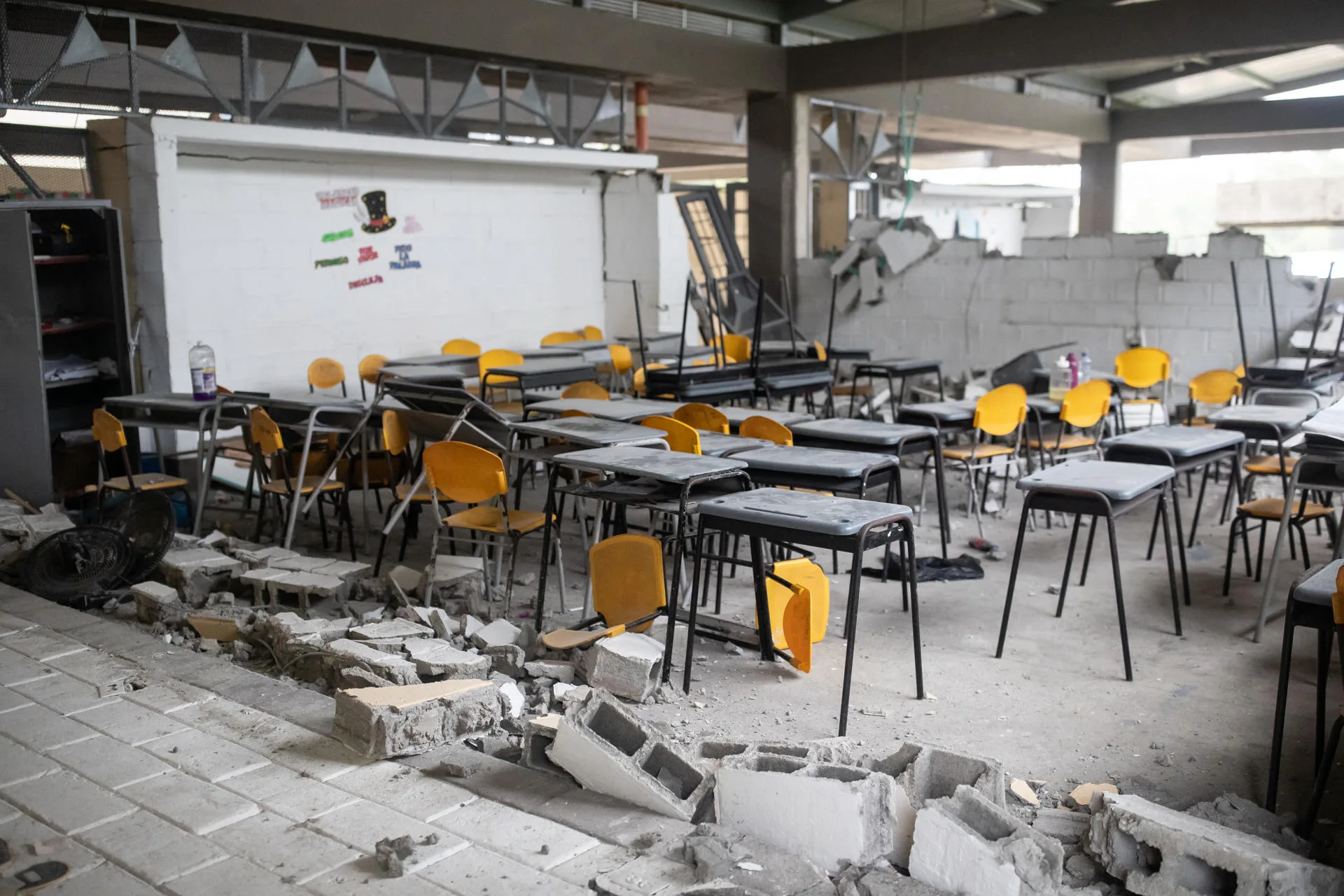
New York (EFE).- The United Nations Resident Coordinator in Colombia Maria José Torres warned on Friday that the 4,000 schools damaged by the earthquake in Colombia are increasing the risk of child recruitment by armed groups.
«The recruitment of children in Colombia is a pre-existing problem. We are concerned that the situation of children out of school can exacerbate this problem,» Torres stated during the daily press briefing of the UN Secretary-General’s spokesperson, where she appeared via videoconference.
According to her statement, nearly 4,000 educational facilities are inoperable in the areas affected by the earthquake.
«We need to rebuild very quickly, including the ability of children to be back into a protective educational environment, particularly in the areas that we are working in Chocó and Valle del Cauca, where there is a presence of the illegal armed groups,» she noted.
Torres confirmed that major hospitals in highly vulnerable areas are also inoperable.
On Aug. 10, a 7.4 magnitude earthquake struck Colombia, leaving 331 dead and 4,439 injured, according to the latest report from the National Unit for Disaster Risk Management (UNGRD) presented on Monday.
The coordinator detailed that nearly 196,000 families have been affected across 16 departments, representing almost half of the country’s territory.
To address the emergency, the UN team has updated its response plan and is requesting 148 million dollars from the international community to assist 127,000 people in conditions of extreme urgency.
Among other needs, Torres prioritized the delivery of rental subsidies and building materials to help advance the return to normalcy.
When asked about the collaboration with the government of Abelardo de la Espriella, which took office days before the earthquake, the coordinator confirmed that it had been “very open and very fluid from day one.”
«The reason why I believe this could happen was, certainly, leadership, but also the systems that exist in Colombia, that are even established by law,» and have continued to function in the transition from one government to the next, she stated.
Torres also highlighted the participation of organizations from Indigenous and Afro-Colombian communities, which have been part of the response teams. EFE
ecs/dmv/dgp