

Ukrainian Justice Struggles to Keep Pace with Russia’s Crimes
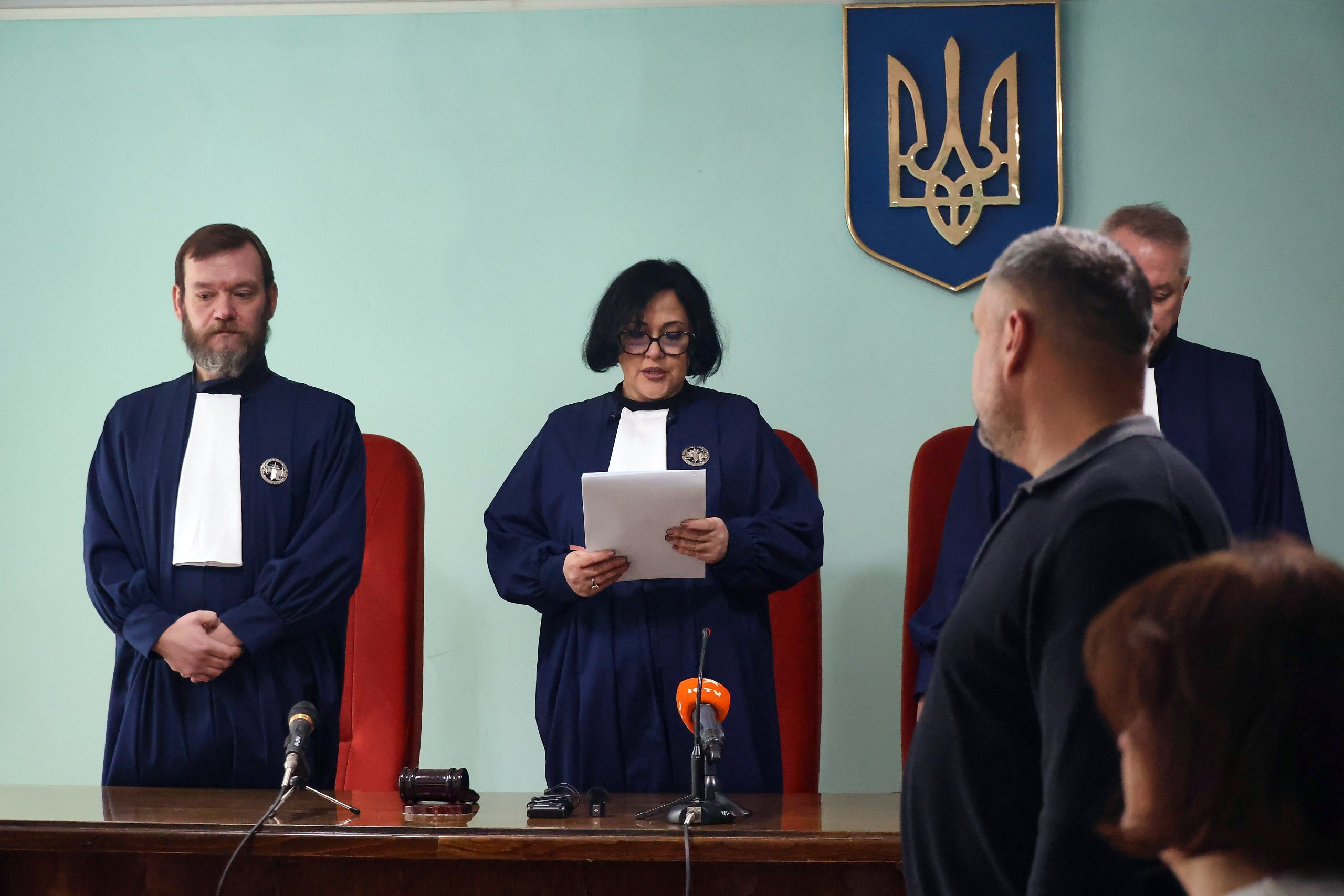
Ukraine’s war crimes investigation and prosecution system has matured substantially since 2022, with specialized war crimes departments now embedded across the Office of the Prosecutor General (OPG), regional prosecutors’ offices, the Security Service, and the National Police.
Independent reviewers, including the War Crimes Trial Monitoring Initiative, have reported that the justice process is broadly effective. But it faces structural and legal constraints that threaten to undermine its efficiency as the number of cases grows.
The most acute structural gap is capacity. By June 2026, more than 240,000 episodes had been recorded in the Unified Register of Pre-Trial Investigations in Ukraine, a volume of cases few investigative or prosecutorial bodies could reasonably process.
While the number of episodes will not necessarily equal the number of prosecutions, as some will be merged due to common perpetrators, the means used, or the targeted territory, it is still a titanic workload.
And training support compounds the imbalance. International technical assistance has concentrated heavily on prosecutors and investigators, while judges and defense attorneys have received limited and less targeted capacity-building.
As cases move toward trial in greater numbers, this uneven investment has left criminal justice capacity lagging the demands of complex atrocity adjudication. The defense function in war crimes proceedings is also systemically under-resourced and will only get worse as the caseload grows.
A significant number of cases also expose the absence of coherent prioritization. Trial monitoring data shows that the average interval between notice of suspicion and verdict is more than two-and-a-half years, a pace incompatible with adjudicating every registered episode individually.
This is why international partners and Ukrainian civil society have consistently pressed for a comprehensive strategy of case prioritization and aggregation. The OPG’s War Crimes Prosecution Strategy, adopted in April, has begun to address this gap, but, without an effective department-wide prioritization framework, the system risks incoherence as the volume of cases outpaces capacity.
Get the Latest
Sign up to receive regular emails and stay informed about CEPA’s work.
Investigative tools and procedural requirements applied to war crimes investigations are outlined in the Criminal Procedure Code, but legislation created for peaceful conditions often fails to reflect the realities of wartime investigations. This includes the collection of battlefield evidence and excessive formal requirements on expert evidence, such as OSINT analyses, digital evidence assessments, and ammunition expertise, which can limit their use and delay verdicts.
In contrast, the Rome Statute of the International Criminal Court is well adapted to the realities of armed conflict. Rather than imposing rigid admissibility requirements at the investigative stage, it places responsibility on judges to assess the admissibility and relevance of evidence in light of the circumstances in which it was collected.
Command responsibility and crimes against humanity also only entered Ukrainian criminal legislation in October 2024, complicating adjudication of earlier conduct. While international law doesn’t recognize limitation periods for crimes, and courts are permitted to read the Criminal Code consistent with international law, domestic practice on retroactivity remains unsettled.
Ukraine’s continued use of trials in absentia, without an expressly codified provision for retrial on the accused’s appearance, raises a related concern. While European Court of Human Rights jurisprudence is unambiguous on the right to retrial, the Criminal Procedural Code’s provisions are open to interpretation.
The absence of a dedicated provision against forced passportization, and other violations of customary international law, also leaves a victim-centered gap in the legislative framework, one increasingly relevant given the widespread use of the practices in Ukraine’s occupied territories.
The Office of the Prosecutor General sent proposals to parliament to address several of these legislative gaps, but lawmakers are yet to start a substantive review, leaving vulnerabilities unresolved while the system grapples with a rapidly expanding caseload.
Sustained, targeted, and cross-institutional support, spanning investigators, prosecutors, judges, and defense counsel, together with a case prioritization framework and timely legislative reform, will be essential to ensuring the system’s continued credibility and effectiveness at scale.
Anna Stakhanova is a legal expert specializing in international crimes, prosecution reform, and accountability. Her research at CEPA focused on Transitional Justice policy for Ukraine. In her most recent position, Anna worked as the Key Expert on Accountability for International Crimes with the EU Project Pravo-Justice in Ukraine, where she advised and trained key stakeholders within the Ukrainian justice system. Prior to this, Anna served as an International Consultant on Accountability for War Crimes with the OSCE Office for Democratic Institutions and Human Rights (ODIHR) in Poland. Anna holds an LLM in International Law from the London School of Economics, along with master’s degrees in law and linguistics from the National University of Odesa Law Academy and Odesa I.I. Mechnikov National University.
Europe’s Edge is CEPA’s online journal covering critical topics on the foreign policy docket across Europe and North America. All opinions expressed on Europe’s Edge are those of the author alone and may not represent those of the institutions they represent or the Center for European Policy Analysis. CEPA maintains a strict intellectual independence policy across all its projects and publications.
Europe’s Edge
CEPA’s online journal covering critical topics on the foreign policy docket across Europe and North America.