

U.S. launches strikes after Iran fires on ship in Strait of Hormuz :: WRAL.com
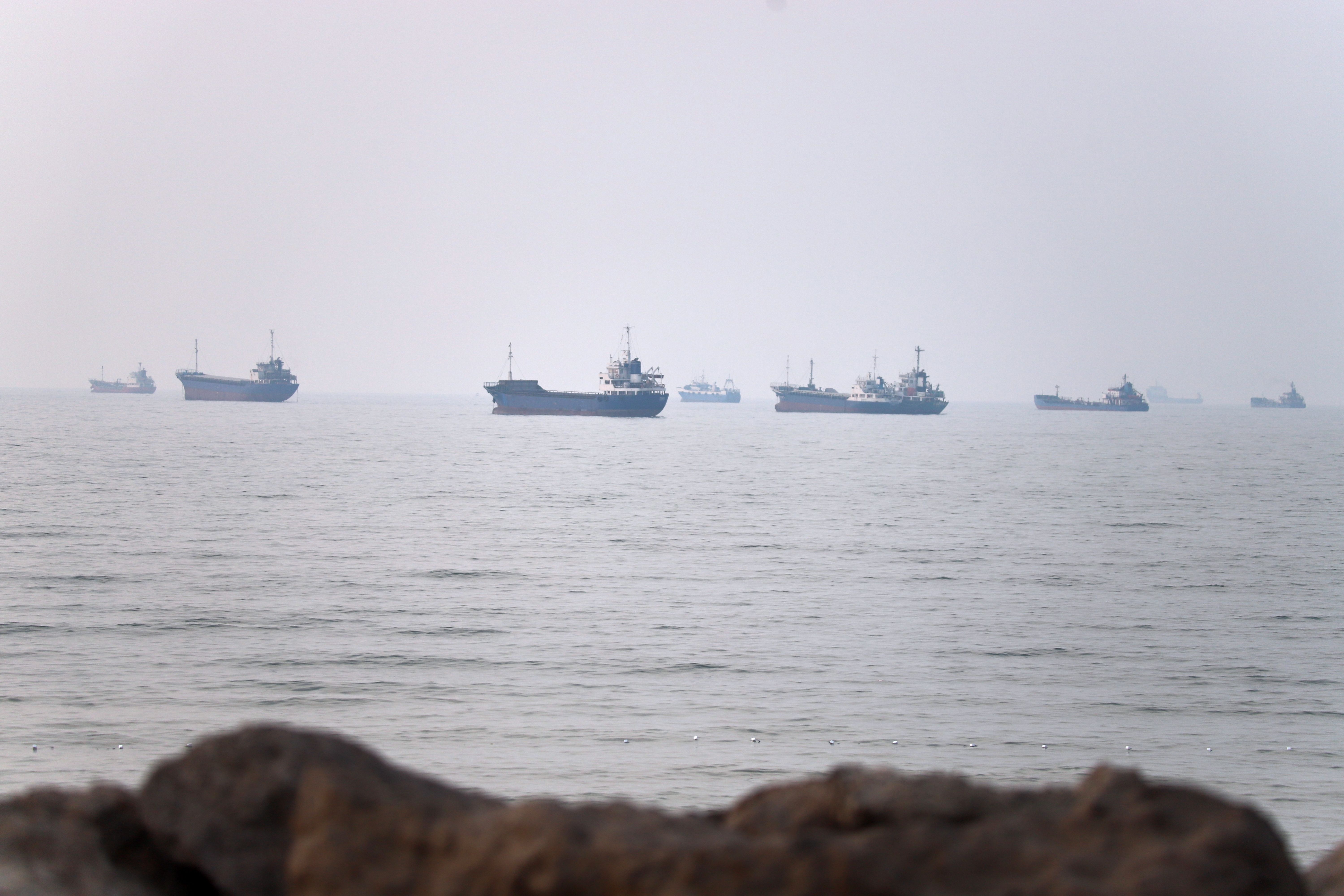
U.S. Central Command said on Saturday evening that it had launched strikes on Iran after the Iranian navy attacked a container ship in the Strait of Hormuz, rejecting a U.S. ultimatum to open the critical waterway to traffic.
Hours earlier, Iranian Foreign Minister Abbas Araghchi had met in Oman with its top diplomat to discuss safe passage in the Strait of Hormuz, but he made no public commitments. The prospect of a reopening seemed dimmer than ever after Iran announced the attack — a warning shot on a container ship — and said it would close the strait “until the end of U.S. interference in the region.”
The Iranian navy said it had fired after “several ships attempted to travel along an unapproved route” and ignored directions to transit through Iran’s territorial waters. It warned that it would meet any U.S. retaliation to its attack with a “forceful response.”
The U.S. military did not immediately specify where it was striking. Iran’s state broadcaster reported that explosions had been heard in key cities across the country’s southern coast that had been targeted in previous rounds of U.S. strikes, many of which include major energy centers and Iranian military installations. The broadcaster said that military barracks had been hit in Bushehr and a military site in Deyr, but did not say whether there had been casualties.
The United Arab Emirates’ defense ministry later said it was intercepting missile and drone attacks from Iran. Qatar’s defense ministry also said it was intercepting missile attacks, though it did not specify where they had come from.
Iran’s attack on the container ship came after a heavy week of skirmishes between the United States and Iran focused on the strait. The Iranian military has continued to claim its own waters as the only viable route, and this past week, U.S. officials said, Iran attacked three ships traveling through the waterway. Tehran did not claim responsibility for those attacks.
Those earlier strikes prompted a forceful American retaliation and U.S. officials to issue the ultimatum, saying that they expected Iran to publicly declare an end to attacks on commercial ships in the waterway and acknowledge that all channels for crossing it were open. If not, the officials said, “we’re not going to have a good outcome for them.”
President Donald Trump and Iran’s supreme leader, Ayatollah Mojtaba Khamenei, exchanged threats throughout the week as tensions built over the Strait of Hormuz. The Iranian leader, in his first statement since a weeklong funeral for Ayatollah Ali Khamenei, vowed revenge for the killing of his father and predecessor in the first U.S.-Israeli attacks of the war.
The latest attacks threaten to further unsettle energy and financial markets. Daily shipping traffic through the strait recently dropped to the lowest level in weeks, according to Kpler, a maritime data firm. Brent crude oil, the international benchmark, closed the week near $76 per barrel, about 5% higher than prewar levels.