

U.S Healthcare Environmental Services Market Growth, 2034

U.S Healthcare Environmental Services Market Size
The U.S healthcare environmental services market size was valued at USD 7.45 billion in 2025 and is anticipated to reach USD 7.98 billion in 2026 to reach USD 13.91 billion by 2034, growing at a CAGR of 7.18% during the forecast period from 2026 to 2034.
MARKET OVERVIEW
As per the Centers for Disease Control and Prevention, approximately 1 in 31 hospital patients has at least one healthcare-associated infection on any given day, which underscores the vital role of rigorous environmental sanitation. The complexity of modern medical environments requires adherence to strict regulatory frameworks such as those established by the Occupational Safety and Health Administration and the Joint Commission. These mandates dictate precise procedures for handling hazardous materials and sterilizing high-touch surfaces to prevent cross-contamination. The aging infrastructure of many U.S. hospitals further necessitates robust environmental management strategies to mitigate risks associated with outdated ventilation systems and surface materials. According to the American Hospital Association, there were 6,120 registered hospitals in the U.S. each require a consistent and compliant environmental stewardship. The integration of advanced cleaning technologies and eco-friendly practices has become a standard expectation rather than an optional enhancement. This evolving landscape demands a workforce trained in both traditional cleaning methodologies and modern infection prevention techniques. The sector operates as the backbone of clinical care by creating sterile environments that directly influence patient recovery rates and staff safety. Consequently, the demand for specialized environmental services continues to grow in tandem with the expansion of healthcare facilities and the increasing scrutiny on hospital-acquired conditions.
MARKET DRIVERS
Rising Prevalence of Healthcare Associated Infections Drives Strict Sanitation Protocols
The escalating incidence of healthcare-associated infections is one of the key factors propelling the growth of the U.S. healthcare environmental services market. These infections pose significant risks to patient outcomes and impose substantial financial burdens on the healthcare system. According to the Centers for Disease Control and Prevention, healthcare-associated infections affect millions of patients annually and contribute to tens of thousands of deaths each year. This stark reality compels hospitals to invest heavily in advanced cleaning protocols and specialized environmental staff training. The implementation of enhanced disinfection routines, particularly in high-risk areas such as intensive care units and operating rooms, has become mandatory for accreditation. Facilities are increasingly adopting terminal cleaning procedures that utilize ultraviolet light or hydrogen peroxide vapor to eliminate resilient pathogens like Clostridioides difficile and methicillin-resistant Staphylococcus aureus. According to the Agency for Healthcare Research and Quality, healthcare-associated infections cost the U.S. healthcare system up to $33 billion annually. Consequently, hospital administrators prioritize environmental services as a critical component of risk management and cost containment strategies. The pressure to reduce infection rates is further amplified by value-based care models that penalize institutions for poor quality metrics. As per data from the National Healthcare Safety Network, facilities with robust environmental hygiene programs demonstrate significantly lower infection rates. This correlation drives continuous investment in superior cleaning technologies and skilled personnel. The demand for evidence-based cleaning practices ensures that environmental service providers must constantly innovate and validate their methods. This dynamic creates a sustained need for comprehensive environmental solutions that go beyond aesthetic cleanliness to achieve true microbial reduction.
Regulatory Compliance and Accreditation Standards Mandate Specialized Services
Stringent regulatory requirements and accreditation standards are further contributing to the U.S. healthcare environmental services market expansion. Organizations such as the Joint Commission and the Centers for Medicare and Medicaid Services enforce rigorous guidelines that healthcare facilities must meet to maintain their licensure and reimbursement eligibility. As per the Joint Commission standards, hospitals must demonstrate continuous compliance with infection control and environmental safety protocols through regular audits and inspections. Failure to meet these standards can result in severe penalties, including loss of accreditation, which effectively bars institutions from receiving federal funding. This regulatory pressure necessitates the engagement of specialized environmental service providers who possess deep expertise in healthcare-specific cleaning methodologies. The Occupational Safety and Health Administration also mandates strict protocols for the handling and disposal of biomedical waste, protecting both workers and the environment. According to the Environmental Protection Agency, healthcare facilities generate approximately 3.5 million tons of waste annually, requiring meticulous segregation and disposal processes. Compliance with these regulations involves detailed documentation and tracking, which adds layers of complexity to environmental management. Hospitals increasingly rely on outsourced partners who can guarantee adherence to these evolving legal frameworks. The complexity of these regulations ensures that general cleaning companies cannot easily enter the healthcare sector without significant investment in training and certification. As per industry observations, facilities that partner with compliant service providers experience fewer regulatory violations and improved audit scores. This dependency on specialized knowledge creates a high barrier to entry for competitors and solidifies the position of established environmental service firms. The constant evolution of health codes further ensures that demand for expert compliance management remains robust and recession-resilient.
MARKET RESTRAINTS
Labor Shortages and High Turnover Rates Impede Service Consistency
The significant operational hurdles due to persistent labor shortages and high employee turnover rates are majorly impeding the U.S. healthcare environmental services market growth. These workforce challenges directly impact the consistency and quality of cleaning services, which are critical for infection prevention. According to the Bureau of Labor Statistics, the turnover rate for the building support and janitorial services sector routinely ranges between 40% and 75% annually. This instability makes it difficult for facilities to maintain a well-trained and experienced workforce capable of adhering to complex hygiene protocols. The physical demands of the job, combined with relatively low wages, contribute to recruitment and retention difficulties. As per the American Hospital Association, many healthcare facilities report chronic understaffing in environmental services departments, leading to increased workloads for existing employees. This situation often results in rushed cleaning procedures and missed spots, which can compromise patient safety. The shortage is exacerbated by an aging workforce and a lack of new entrants attracted to the profession. Training new employees requires significant time and resources, yet many leave before becoming fully proficient in healthcare-specific cleaning techniques. This cycle of hiring and training strains operational budgets and reduces overall efficiency. Furthermore, the stigma associated with cleaning roles often discourages potential candidates from pursuing careers in this field. As per industry surveys, facility managers frequently cite staffing as their top concern, affecting their ability to meet stringent cleanliness standards. The inability to retain skilled workers leads to inconsistent service delivery, which can result in higher infection rates and regulatory non-compliance. Addressing this labor crisis requires innovative human resource strategies and improved compensation models, which remain challenging to implement in a cost-constrained environment.
Stringent Budget Constraints Limit Investment in Advanced Technologies
Financial pressures and stringent budget constraints significantly restrict the ability of healthcare facilities to invest in advanced environmental service technologies and practices, which is further hindering the U.S. healthcare environmental services market expansion. Hospitals operate on thin margins and face increasing pressure to reduce operational costs while maintaining high standards of care. According to the American Hospital Association, more than half of U.S. hospitals operated with negative margins during recent financial peaks, forcing administrators to scrutinize every expense category, including environmental services. This financial strain often leads to the selection of lowest-bid contractors rather than providers offering superior technology or training. The adoption of innovative cleaning solutions, such as autonomous robots or electrostatic sprayers, requires substantial upfront capital investment, which many facilities cannot justify amidst budget cuts. As per data from Kaufman Hall, rising labor costs and supply chain inflation further erode operating margins, limiting discretionary spending. Consequently, many institutions continue to rely on traditional manual cleaning methods that are less effective and more labor-intensive. The reluctance to invest in premium services is also driven by the perception of environmental cleaning as a non-revenue-generating function. This mindset overlooks the long-term cost savings associated with reduced infection rates and improved patient throughput. However, the immediate focus on short-term financial performance often prevails over strategic investments in hygiene infrastructure. As per industry analysis, budget limitations also hinder the implementation of comprehensive training programs for environmental staff. This lack of investment in human capital perpetuates inefficiencies and increases the risk of compliance failures. The tension between cost containment and quality assurance remains a persistent restraint that limits market growth and innovation adoption.
MARKET OPPORTUNITIES
Integration of Smart Cleaning Technologies Offers Efficiency Gains
The integration of smart cleaning technologies presents a significant opportunity for U.S. healthcare environmental services market expansion. Innovations such as Internet of Things enabled sensors, autonomous floor scrubbers, and real-time monitoring systems offer unprecedented levels of efficiency and accountability. According to the International Facility Management Association, the adoption of smart building technologies can reduce operational facility costs by up to 20% through optimized resource allocation and predictive maintenance. These technologies allow facility managers to track cleaning activities in real time, ensuring that high-traffic areas receive attention when needed most. The use of data analytics enables evidence-based decision-making, allowing hospitals to adjust cleaning frequencies based on actual usage patterns rather than fixed schedules. As per industry trends, the deployment of ultraviolet-C disinfection robots has gained traction due to their ability to eliminate pathogens more effectively than manual methods alone. These devices provide verifiable proof of disinfection, which enhances trust among patients and regulatory bodies. The transition to digital platforms also facilitates better communication between clinical staff and environmental services teams, improving response times to spills or contamination events. Furthermore, smart technologies help address labor shortages by automating repetitive tasks, allowing human workers to focus on complex cleaning requirements. As per market observations, hospitals that implement these technologies report higher satisfaction scores from both staff and patients. The ability to demonstrate measurable improvements in cleanliness and efficiency provides a competitive advantage for service providers. This technological shift aligns with the broader digital transformation of healthcare infrastructure, creating new revenue streams for vendors offering integrated solutions. The demand for transparent and data-driven environmental management continues to rise as hospitals seek to optimize operations and enhance patient safety outcomes.
Expansion of Outpatient and Ambulatory Care Centers Creates New Demand
The rapid expansion of outpatient and ambulatory care centers offers a substantial growth avenue for the healthcare environmental services market in the U.S. As healthcare delivery shifts away from traditional inpatient settings towards community-based clinics and surgical centers, the demand for specialized cleaning services diversifies. According to the Ambulatory Surgery Center Association, there are over 6,000 certified ambulatory surgery centers in the U.S., performing millions of procedures annually. These facilities require rigorous environmental hygiene standards similar to hospitals but often operate with smaller internal staffs, making them reliant on outsourced environmental services. The convenience and cost-effectiveness of outpatient care drive patient preference, leading to increased construction and operation of these facilities. As per the Centers for Medicare and Medicaid Services, a growing proportion of medical procedures are now performed in outpatient settings, reducing the burden on acute care hospitals. This trend necessitates scalable environmental service solutions that can cater to multiple smaller locations rather than single large campuses. Providers who can offer flexible and standardized cleaning protocols across a network of clinics gain a strategic advantage. The regulatory requirements for these centers are becoming increasingly stringent, mirroring those of hospitals, which elevates the need for professional expertise. Furthermore, the rise of urgent care clinics and diagnostic imaging centers adds to the volume of facilities requiring compliant environmental management. As per industry forecasts, the outpatient sector is expected to continue its robust growth trajectory, driven by demographic trends and policy changes. This expansion creates a fragmented yet lucrative market for environmental service providers who can adapt their offerings to meet the specific needs of diverse outpatient settings. The ability to deliver consistent quality across dispersed locations becomes a key differentiator in this evolving landscape.
MARKET CHALLENGES
Workforce Recruitment and Retention Remain Persistent Operational Hurdles
Recruiting and retaining a qualified workforce remains one of the most significant challenges facing the U.S. healthcare environmental services market. The market struggles with a perception of low status and limited career advancement opportunities, which deters potential candidates. According to the Bureau of Labor Statistics, the median hourly wage for healthcare janitors and cleaners is approximately $16.50, which sits below the national median for all combined occupations and makes it difficult to attract talent in a tight labor market. This wage disparity, coupled with the physically demanding nature of the work, leads to high absenteeism and turnover. As per industry surveys, many environmental services directors report spending excessive time on recruitment rather than strategic planning due to constant staffing gaps. The challenge is compounded by the need for specialized training in infection control and hazardous material handling, which requires time and investment that high turnover rates undermine. Facilities often find themselves in a cycle of hiring inexperienced workers who lack the necessary skills to maintain rigorous hygiene standards. This inconsistency poses a direct risk to patient safety and regulatory compliance. Furthermore, the aging demographic of the current workforce means that retirements are outpacing new hires, exacerbating the shortage. As per labor market analysis, the competition for entry-level workers from other sectors, such as retail and hospitality, further limits the available talent pool. Addressing this challenge requires a fundamental shift in how environmental services roles are valued and compensated within healthcare organizations. Without significant improvements in workforce stability, facilities will continue to face operational disruptions and increased costs associated with continuous training and recruitment efforts.
Balancing Cost Efficiency with High Quality Infection Control Standards
Achieving a balance between cost efficiency and high-quality infection control standards is another complex challenge for the U.S. market. Hospitals are under immense pressure to reduce expenses while simultaneously meeting increasingly stringent hygiene requirements to prevent healthcare-associated infections. According to the Agency for Healthcare Research and Quality, the cost of treating an individual hospital-acquired condition like a central line-associated bloodstream infection can average up to $48,000, creating a strong incentive for effective prevention. However, the upfront costs of premium cleaning products, advanced equipment, and comprehensive staff training can be prohibitive for facilities operating on narrow margins. As per financial data from the American Hospital Association, many institutions struggle to justify the return on investment for superior environmental services despite the clear link to patient outcomes. This tension often leads to compromises in cleaning frequency or the use of less effective but cheaper alternatives. The variability in reimbursement rates from insurance providers further complicates budget planning for environmental services. Facilities must navigate these financial constraints while ensuring that they do not compromise on the quality of care. As per regulatory updates, the penalties for non-compliance with infection control standards are becoming more severe, adding another layer of financial risk. Service providers must therefore demonstrate tangible value through measurable improvements in hygiene metrics to justify their costs. The lack of standardized pricing and performance benchmarks in the industry makes it difficult for hospitals to compare options effectively. This ambiguity often results in procurement decisions based primarily on price rather than quality. Overcoming this challenge requires greater transparency and evidence-based validation of environmental service outcomes to align financial incentives with patient safety goals.
REPORT COVERAGE
|
REPORT METRIC |
DETAILS |
|
Market Size Available |
2025 to 2034 |
|
Base Year |
2025 |
|
Forecast Period |
2026 to 2034 |
|
CAGR |
7.18% |
|
Segments Covered |
By Type, Facility, and By Country |
|
Various Analyses Covered |
Global, Regional, and Country Level Analysis, Segment-Level Analysis; DROC, PESTLE Analysis; Porter’s Five Forces Analysis; Competitive Landscape; Analyst Overview of Investment Opportunities. |
|
Regions Covered |
California, Washington, Oregon, New York & Rest of the United States |
|
Market Leaders Profiled |
Sodexo (France), Compass Group PLC (UK), Aramark (US), Hospital Housekeeping Systems (US), ABM Industries Incorporated (US), Healthcare Services Group, Inc. (US) |
SEGMENTAL ANALYSIS
By Type Insights
The janitorial services and core cleaning segment accounted for the leading share of the U.S. market in 2025. The dominance of this segment in the U.S. market is attributed to their foundational role in maintaining daily operational hygiene. These services encompass routine tasks such as floor care, waste removal, and surface disinfection, which are essential for preventing the spread of pathogens in high-traffic areas. According to the Centers for Disease Control and Prevention, consistent environmental cleaning is the first line of defense against healthcare-associated infections, which affect approximately 1 in 31 hospital patients on any given day. This statistical reality drives hospitals to prioritize robust janitorial protocols to meet accreditation standards set by The Joint Commission. Failure to maintain these standards can result in significant financial penalties and loss of reputation. As per the American Hospital Association, there are over 6,120 registered hospitals in the U.S., each requiring continuous and rigorous cleaning services to operate safely. The sheer volume of facilities ensures a steady and recurring demand for core cleaning services. Furthermore, regulatory bodies mandate specific cleaning frequencies for different zones within a hospital, ensuring that janitorial services remain a non-negotiable expense. The integration of standardized cleaning checklists and visual monitoring tools has further cemented the importance of this segment. Hospitals recognize that without effective janitorial services, all other infection control measures are compromised. This dependency ensures that core cleaning remains the largest revenue generator within the environmental services sector. The segment benefits from long-term contracts and stable demand regardless of economic fluctuations. As per industry data, the consistency of these services provides a reliable baseline for facility management budgets. The critical nature of these tasks means that hospitals are unlikely to reduce spending in this area even during periods of financial constraint.
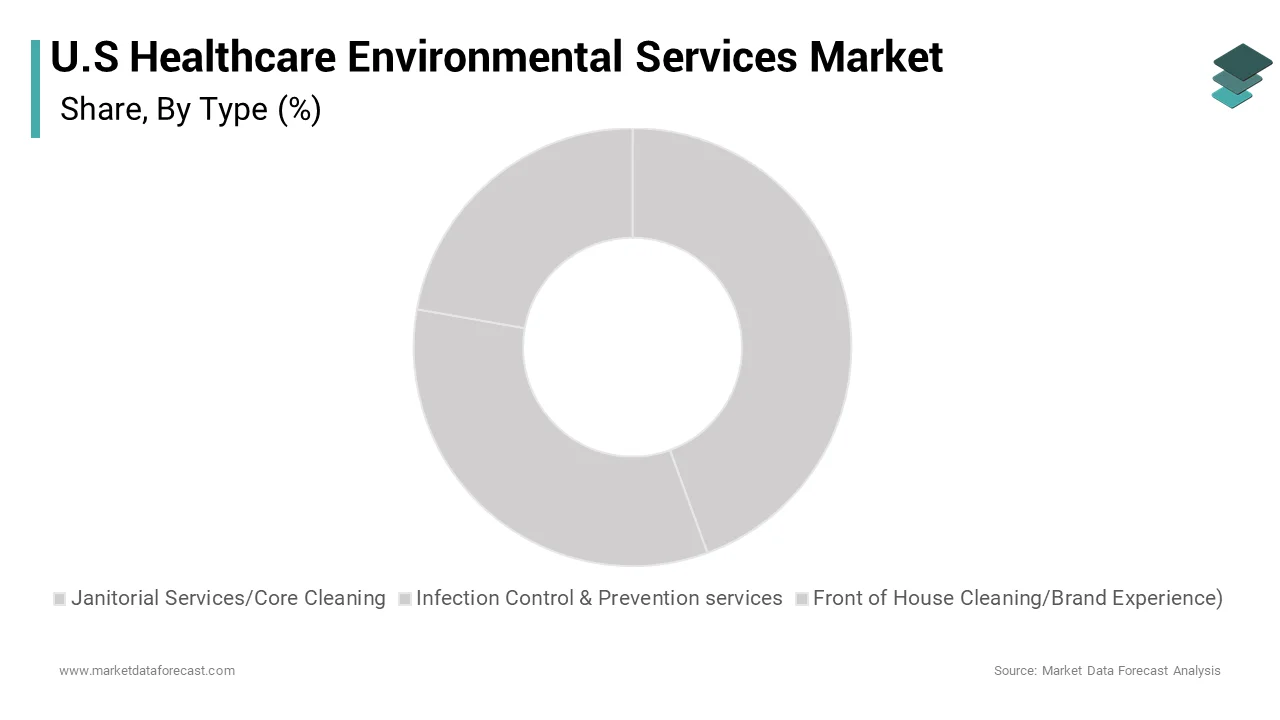
On the other hand, the infection control and prevention services segment is estimated to showcase the fastest CAGR in the U.S. market during the forecast period owing to the rapid adoption of advanced disinfection technologies. Facilities are increasingly integrating no-touch disinfection methods, such as ultraviolet-C light robots and hydrogen peroxide vapor systems, to enhance cleaning efficacy. According to the Association for the Advancement of Medical Instrumentation, clinical validation studies indicate that automated ultraviolet-C disinfection systems can reduce environmental bacterial bioburden by up to 99.9% on exposed surfaces compared to manual cleaning alone. This superior level of disinfection is critical for combating multidrug-resistant organisms that are prevalent in healthcare settings. As per the Centers for Disease Control and Prevention, healthcare-associated infections cost the U.S. healthcare system billions of dollars annually, creating a strong financial incentive for hospitals to invest in preventive technologies. The market for these advanced services is expanding at a compound annual growth rate of approximately 8.5% as more facilities seek to improve patient safety outcomes. The integration of robotics also addresses labor shortages by automating time-consuming disinfection processes. This allows human staff to focus on detailed cleaning tasks that require manual dexterity. Furthermore, the verifiable data provided by these technologies offers hospitals proof of disinfection, which is valuable for accreditation and liability purposes. For instance, the initial high cost of these technologies is offset by long-term savings from reduced infection rates and shorter patient stays. The demand for evidence-based infection control is driving hospitals to partner with service providers who offer these advanced solutions. This trend is expected to continue as technology becomes more affordable and accessible. The shift towards proactive rather than reactive infection control is a key driver of growth in this segment. Hospitals are recognizing that investment in advanced disinfection is a strategic imperative for quality care.
By Facility Insights
The acute care hospitals segment led the market by holding the highest share of the U.S. market in 2025. The leading position of acute care hospitals segment in the U.S. market is driven by the high acuity of patients and the complexity of their infrastructure. These facilities treat severe and urgent medical conditions, requiring intensive environmental controls to prevent cross-contamination. According to the American Hospital Association, acute care hospitals account for the majority of healthcare expenditures and patient visits in the U.S. The high turnover of patients in emergency departments and intensive care units necessitates frequent and thorough cleaning to maintain sterile environments. As per the Centers for Disease Control and Prevention, patients in acute care settings are at higher risk for healthcare-associated infections due to compromised immune systems and invasive procedures. This vulnerability drives hospitals to invest heavily in specialized environmental services that meet rigorous hygiene standards. The complex infrastructure of acute care hospitals, including operating rooms, isolation wards, and diagnostic suites, requires tailored cleaning protocols. Service providers must possess expertise in handling diverse environments within a single facility. This complexity creates a high barrier to entry for general cleaning companies. Furthermore, the large size of acute care hospitals results in significant volume for environmental service contracts. As per industry data, the average acute care hospital has hundreds of beds and thousands of square feet of clinical space requiring continuous maintenance. The critical nature of services provided in these facilities ensures that environmental hygiene is a top priority for administration. Hospitals cannot compromise on cleaning quality without risking patient safety and regulatory compliance. This dependency ensures that acute care hospitals remain the largest consumers of environmental services. The segment benefits from stable long-term contracts and recurring revenue streams. The ongoing need for high-level sanitation in acute care settings solidifies its position as the market leader.
The post-acute care facilities segment is another promising segment and is expected to register a fastest CAGR in the U.S. market during the forecast period owing to the rising demand for elderly care and chronic disease management. The aging population in the U.S. is increasing the need for skilled nursing facilities, rehabilitation centers, and long-term care institutions. According to the National Institute on Aging, the population of Americans aged 65 and older is projected to expand significantly to reach nearly 95 million by 2060. This demographic shift creates a sustained demand for post-acute care services, which require consistent environmental hygiene to protect vulnerable residents. As per the Centers for Medicare and Medicaid Services, a significant portion of healthcare spending is directed towards post-acute care settings. These facilities house individuals with chronic conditions who are susceptible to infections such as influenza and pneumonia. Maintaining a clean environment is crucial for preventing outbreaks in these congregate living settings. The growth of this segment is further fueled by the shift towards value-based care, which emphasizes keeping patients out of acute care hospitals. Post-acute facilities play a key role in this continuum of care. As per industry forecasts, the number of skilled nursing facilities is expected to expand to meet the needs of the aging population. This expansion drives demand for professional environmental services that can ensure resident safety and comfort. Facilities are increasingly outsourcing cleaning to specialized providers who understand the unique needs of elderly care. The focus on quality of life and infection prevention in these settings is driving investment in environmental hygiene. The segment benefits from long-term residency models, which provide stable revenue for service providers. The growing recognition of the link between cleanliness and health outcomes in post-acute care is accelerating market growth.
COUNTRY ANALYSIS
The U.S. healthcare environmental services market is projected to expand steadily over the next few years, maintaining its dominant position in North America and accounting for the largest share of regional revenue. According to the American Hospital Association, the U.S. has one of the most complex and expensive healthcare systems in the world, which drives significant spending on support services, including environmental hygiene. The presence of stringent regulatory bodies, such as the Centers for Disease Control and Prevention and the Joint Commission, ensures that healthcare facilities maintain high standards of cleanliness. As per the Bureau of Labor Statistics, the healthcare sector is one of the largest employers in the country, providing a substantial workforce for environmental services. The driving factors for the market include the rising prevalence of healthcare-associated infections, which affects approximately 1 in 31 hospital patients on any given day, as stated by the Centers for Disease Control and Prevention. This statistic underscores the critical need for effective environmental cleaning to protect patient safety. Furthermore, the aging population is increasing the demand for healthcare services across various settings, including hospitals and post-acute care facilities. According to the National Institute on Aging, the number of older adults is growing rapidly, which expands the customer base for environmental services. The adoption of advanced cleaning technologies, such as robotics and ultraviolet disinfection, is also driving market growth. Hospitals are investing in these innovations to improve efficiency and reduce infection rates. As per industry data, the U.S. market is mature but continues to grow due to technological advancements and regulatory pressures. The focus on value-based care is further incentivizing facilities to invest in preventive measures, including environmental hygiene. The U.S. remains a leader in setting standards for healthcare environmental services globally.
COMPETITIVE LANDSCAPE
The competition in the US healthcare environmental services market is characterized by a mix of large multinational corporations and specialized regional providers vying for contracts with healthcare institutions. Large firms leverage their scale and comprehensive service portfolios to offer integrated facility management solutions that appeal to large hospital systems. These companies invest heavily in technology and training to differentiate their offerings and ensure compliance with strict regulatory standards. Regional players often compete on the basis of localized expertise and personalized service which can be attractive to smaller community hospitals and clinics. The market is moderately consolidated with top players holding significant influence but facing pressure from niche competitors who specialize in specific areas such as hazardous waste disposal or advanced disinfection. Price competition remains intense particularly for basic janitorial services prompting providers to add value through technological innovations and sustainability initiatives. The barrier to entry is moderate due to the need for specialized training and regulatory compliance knowledge which protects established players from new entrants. However the threat of substitution is low as healthcare facilities require professional services to meet accreditation standards. Competitive dynamics are further shaped by the increasing demand for transparent and data driven service delivery. Providers who can demonstrate measurable improvements in hygiene outcomes gain a competitive advantage. The focus on infection prevention and patient safety continues to drive differentiation among competitors. Strategic partnerships and acquisitions are common tactics used to expand capabilities and market reach. Overall the competitive landscape is dynamic with continuous innovation and adaptation required to maintain leadership positions.
KEY MARKET PLAYERS
A few of the market players that are dominating the U.S. healthcare environmental services market are
- Sodexo (France)
- Compass Group PLC (UK)
- Aramark (US)
- Hospital Housekeeping Systems (US)
- ABM Industries Incorporated (US)
- Healthcare Services Group, Inc. (US)
Top Players in the Market
- ABM Industries Incorporated stands as a prominent provider of facility solutions with a significant footprint in the healthcare sector across the U.S.. The company delivers comprehensive environmental services including cleaning waste management and specialized infection control protocols to hospitals and medical centers. ABM focuses on integrating advanced technologies such as automated cleaning equipment and data driven monitoring systems to enhance service quality and efficiency. Recent initiatives include expanding its portfolio through strategic acquisitions that bolster its capabilities in healthcare specific hygiene management. The company emphasizes sustainability by implementing eco friendly cleaning products and energy efficient practices which align with the growing demand for green healthcare facilities. ABM also invests heavily in training programs to ensure its workforce meets rigorous regulatory standards and accreditation requirements. By leveraging its national scale and localized expertise ABM strengthens its position as a trusted partner for healthcare institutions seeking reliable and compliant environmental services. The organization continues to innovate by adopting digital tools that provide real time visibility into cleaning performance and operational metrics. This approach helps healthcare clients achieve better patient outcomes and maintain high standards of hygiene. ABM’s commitment to quality and safety reinforces its leadership in the market while addressing the evolving needs of modern medical facilities.
- Sodexo Group operates as a global leader in quality of life services with a robust presence in the US healthcare environmental services market. The company provides integrated facility management solutions that encompass cleaning linen management waste disposal and infection prevention services tailored for hospitals and clinics. Sodexo leverages its international expertise to introduce best practices and innovative technologies to American healthcare facilities. Recent actions include the deployment of smart cleaning solutions and robotics to improve efficiency and reduce labor dependency. The company prioritizes employee engagement and training to ensure high standards of service delivery and compliance with health regulations. Sodexo also focuses on sustainability initiatives by reducing water and energy consumption in its operations which appeals to environmentally conscious healthcare providers. By offering end to end facility management services Sodexo helps healthcare organizations streamline operations and focus on patient care. The company collaborates with clients to develop customized solutions that address specific hygiene challenges and regulatory requirements. Sodexo’s emphasis on digital transformation enables real time monitoring and reporting which enhances transparency and accountability. This strategic focus allows Sodexo to maintain a competitive edge and deliver value to its healthcare partners. The company continues to expand its service offerings through innovation and strategic partnerships that strengthen its market position.
- Compass Group North America is a leading foodservice and support services company with a strong division dedicated to healthcare environmental services. Through its subsidiary Eurest and other specialized units Compass provides cleaning sanitation and hygiene management services to hospitals and medical facilities across the U.S.. The company integrates its foodservice expertise with environmental services to offer holistic facility management solutions. Recent efforts include investing in advanced cleaning technologies and sustainable practices to meet the stringent demands of healthcare clients. Compass focuses on workforce development by providing extensive training in infection control and safety protocols. The company also emphasizes customer centric approaches by tailoring services to the unique needs of each healthcare facility. By leveraging its large scale operations Compass achieves cost efficiencies that benefit its clients. The organization actively participates in industry initiatives to promote best practices in healthcare hygiene and environmental stewardship. Compass continues to innovate by adopting digital platforms that enhance communication and service coordination. This technological integration improves response times and ensures consistent quality across multiple locations. The company’s commitment to excellence and sustainability drives its growth in the healthcare sector. Compass Group maintains its relevance by adapting to changing regulatory landscapes and client expectations. Its comprehensive service model supports healthcare providers in maintaining safe and clean environments for patients and staff.
Top Strategies Used By Key Market Participants
Key players in the US healthcare environmental services market primarily employ strategic acquisitions to expand their service capabilities and geographic reach. Companies frequently acquire specialized firms with expertise in infection control or waste management to enhance their overall value proposition. Another major strategy involves the integration of advanced technologies such as robotics and Internet of Things sensors to improve operational efficiency and data transparency. These innovations allow providers to offer evidence based cleaning solutions that appeal to healthcare administrators focused on quality metrics. Workforce development and training programs are also critical strategies as companies invest in upskilling employees to meet rigorous regulatory standards. By emphasizing certified training providers differentiate themselves in a competitive landscape. Sustainability initiatives form another key strategic pillar with firms adopting eco friendly products and energy efficient practices to align with hospital green goals. Partnerships with technology vendors enable service providers to offer integrated digital platforms for real time monitoring and reporting. These strategies collectively help companies strengthen their market position by delivering superior value and compliance assurance to healthcare clients. Diversification of service offerings beyond traditional cleaning to include linen management and disinfection consulting further drives growth. Companies also focus on long term contractual agreements to ensure revenue stability and deepen client relationships.
MARKET SEGMENTATION
This research report on the U.S healthcare environmental services market is segmented and sub-segmented into the following categories.
By Type
- Janitorial Services/Core Cleaning
- Infection Control & Prevention services
- Front of House Cleaning/Brand Experience)
By Facility Type
- Acute Care (Acute Hospitals)
- Post-Acute Care
By Country
- California
- Washington
- Oregon
- New York
- Rest of the United States