
Türkiye, Iraq discuss 24-hour work to finish Development Road railway in 3 years
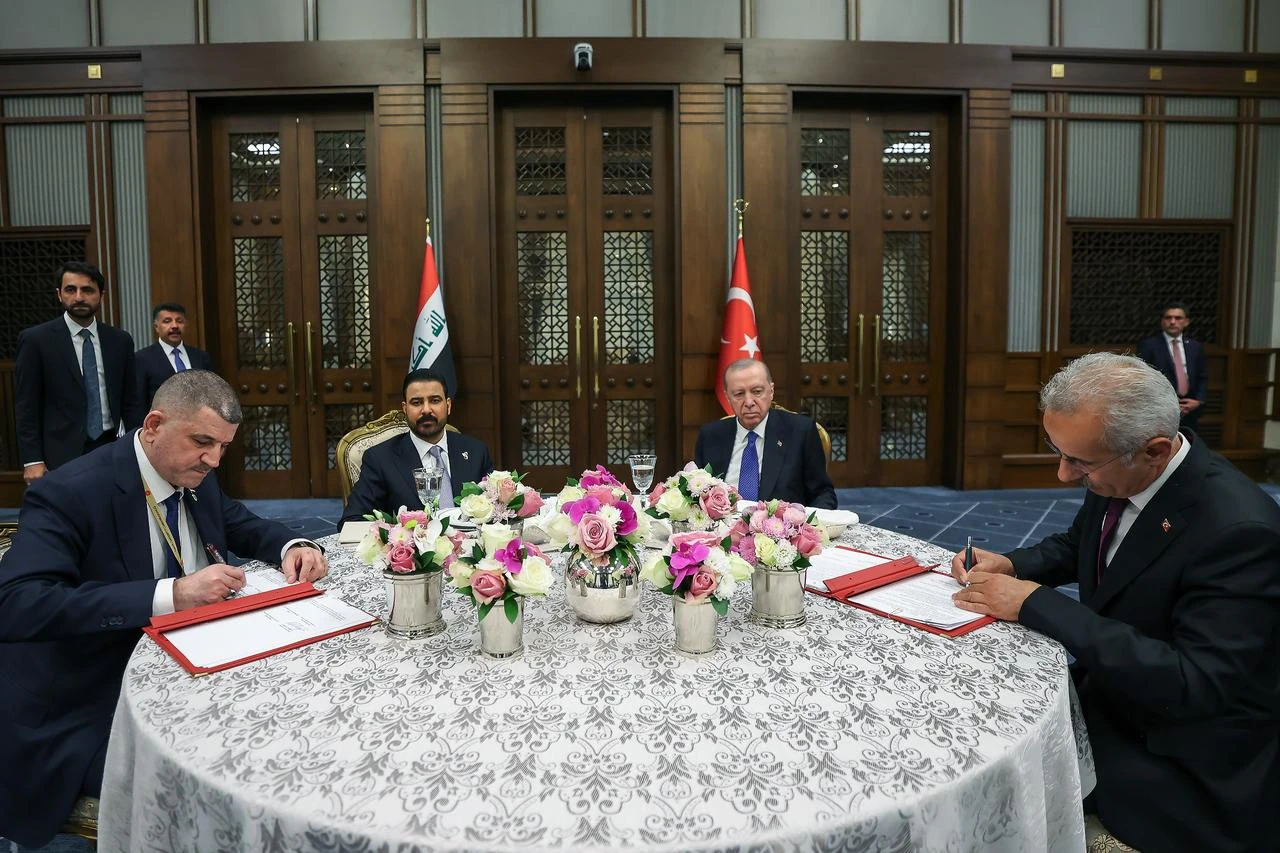
Iraq has proposed completing the Development Road railway project within three years by working around the clock. Discussions are underway between the two sides on the project’s timeline and implementation, Transport Minister Abdulkadir Uraloglu said Tuesday.
“The Iraqi prime minister asked me, ‘If we work 24 hours, can we finish it in three years?’ I told him, ‘Let’s start. Once we start, we will discuss that as well,’” Uraloglu told local broadcaster NTV during a live interview.
In normal conditions, the project would likely take four to five years to complete, Uraloglu said, adding that the timeline should not exceed five years.
Border route settled, rail work moves ahead
The project, which will stretch about 1,200 kilometers (9745.65 miles) to link Iraq with Türkiye and provide a route toward Europe, is estimated to cost between $15 billion and $20 billion, the minister said, recalling that the financing has already been secured.
Railway construction will come before highways because Türkiye already has a road route along parts of the corridor, Uraloglu stressed.
“Although there is currently a road, even if it is not up to the standards we want, our priority is the railway. We envisage the railway carrying more freight, and because it will go to the European Union, it is a mode of transport that can reduce carbon emissions,” he explained.
The Development Road project formally took shape after a March 2023 meeting between President Recep Tayyip Erdogan and the Iraqi prime minister. Türkiye, Iraq, Qatar and the United Arab Emirates later signed a quadrilateral memorandum of understanding on the project in April 2024.
More recently, Türkiye and Iraq signed five agreements during Iraqi Prime Minister Ali al-Zaidi’s visit to Ankara on July 28, including two directly related to the Development Road.
One covers railway and road transportation through the Fishabur-Ovakoy border crossing, while another establishes a framework for developing transportation infrastructure in Iraq in exchange for natural resources.
Iraq’s fieldwork on the project has reached its final stage, Uraloglu confirmed, following delays linked to regional conflicts, elections and the lengthy formation of Iraq’s government.
With the border route now settled, he said the project’s design process is 100% complete, while a Turkish technical delegation is in Baghdad to work on the next stage of the project.
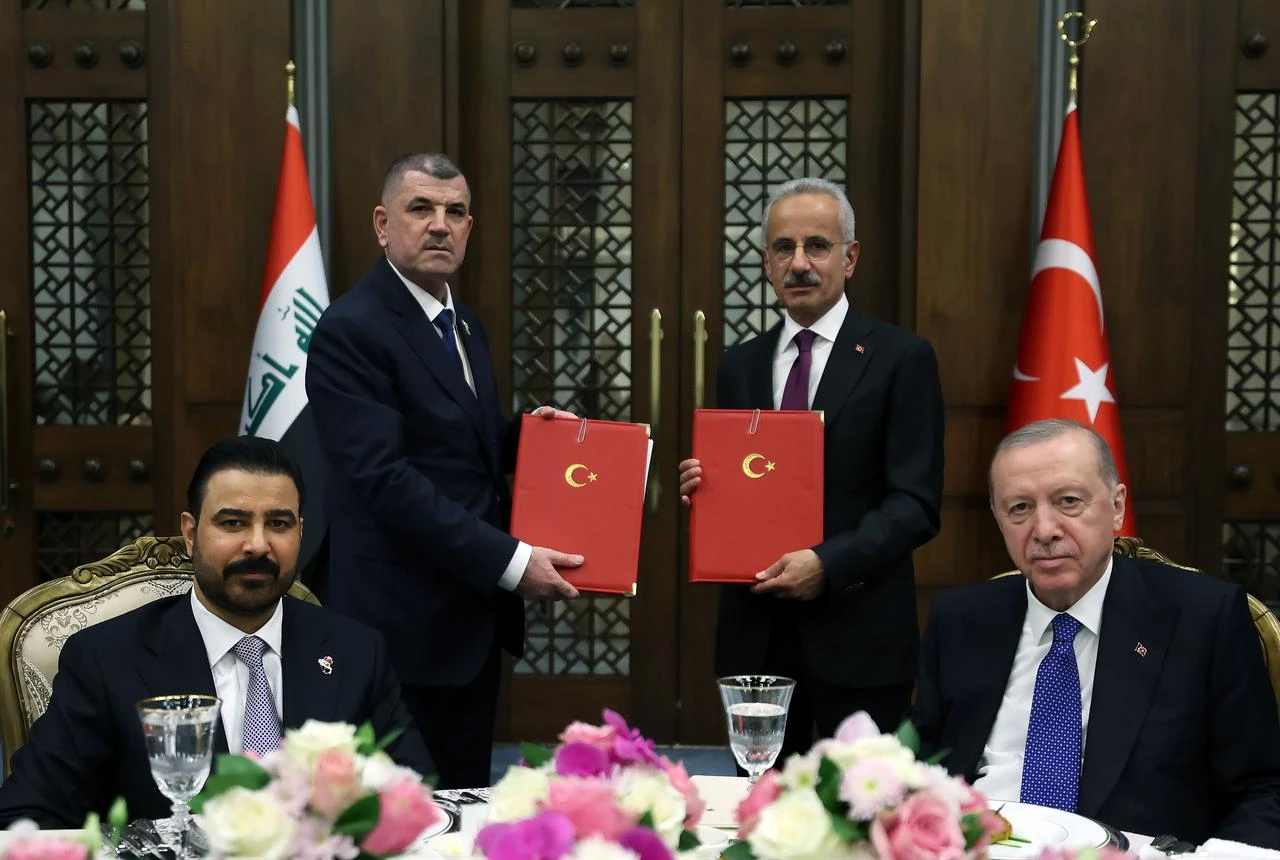

Turkish President Recep Tayyip Erdogan (R) and Iraqi Prime Minister Ali al-Zaydi (L) attend signing ceremony at the Presidential Complex in Ankara, Türkiye, July 28, 2026. ( TUR Presidency /Murat Cetinmuhurdar – Anadolu Agency )
Oil-backed financing, $55B economic boost
Detailing the other agreement, which focuses on financing transportation infrastructure on the Iraqi side through oil and other natural resources, Uraloglu said a fund would be established and regularly supplied with enough revenue to cover construction costs.
“The payments for the work carried out will then be made to the contractors from that fund,” Uraloglu said, noting that Turkish contractors would carry out the construction work in exchange for oil.
He emphasized that Türkiye is not currently seeking an alternative financing source from Iraq.
Türkiye will also need to construct nearly 500 kilometers of railway on its side of the corridor, the minister indicated, pointing out that the first major missing section is between Ovakoy and Nusaybin, while additional work is needed to connect the route to Gaziantep and along existing railway corridors toward Afyon and Eskisehir.
Uraloglu said Ankara has already included the required investments in its investment program and completed the relevant project work, while the European Union has indicated that it would support the country’s infrastructure investments.
According to the ministry’s estimates, the Development Road could generate around 69,000 jobs annually and contribute approximately $55 billion to Türkiye’s economy over 10 years. Türkiye would initially need to spend about $8 billion-$10 billion on its side of the project.
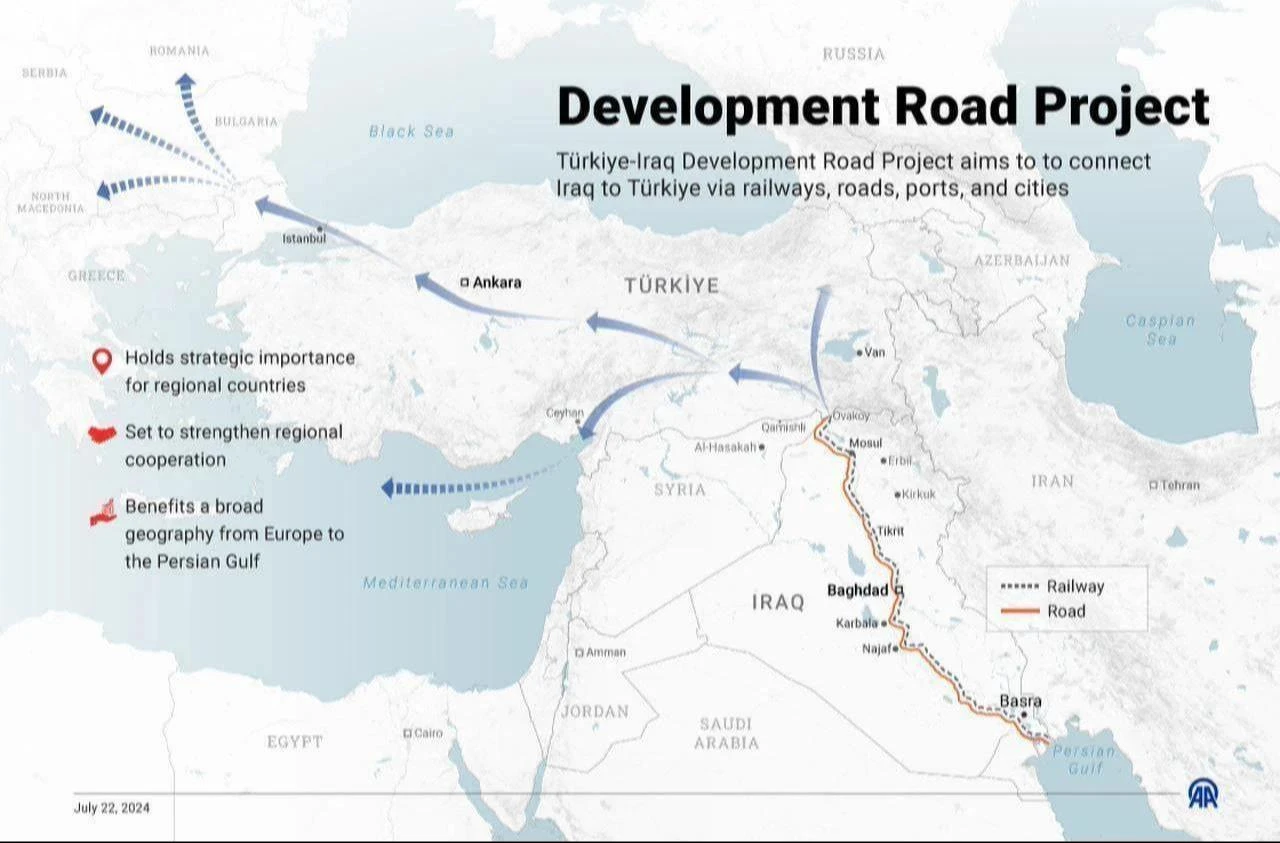
The infographic shows the planned Development Road corridor linking Iraq’s Basra region to Türkiye and onward to Europe via road and rail networks. (AA Graphic)
Oct. 14 tender set for Yavuz Sultan Selim Bridge rail link
Uraloglu also highlighted the Development Road’s potential as an alternative trade route amid disruptions around the Strait of Hormuz. About 22% of global energy supplies pass through the strait, according to the minister.
“If we had completed the Development Road today, the Strait of Hormuz would not have been so much on the world’s agenda,” Uraloglu said, arguing that alternative routes are needed even in normal times as global trade volumes continue to grow.
“When we implement the Development Road, the burden on Hormuz will decrease. At least, there will be an alternative route,” he added.
A key challenge for the corridor is limited freight capacity across Istanbul. Marmaray currently handles a maximum of four freight trains a day, compared with around 280-300 passenger trains, which carry roughly 600,000-700,000 people daily.
Türkiye plans to ease the bottleneck with a new double-track railway crossing the Yavuz Sultan Selim Bridge. The 122-kilometer line will run from Gebze through Sabiha Gokcen Airport, Yavuz Sultan Selim Bridge and Istanbul Airport to Catalca, with the tender scheduled for Oct. 14, the minister announced.
The line will serve the Development Road as well as the Middle Corridor and modern Hejaz Railway, linking several of Türkiye’s major international rail routes.

August 11, 2026 02:41 PM GMT+03:00