

Trump Playbook Tested by Hard-Right Outsider in Colombia Presidential Race
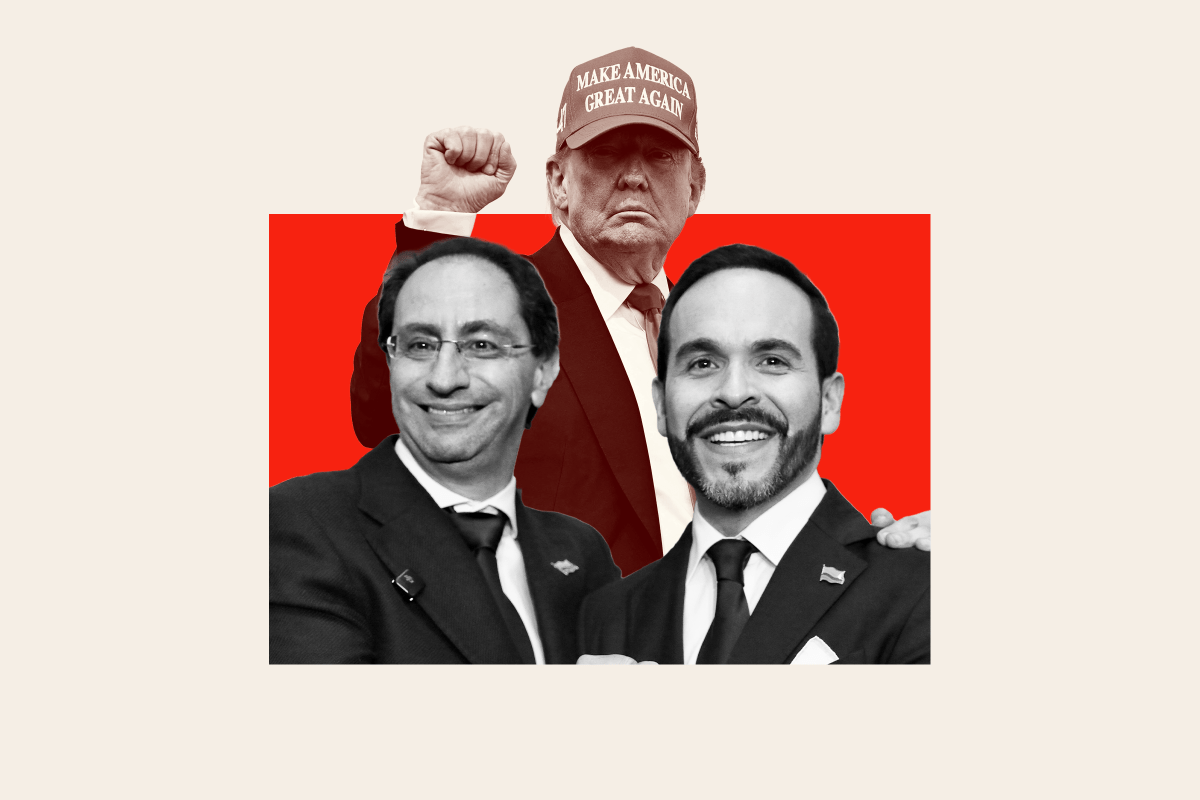
Four years after Gustavo Petro became Colombia’s first left-wing president, voters are preparing to decide whether to continue his political project or hand power to a rising hard-right challenger.
Leading the race are Ivan Cepeda, Petro’s chosen successor, and Abelardo De La Espriella, a lawyer and political outsider who has surged from the margins of Colombian politics to become the country’s most prominent right-wing candidate.
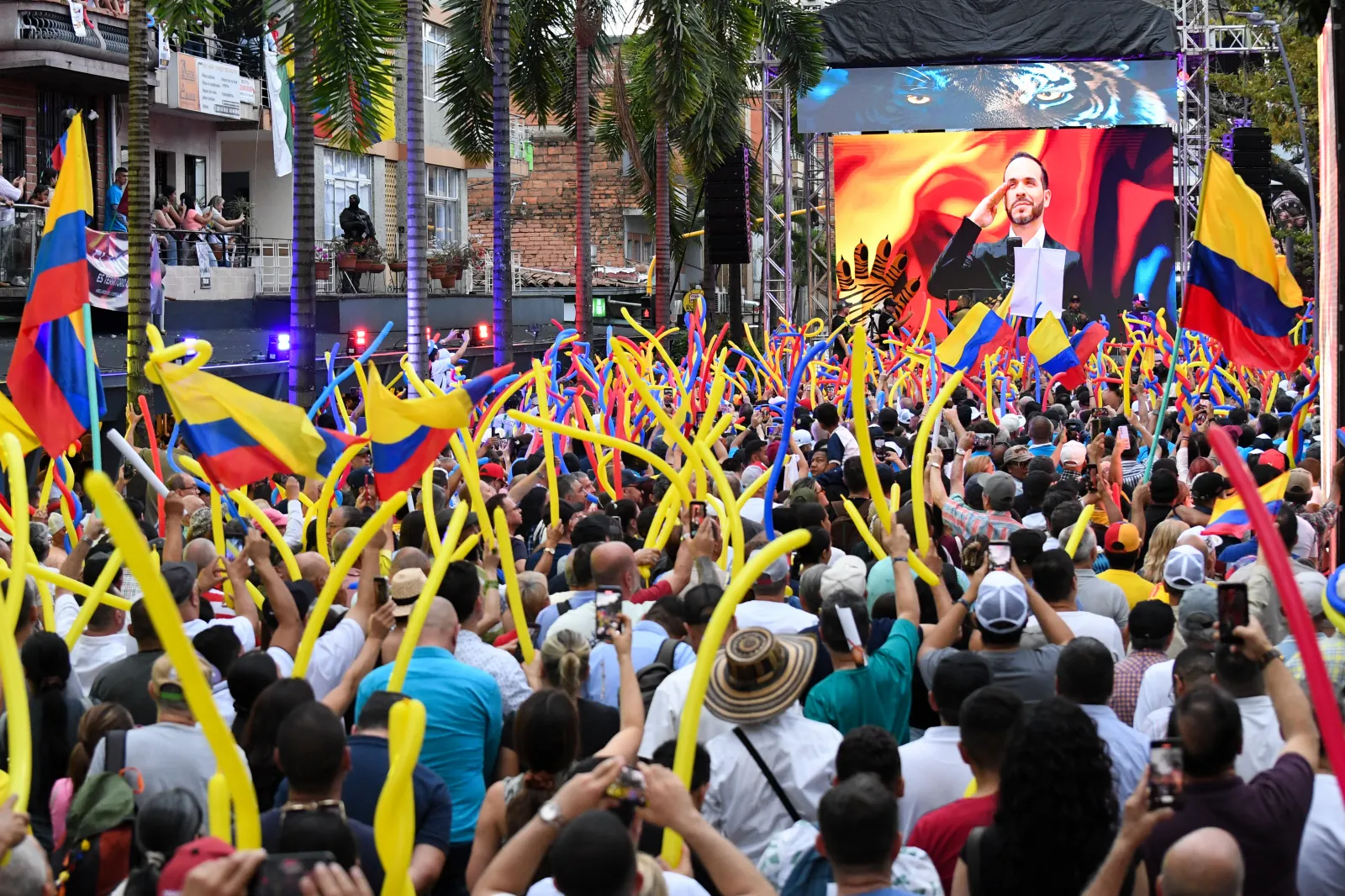
His campaign has followed a formula familiar across the Americas: anti-establishment rhetoric, relentless social media engagement and a promise to restore security while defeating the left. Nicknamed “The Tiger,” he has embraced a style similar to U.S. President Donald Trump and other right-wing populists like Javier Milei, Jair Bolsonaro and Nayib Bukele.
Colombia Heads to the Polls Deeply Divided
Colombia enters Sunday’s election deeply polarized. Petro leaves office with approval ratings that reflect a country split almost evenly between supporters and opponents.
“There is fatigue with the traditional left-right divide,” Gimena Sanchez, director of the Washington Office on Latin America’s Andes program, told Newsweek. “People are disillusioned with both and just want something different.”
That frustration has created fertile ground for De La Espriella, whose campaign has focused less on detailed policy proposals and more on defeating Petro’s political movement. His platform includes smaller government, expanded prisons, a tougher security strategy modeled on El Salvador’s Nayib Bukele and strong nationalist rhetoric.
“De La Espriella is a right-wing populist who sensed and is taking advantage of the widespread anti-establishment sentiment in Colombia,” said Michael Shifter, a senior fellow at the Inter-American Dialogue. “His campaign centers on emotional appeals and is light on policy details.”
His main opponent is Ivan Cepeda, a longtime left-wing senator and Petro’s preferred successor, who has led most polls and is expected to reach a runoff. De La Espriella is also battling Paloma Valencia, the establishment conservative candidate backed by former president Alvaro Uribe.
How Colombia’s Most Famous Criminal Defense Lawyer Became a Presidential Front-Runner
While Valencia entered the race with strong institutional backing, De La Espriella has turned his lack of political experience into a selling point. Polls suggest the strategy is working.
In March 2025, De La Espriella polled at just 1.1 percent. By November, he had climbed to 14 percent. By January, surveys showed him tied with Cepeda near 27 percent. In the final week of the campaign, he reached roughly 30 percent, behind Cepeda at 37 percent.
“We must not forget that the number one concern for most Colombians is security,” former Colombian Foreign Affairs Minister Julio Paredes told Newsweek. “We are facing a framework of narco-terrorism.”
Valencia, once considered the leading conservative candidate, has steadily lost support. Polls now point toward a runoff between Cepeda and De La Espriella.
Some runoff polling shows Cepeda leading with about 52 percent support against De La Espriella’s 45 percent. Other survey averages show a nearly tied race, highlighting how unpredictable the election has become.
Even if De La Espriella loses, analysts say the political forces behind his rise are unlikely to disappear. He has said he will leave politics if defeated. But observers believe his success has already opened space for a new kind of hard-right, anti-establishment politics in Colombia.
Shifter said the populist politics that grew under Petro could continue under a right-wing banner.
“Whoever wins the second round,” he said, “the populism that began with Gustavo Petro four years ago will continue — this time from the right.”
The Outsider’s Gambit
De La Espriella is a corporate lawyer who has engineered one of the fastest political ascents in Colombian history. Like Javier Milei in Argentina and Nayib Bukele in El Salvador, he has positioned himself as an anti-establishment insurgent. Calling himself “the Tiger,” he has built a campaign around a promise of “total war” against what he calls “communism” — a label applied broadly to Petro’s government and moderate parties.
“His campaign is built more around emotion than detailed policy proposals. Like other right-wing populists in the region,” Shifter said.
But De La Espriella’s legal career has also attracted controversy. While he represented celebrities and high-profile public figures, he also served as counsel to some of Colombia’s most notorious criminals and paramilitary leaders. Colombia’s Truth Commission found that paramilitary groups were responsible for more than 205,000 deaths.
De La Espriella also represented Alex Saab, a Colombian businessman accused by U.S. prosecutors of money laundering for Venezuela’s Nicolás Maduro. In 2018, Saab’s arrest in Colombia was thwarted after an attorney in De La Espriella’s office and an assistant to Saab received information about the imminent arrest of the businessman and his family members. De La Espriella admitted to a Colombian disciplinary tribunal that he ordered the recording of a police officer who had frustrated his client’s capture.
According to journalist Gerardo Reyes of Univision, De La Espriella benefited from transfers of more than $370,000 from Saab’s companies.
De La Espriella has rejected those criticisms, arguing that a lawyer’s job is to provide legal representation, not to endorse a client’s actions.
Record Cocaine Production Drove a U.S.-Colombia Breaking Point
For decades, Colombia was Washington’s closest partner in South America, largely because of security cooperation under Plan Colombia. But former U.S. Ambassador Kevin Whitaker said that relationship had been weakening well before the drug numbers hit their peak.
“Democrats and Republicans long considered Colombia one of our closest allies in the region,” Whitaker said. “After the 2016 peace accord, this began to erode.”
Under Petro, coca cultivation in Colombia climbed to 253,000 hectares in 2023, a 10 percent increase from the prior year, while potential cocaine production surged 53 percent to 2,664 metric tons — the largest recorded increase since the United Nations began monitoring production in 2001. Colombia alone accounted for roughly 67 percent of the world’s total coca cultivation.
Washington’s response was severe. In September 2025, the Trump administration formally stripped Colombia of its drug certification for the first time in roughly 30 years, blaming Petro’s government for presiding over a record cocaine boom and failing to uphold international counternarcotics commitments. Colombia’s 2023 target to eradicate 10,000 hectares of coca fell short, with only 5,000 hectares eradicated by year’s end.

U.S. Treasury Secretary Scott Bessent said cocaine production in Colombia had “exploded to the highest rate in decades, flooding the United States and poisoning Americans” since Petro came to power. The Treasury Department subsequently sanctioned Petro personally, an extraordinary step against a sitting head of state.
A Conservative Win Could Quickly Rebuild Ties With Washington
Both De La Espriella and Valencia have promised to rebuild ties with Washington. Both support a tougher security strategy and a new version of Plan Colombia focused on organized crime and border security.
“Colombia is typically a rock-solid U.S. partner,” said Benjamin Gedan, senior fellow and director of the Latin America Program at The Stimson Center. “A conservative victory would quickly repair this strategic relationship.”
Whitaker said implementation problems with the peace deal between the government and the FARC guerrilla, combined with political divisions inside Colombia, damaged bipartisan support in Washington. Relations worsened further under Petro, as the two governments clashed over drug policy, immigration, Israel and Venezuela. The United States reduced economic assistance and tensions grew over counternarcotics cooperation.
But critics warn that a hard-right security strategy could carry major risks. Sanchez from WOLA pointed to Colombia’s “false positives” scandal, in which thousands of civilians were killed by the military and falsely presented as guerrilla fighters during earlier security campaigns.
“A hardline security approach is very problematic. It’s been done in the past and resulted in many human rights violations, and just worsened violence and conflict. Such an approach would not work to end narco-trafficking and illicit economies because those are driven by the extreme inequality and lack of opportunities many people face in the country,” Sanchez said.
She argued that mass incarceration and military crackdowns would not solve the deeper problems driving violence and drug trafficking in rural areas.
“The government has not been able to offer huge parts of the country basic services and protection,” Sanchez said. “That is why illicit economies continue to grow.”
Sandra Borda, a Colombian foreign policy analyst and former government adviser, said Trump’s approach to the region is driven by personal and ideological preferences.
“It is very clear which are the leaders Trump likes and which he doesn’t — who he wants to win and those who wants him not to win,” Borda said. “Things happen a lot because of ideological political affiliation to the United States.”
Former Colombian Foreign Affairs Minister Julio Paredes argued that both Colombian and U.S. officials have allowed politics and personal disputes to shape foreign policy decisions.
“You cannot manage foreign policy based on the outbursts of officials or presidents,” he told Newsweek.
Venezuela and the 1,400-Mile Border Neither Country Can Ignore
Colombia’s relationship with Venezuela will be one of the most consequential foreign policy challenges facing the next president. The two countries share a nearly 1,400-mile border that has become a major hub for armed groups, drug trafficking and migration. The ELN guerrilla group now operates heavily on both sides of the frontier.
Sunday’s result will shape how closely Colombia aligns with the Trump administration’s approach toward Venezuela. But geography ultimately constrains any government’s options, according to Julio Paredes, a former Colombian foreign service official.
“We cannot fight these groups alone, especially the ELN,” Paredes said. “At some point, Colombia will have to work with the Venezuelan government.”
Yet the calculus has shifted in a more fundamental way. Borda said Colombia’s relationship with Venezuela is now entirely dependent on Washington’s own policy toward Caracas.
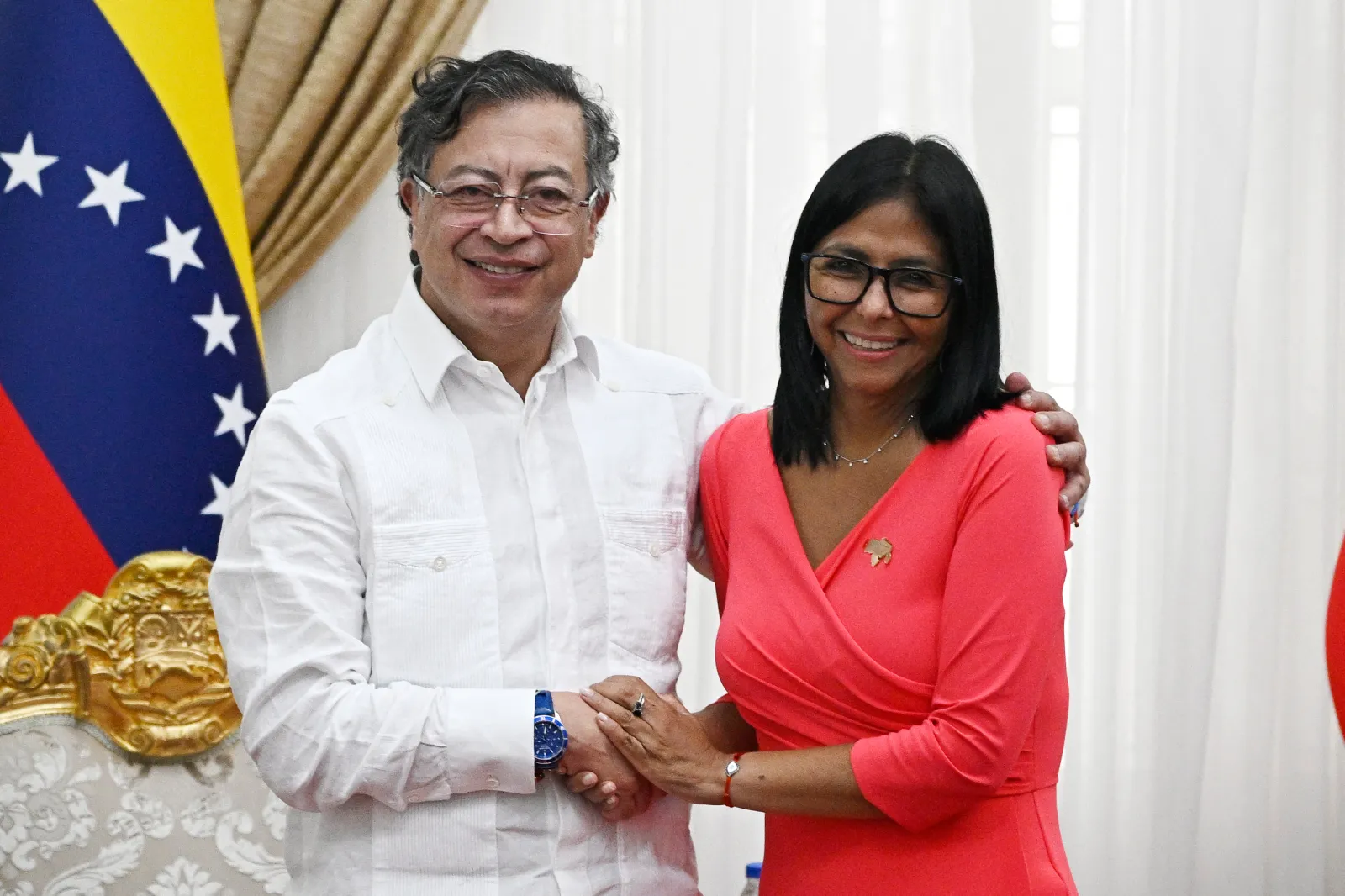
“Unlike what happened in the past, now the relationship with Venezuela is not partial, but completely mediated by the relationship with the United States,” she said. “Understanding with Venezuela will be as easy or as uncomfortable depending on how happy the United States is with the performance that the government is doing in Venezuela now.”
That dynamic may leave Colombia with limited room to maneuver regardless of who wins. Borda said the country may need to reduce its dependence on the United States, even as two of the leading candidates are ideologically aligned with Washington.
“The United States is no longer the same reliable partner it was during much of the 20th century,” she said. “Colombia’s foreign policy will probably have to diversify more.”