

Trump ends Haiti TPS, putting some NC immigrants at risk of deportation
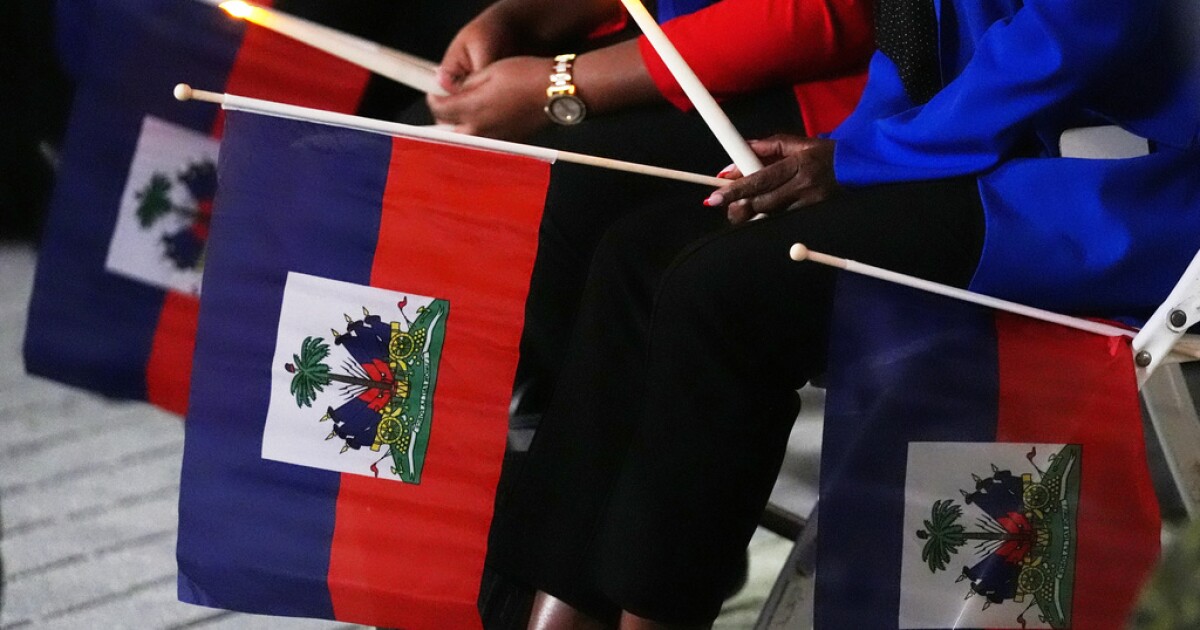
Many belonging to the Triangle’s Haitian community are facing the devastating prospect of returning to their crisis-stricken country, the poorest in the Western Hemisphere.
The Department of Homeland Security ended Temporary Protected Status for around 330,000 Haitians in the U.S., as well as Syrians and Yemenis, totaling to hundreds of thousands of immigrants who’ve lost legal status.
This means the loss of legal work permits and the risk of deportation for many in North Carolina’s Haitian population, which is estimated at around 13,000.
While the exact number of Haitian TPS holders in North Carolina isn’t available, North Carolina Central University biology professor Ricardo M. Richardson said nearly everyone in the local community knows at least one Haitian with TPS.
Richardson, a native of Haiti and a member of the local organization Haitians of the Triangle, said the news is devastating for many of his friends and community members, who fear being deported.
“It’s a domino effect — a lot of people are suffering,” Richardson told WUNC News. “We are suffering because we cannot see our friends (with TPS). They are suffering because they cannot socialize, they cannot work, they cannot send anything to their families who are already suffering in Haiti.”
TPS allows recipients to work legally in the U.S., providing a lifeline to their families in poor countries abroad like Haiti who rely economically on remittances.
Haiti is one of more than a dozen countries Trump has targeted to strip TPS for its citizens, along with Honduras and El Salvador, which has impacted the local Latino immigrant community.
Haitians who lost their status have stopped showing up to soccer games and other local community events, Richardson said.
“They are being careful, because no one wants to be deported,” he said. “You have nothing to go back home to. The gangs took over, they took your house, everything.”
Much of the Caribbean island is impacted by widespread gang violence, lack of rule of law, and economic instability following the 2021 assassination of its previous president Jovenel Moise.
The majority of its capital, Port-au-Prince, is controlled by deadly gangs who have carried out massacres.
This news comes after the Supreme Court ruled in June that the Trump Administration could move forward with ending TPS for Haitian and Syrian recipients, NPR reported.
The National TPS Alliance, which has sued the Trump Administration to extend TPS protections, calls this one of the “largest mass de-documentations in U.S. history.”
“The ruling marks a devastating setback for TPS holders and their families, many of whom have lived, worked, raised children, purchased homes, and contributed to their communities in the United States for years or even decades,” the National TPS Alliance said in a statement.
The Supreme Court ruled that federal courts cannot review whether the Administration complied with statutory requirements when terminating TPS designations for Haiti and Syria. While the Court acknowledged that constitutional claims may still be subject to judicial review, it concluded there was insufficient evidence at this stage to establish that Haiti’s TPS termination was motivated by racial discrimination.
Haitians were originally granted protections in 2010 under then-President Barack Obama following the devastating earthquake that rocked the nation.
The earthquake left an estimated 220,000 dead and 1.5 million people displaced, causing instability ever since.