

They Say Brazil Is Finished. So, Why Can’t Anyone Move On?
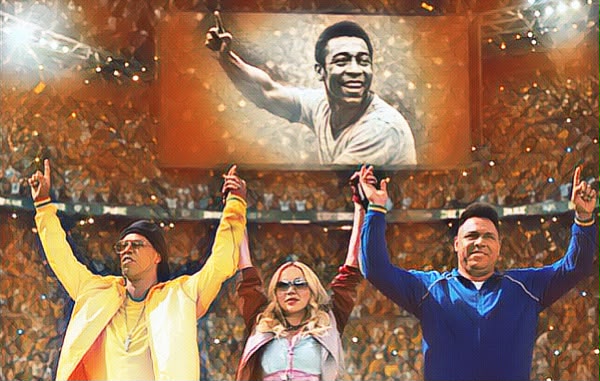
There is a phrase often attributed to Freud, suggesting that when we talk about someone, we often end up learning more about ourselves than about that person. The attribution is questionable, but the idea remains irresistible when applied to football, especially in a World Cup in which Brazil went out early, came nowhere near the final, and still kept showing up in the taunts, comparisons, and even in the spectacle’s collective imagination.
Everyone seems to have something to say about Brazil. The Japanese had their provocations, Mbappé had his comments, and Argentine supporters have been singing about us for years. At the 2026 World Cup, a Scottish journalist went even further and practically pronounced Brazilian football dead. Maybe he has a point, because Brazil has not won a World Cup since 2002. That is 24 years, almost a quarter of a century. At this tournament, we were eliminated in the round of 16; we no longer frighten opponents simply by walking onto the pitch in yellow, and the sixth star has gone from something almost expected to an increasingly distant promise.
Every Brazilian elimination seems to produce a new obituary. Brazil is finished, Brazil lives in the past, Brazil has become more of a brand than a football power, Jogo Bonito is nostalgia, Pelé belongs to another century, and Ronaldo and Ronaldinho represent a generation that never truly returned. Some of that criticism is fair. Brazil has spent years giving the world plenty of reasons to ask what happened to our football.
But there is a curious contradiction in all of this: for something supposedly dead, Brazil occupies an extraordinary amount of space in everyone else’s imagination.
That is where Argentina becomes particularly interesting, though it is hardly the only example. Argentine supporters keep singing about Brazil, taunting Brazil, comparing Messi and Maradona to Pelé, recalling our defeats, and using the Seleção as a measure of their own greatness. And they have every right to celebrate their recent superiority. Brazil has given them plenty of ammunition.
But a rival is not just any opponent. A rival is the one whose defeat makes your victory feel bigger, the one you need to surpass to confirm who you believe yourself to be. And, apparently, Brazil still serves that purpose.
The 2026 World Cup final offered an almost perfect image of that contradiction. Brazil had been eliminated two weeks earlier, Argentina and Spain were playing for the title, and, from a sporting standpoint, there was no reason for Brazil to matter anymore. And yet Pelé appeared on the giant screen, while Ronaldo and Ronaldinho became part of one of the biggest moments of the global spectacle.
For a few minutes, during a World Cup final, Brazil was not even playing; football’s global imagination was speaking Portuguese again. Which brings us to the inevitably mischievous question: where was Maradona? Where were the great icons of the other football powers occupying that same symbolic space?
That is exactly where all these declarations about the “end” of Brazil become interesting, because perhaps they are confusing two completely different things. Brazil may no longer be the best national team in the world; obviously, it is not, and we have not been for decades. Argentina has had far stronger recent sporting arguments, France built an extraordinary generation, Spain returned to the top, and other countries modernized, developed players, and caught up with or surpassed a Brazil that too often seems trapped somewhere between nostalgia and improvisation.
But there is a difference between being the best right now and occupying the imagination of an entire sport.
Pelé is not merely a former Brazilian footballer. Ronaldo and Ronaldinho are not simply retired champions. The yellow shirt, attacking football, carnival, music, and the romanticized idea of jogo bonito created an iconography that stopped belonging only to Brazil a long time ago and became part of football itself.
Maybe that is why Japan can provoke Brazil, why Mbappé can invoke Brazil, why a Scottish journalist can declare that Brazil is finished, and why Argentine supporters can sing about us even when Argentina is the team winning. To say Brazil has fallen, you first have to acknowledge how high it once stood. And to celebrate having surpassed Brazil, you still have to use Brazil as the measure.
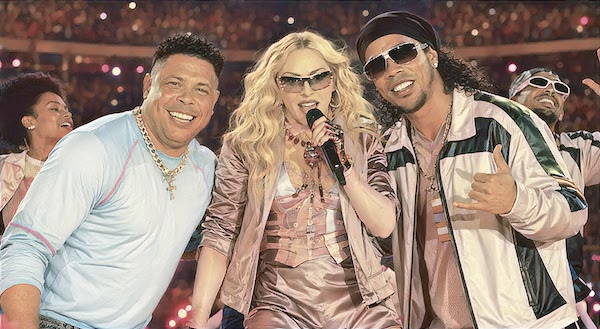
There is an irony that is hard to ignore: even when Brazil loses, it remains inside everyone else’s conversation, in the taunts, comparisons, obituaries, and celebrations. Football keeps announcing that Brazil is over while repeatedly returning to Brazil to explain what greatness once looked like.
And before anyone points out the contradiction, yes, the rule applies to me too. If I am writing about how much everyone talks about Brazil, I am probably revealing something about us and about myself. Rivalries work like that, and so does nostalgia. No one looks so intensely at the other without, in some way, finding their own reflection. But perhaps that reflection, by itself, already tells us something.
We are no longer the best. We are the reference point. And, sorry about that, sometimes that lasts much longer than a World Cup.
Descubra mais sobre
Assine para receber nossas notícias mais recentes por e-mail.