

The world is entering the era of major regions
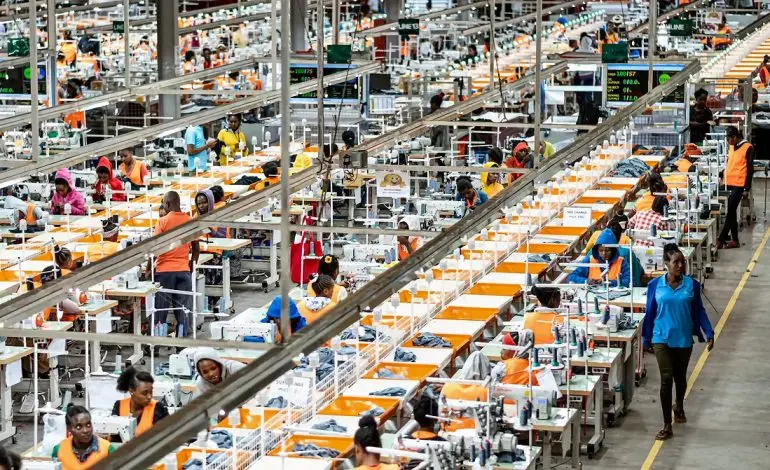
Jean-Louis Guigou, a geographer, futurologist and founder of the Institute for Economic Foresight in the Mediterranean World (IPEMED), has published Le monde en trois verticales. Contrary to analyses predicting a return to chaos or the end of globalisation, he puts forward a different interpretation: the world is currently reorganising itself around major regional blocs. In his view, Europe’s future now lies in a shared destiny with the Mediterranean and Africa.
Why publish this book now?
For over twenty years, I have been working on relations between Europe, the Mediterranean and Africa. I have observed the transformations brought about by globalisation, the difficulties faced by countries in the Global South and the new dynamics that are emerging.
We are at a pivotal moment. Many things are being called into question, but we must not focus solely on the crises. We must also look at the underlying trends. My work consists precisely of identifying these profound shifts that are shaping the future.
You claim that globalisation is drawing to a close. What do you mean by that?
Globalisation in the 1980s was based on a simple logic: produce anywhere, at the lowest possible cost, by exploiting wage differentials and spreading value chains across the globe. This model is coming to an end.
There is much talk of trade wars, geopolitical tensions and fragmentation. But behind these phenomena, I observe a far more fundamental trend: the regionalisation of the world.
North America has organised itself around a vast economic area comprising the United States, Canada and Mexico. Asia is gradually building a bloc stretching from China to Japan, via ASEAN and Australia. Europe must now envisage its future within a framework that extends beyond its own borders.
Is this what you refer to as the ‘three verticals’?
Yes. I’m observing the emergence of three major blocs.
The first bloc links North, Central and South America. The second brings together Europe, the Mediterranean and Africa. The third stretches from China through South-East Asia and Japan, all the way to Australia.
These blocs are not built solely on geographical criteria. They are driven by economic, industrial and strategic considerations. Businesses are seeking greater proximity, stability and security. States are seeking to reduce their excessive dependencies. All of this is fostering the emergence of large, coherent regional blocs.
Why do you place such a central focus on the Europe-Mediterranean-Africa bloc?
Because the interests of the two continents are deeply intertwined. If Europe remains isolated, it will age and gradually become marginalised. If Africa remains isolated, it will continue to be subject to an economy based on the export of raw materials and the import of processed goods. We must break free from this long-standing pattern.
For a long time, we assumed that people from the Global South had to travel northwards to access capital. I now believe that capital, technology and production capacity must flow more towards the Global South.
Africa lacks neither resources nor energy, nor a young population. What it lacks is sufficient industrialisation and balanced partnerships that enable greater value to be created locally.
The industrialisation of Africa appears to be one of the key themes in your thinking.
Because it is a crucial issue. For decades, Africa has exported its raw materials without adequately processing them. This situation has limited its industrial development and its ability to create skilled jobs.
Today, the landscape is changing. Companies are seeking to bring their production sites closer to their markets. They are looking for greater resilience and security. This shift opens up new prospects for the African continent.
Africa has a rapidly growing domestic market, a young population and considerable potential. However, it must be allowed to develop its own productive capacities.
Has Europe fully grasped this shift?
Not yet. One recurring mistake is attempting to envisage Africa’s future without listening sufficiently to Africans themselves. Yet the priorities are clear: infrastructure, energy, industrialisation and food security.
The African Union has been working on these issues for a long time. Many African economists have put forward sound proposals. Europe would do well to build more on these expectations rather than imposing its own models.
What tools should be used to realise this ambition?
The other major regions of the world have equipped themselves with powerful instruments.
We need to strengthen networks linking businesses, researchers and decision-makers. We need to facilitate investment and capital flows. We need to forge more ambitious economic agreements and develop mechanisms for regular consultation.
Above all, we need a shared vision. There are already a great many institutions in place. What is often lacking is a shared long-term political project.
Are you optimistic about the future of this relationship between Europe and Africa?
Yes, because history shows that major transformations always begin before they become self-evident. When Robert Schuman proposed European integration in the aftermath of the war, few people could have imagined what it would become. Yet this vision eventually prevailed.
I believe we are now at a comparable juncture.
Regionalisation is already underway. Europe, the Mediterranean and Africa have the opportunity to build a shared space of prosperity, stability and development.
The question is no longer whether this development is possible. The real question is whether we will have the political will to support it.
Crédito: Link de origem