

The unforgettable moment Haiti’s World Cup team made history in 1974
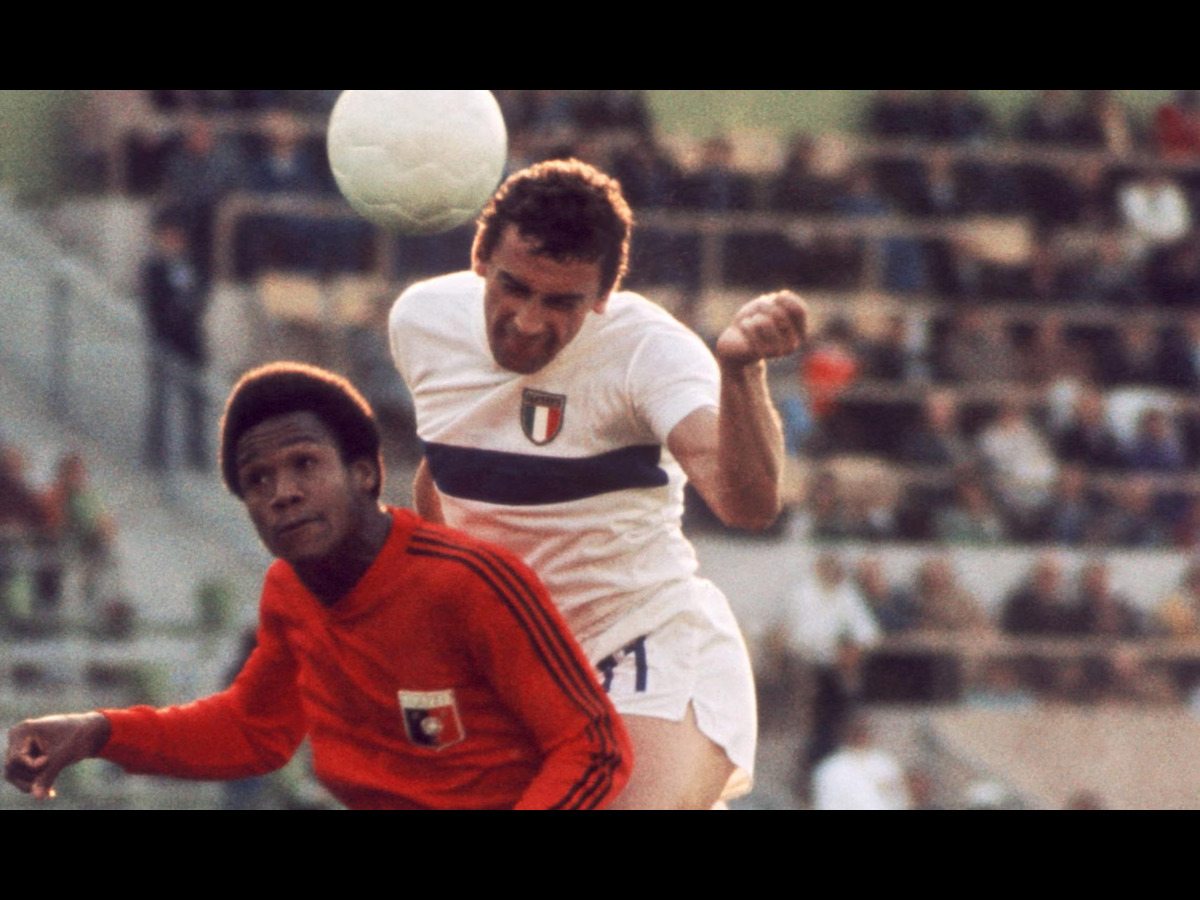
It’s been 52 years since Haiti’s last World Cup appearance, and once again, the national team, Les Grenadiers, are preparing to shine at soccer’s biggest stage.
In 1974, when they first qualified for the World Cup in West Germany, they did so under the guidance of coach and former player Evariste Saint-Louis, but the road to the international stage was not easy.
They had to beat strong opponents during the qualifiers before managing to get to the top, largely due to their amazing performance and can-do spirit.
Qualifying for the 1974 World Cup was big news for the small nation, drawing celebrations throughout the country and uniting everyone around the national team.
Even though the country lost all three matches it played in the 1974 World Cup, it won many new fans during its campaign.
Pitted against Italy, Poland and Argentina, not much was expected from Haiti, but that didn’t deter them from taking the lead against Italy in their opening game through football star Emmanuel Sanon. Even though the game ended in a 3-1 defeat, the Miami Herald reports that the goal against Italy placed both Sanon and the first majority-Black country in the Caribbean to qualify for a World Cup into soccer history — It was the first time Italian keeper Dino Zoff had given up a goal in two years.
Their second game against Argentina also didn’t go as hoped, but the team didn’t disappoint as they played incredibly well, earning praise and admiration from supporters and even the media.
“The passion and fervor of Haitian supporters, who traveled to Germany to cheer for their team, were palpable. The Haitian community felt united, sharing moments of joy and pride,” Haiti Football News writes.
Despite also losing the final group stage match against Poland, their game reflected Haiti’s fighting spirit, as reported by Haiti Football News. Even though Les Grenadiers exited the World Cup at the group stage, they did not do so without stealing the hearts of the football world. They showed the world that they could compete with the biggest nations and make an impact, no matter the outcome.
Today, only 13 players from that historic World Cup team are still alive, and Pierre Bayonne, then a 24-year-old defender on the soccer team, is one of them. Recently, in Little Haiti, he and the other players were honored by Art Beat Miami and members of the Haitian community for putting the country on the map.
“I would have regretted it if I had not come out today,” Bayonne, who lives in Orlando, said, according to the Miami Herald. “I had a great time.”
As Haiti gets ready for Group C matches against Scotland, Brazil and Morocco at this year’s World Cup, Bayonne said he hopes that he and his former teammates will be a source of inspiration for the current team.
“They are more advanced than we were, and so I am anticipating a lot from them,” he said of the team.
Indeed, a lot has changed since Bayonne and his fellow teammates turned heads in 1974. Haiti is no longer governed by the Duvalier family, seen as dictators, but the nation is facing violence and political upheaval, with armed gangs controlling roughly 90% of Port-au-Prince and up to 50% of the Artibonite region, causing a collapse in government authority.
That is why for Brooklyn’s Haitian community, this year’s tournament holds special meaning.
“It is a very moving situation for the Haitian people because of what’s going on in Haiti at this moment,” Joe Dessources said about his native country in an interview with Gothamist. “To have the country qualify for the World Cup, that means a lot to every Haitian, including myself.”
Half a century ago, when the team played in West Germany, Haitians had not established vibrant communities globally, including in West Germany. The reverse is true now, and the team hopes to leverage this to perform better, especially after receiving financial support from FIFA and government assistance.