

The Silent Doctrine of Benin
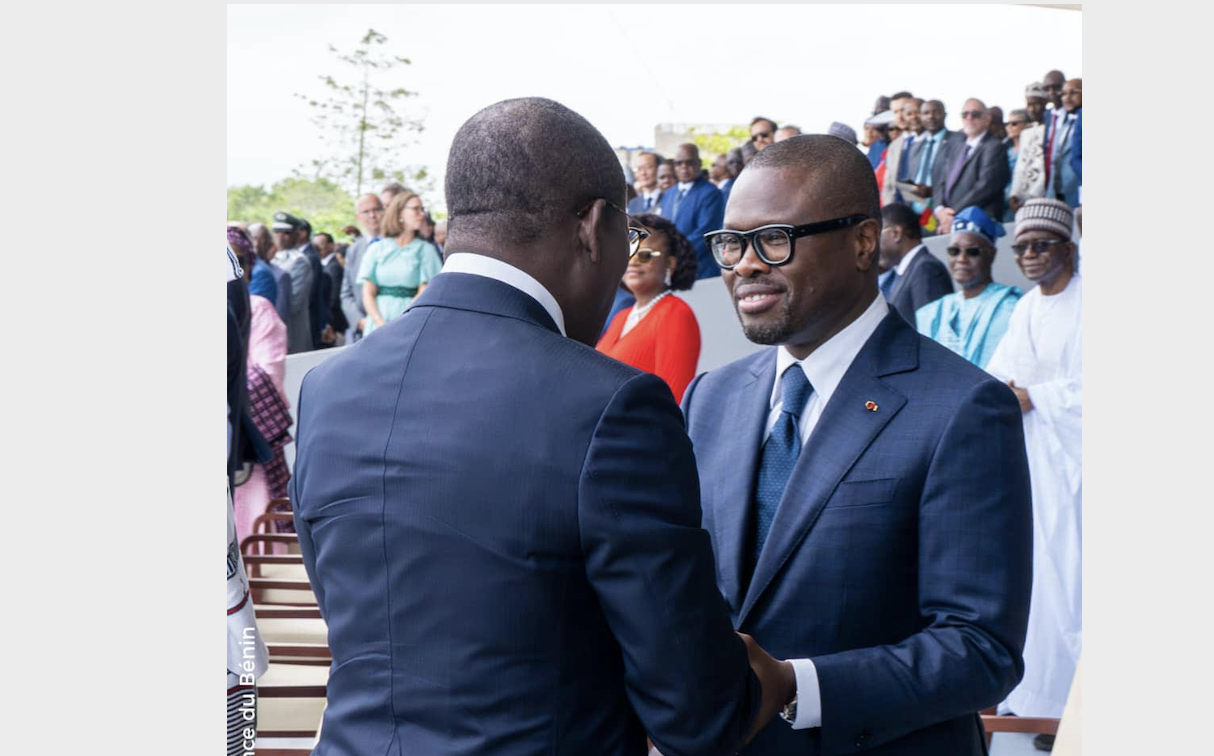
From Transformation to Consolidation
I. THE VERDICT
On April 12, the Republic of Benin delivered an electoral verdict that goes far beyond its borders. By electing Romuald Wadagni to the highest office with 94.27% of the votes cast — a score confirmed on April 16 by the Constitutional Court — the country not only designated a successor to Patrice Talon.
It sent a strategic signal to the rest of the continent.
The context gives this result a particular resonance. On December 7, 2025, just four months before the election, a small group of military personnel briefly took control of the state television, announcing the overthrow of the sitting president. The attempt failed within hours, thanks to the resistance of loyalist forces and the swift intervention of ECOWAS and Nigeria. However, it highlighted the pressure on a country once hailed as one of the most stable democracies in West Africa — a country that had not experienced a coup since 1972.
The election on April 12, held in peace and praised by the observation missions of ECOWAS, the African Union, and many international partners for its smooth conduct, therefore has institutional significance. In a region plagued by a series of coups — Mali, Burkina Faso, Niger, Guinea, Guinea-Bissau — Benin made the opposite choice: that of constitutional transfer of power. In doing so, it outlines a form of implicit doctrine that could be described as governance by trajectory — the deliberate decision to extend a cycle of reforms rather than reset it through force or uncertainty.
| 94.27% of the votes, final results from the Constitutional Court | 63.6% voter turnout, up from 50% in 2021 | 7% projected growth in 2026, the highest in the UEMOA zone |
II. THE TALON DECADE — A TRANSFORMATION IN MOTION
To understand the significance of this election, one must measure the extent of the transformation initiated since 2016. Under the leadership of Patrice Talon, Benin has undergone a tangible and disciplined economic transformation. The growth rate has increased from 3.3% in 2016 to 7.2% in 2021, before stabilizing around 6.5% to 7.5% in the recent period — performances that make the country one of the engines of the UEMOA zone according to the World Bank and the African Development Bank.
This dynamic is based on several structural pillars. The government action program “Benin Revealed” (2016-2021), valued at over 9,000 billion CFA francs, directed massive investments towards transportation infrastructure, urban sanitation, the port of Cotonou, and energy. More emblematic, the Glo-Djigbé Industrial Zone (GDIZ), designed to locally process raw materials — cotton, cashew nuts, soybeans — embodies an unprecedented economic diversification ambition in the region. At the same time, Benin has significantly strengthened its credibility in international financial markets: its first eurobond in history in 2019, a $700 million agreement with the IMF in 2022, a sovereign rating upgrade by Standard & Poor’s to BB- in 2024, and the highest budget transparency score among French-speaking African countries in 2023.
These results have an identified architect: Romuald Wadagni, Minister of Economy and Finance since April 2016.
Any transformation of this magnitude generates its own tensions, and this one is no exception. Institutionally, the reforms undertaken have favored decision-making efficiency, sometimes at the expense of adjustments in the political architecture. The sponsorship system — designed to ensure the representativeness of candidacies and consolidate a clearer party landscape — has led to a tight competition, reflecting a deliberate choice for institutional stabilization. The attempted coup on December 7, 2025, quickly and firmly thwarted thanks to the mobilization of loyalist forces and the united support of ECOWAS, mainly confirmed the strength of Benin’s republican framework against the coupist temptation sweeping the region. It also underscored the importance of sustained attention to security challenges in the northern part of the country and the imperatives of redistribution — two areas that the new president has precisely placed at the heart of his priorities. These signals do not undermine the solidity of the foundation built in ten years; however, they outline the horizons of a necessary deepening.
III. THE HEIR — ASSUMED CONTINUITY, LEGITIMACY TO BUILD
Romuald Wadagni is not an heir by default. Born in 1976 in Lokossa, an internationally trained chartered accountant — he was the youngest partner in the history of Deloitte — he has built, in ten years at the helm of Benin’s finances, a rare profile on the continent: that of a technocrat recognized on the international stage, repeatedly named African Finance Minister of the Year by leading publications such as The Banker and Financial Afrik, and with direct experience in major global financial institutions.
His accession to the Marina does not reflect a desire for experimentation, but an assumed logic of extension. The two majority parties — the Progressive Union for Renewal (UPR) and the Republican Bloc (BR) — designated him as the candidate of continuity as early as August 2025. The legitimacy of this designation was recognized far beyond the majority circle: diverse personalities such as former President Nicéphore Soglo, former President of the Supreme Court Ousmane Batoko, and prominent political figures such as Bruno Amoussou, Adrien Houngbedji, Mathurin Coffi Nago, Idji Kolawolé, and Karim Da Silva supported this candidacy. Executives from various backgrounds, including several members of the Democrats party (a radical opposition party), such as Éric Houndté and members of the Republican Pact, Chabi Yayi, Guy Dossou Mitokpè, as well as early parliamentarians like Michel Sodjinou, Chantal Adjovi, Joël Godonou, Nahum Constant, Do Rêgo Léansou, or Houénou Denise, also rallied to his cause. Unions, organizations, civil society personalities, and representatives of the diaspora completed this gathering, giving the election a depth that goes beyond mere party mechanics.
However, the extent of his victory poses a well-known paradox for political scientists: landslide mandates strengthen authority in the short term, but increase the obligation for long-term results. As comparative political science in the tradition of David Easton reminds us, electoral support is never definitively acquired: it depends on the system’s ability to produce decisions perceived as fair and effective. The stronger the initial support, the higher the collective expectations. For Benin’s partners, the question is no longer one of stability. It is one of depth.
IV. THE CHALLENGES — BEYOND CONTINUITY
Several urgent challenges need to be addressed. The first is security. The northern part of the country has been facing increasing jihadist incursions for several years, in a regional context fragile due to instability in Mali, Burkina Faso, and Niger. Wadagni inherits an expanded responsibility in defense matters: as early as 2023, Patrice Talon entrusted him with the coordination of military and international cooperation issues, allowing him to gain direct mastery of this sensitive dossier.
The second challenge is that of redistribution. While macroeconomic indicators are strong, World Bank projections emphasize that Benin’s growth still holds significant potential for inclusion. Targeted strengthening of the budget system could significantly reduce poverty and better redistribute the fruits of a decade of structural efforts. Wadagni has, in his societal project, made the commitment to place the fight against extreme poverty at the forefront of national priorities — a strong signal of a willingness to make growth not just a performance, but a promise fulfilled for the entire population.
For continuity alone does not guarantee progress. It must renew itself.
V. INTERNATIONAL SIGNIFICANCE
The coming years will be decisive. They will determine whether Benin is capable of transitioning from a phase of accelerated transformation to a moment of controlled balance — where growth is accompanied by social cohesion, where public performance is articulated with democratic vitality, where institutional stability does not equate to political immobility.
Here lies the international significance of this Beninese moment. At a time when governance models are being questioned in many emerging economies, when anti-democratic discourse is gaining ground in several African capitals, Benin stands at the crossroads of two narratives: that of an effective state and that of an open society. Its ability to reconcile the two — to prove that economic rigor can coexist with pluralism of opinion, that continuity can rhyme with renewal — will determine whether its trajectory becomes a reference for the region… or a warning.
With the election of Romuald Wadagni, Benin has not turned the page. It has chosen to continue the sentence — in a regional context that does not forgive stylistic errors. And the world will watch closely how it will be written.
Credit: Source link