

The Saudi Houthi Confrontation and Somaliland as a Southern Flank Partner – HORN REVIEW
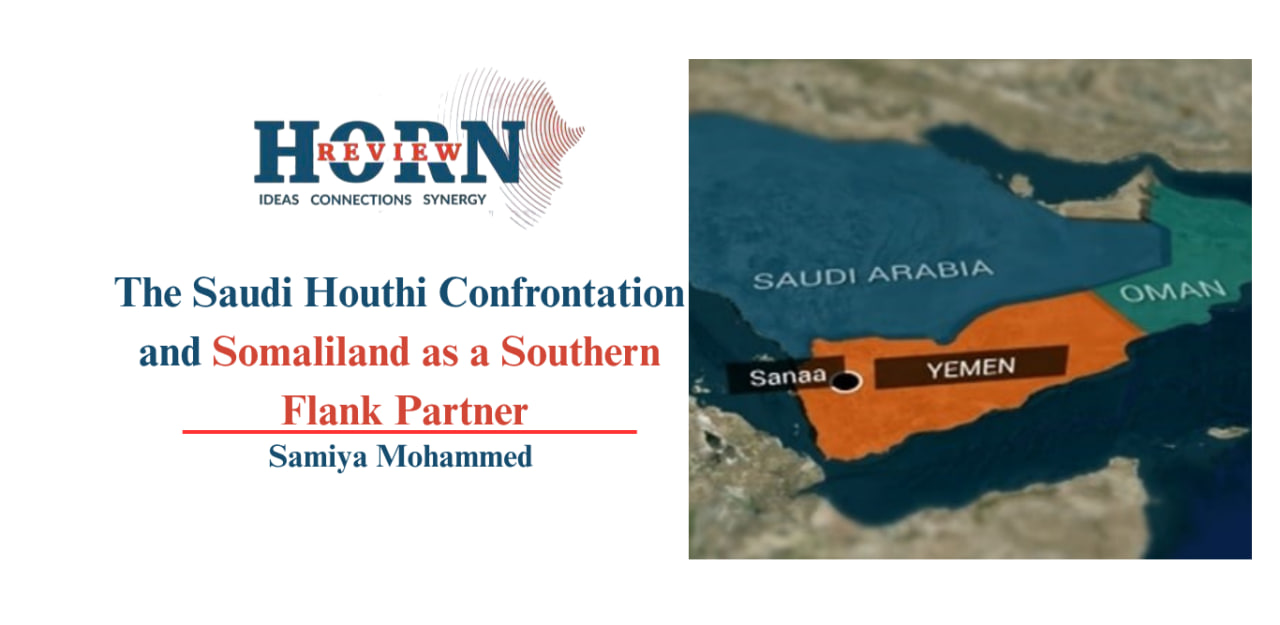
The informal de escalation agreement that has governed Saudi and Houthi relations since 2022 has conclusively collapsed with a sequence of direct military exchanges between Saudi Arabia and the Houthi movement in Yemen that shattered the four year truce presenting the most important upsurge in hostilities since the conflict’s peak years. This development surpasses a resurgence of the Yemeni civil war and it is a direct confrontation within the Iran and Saudi proxy competition carrying immediate objectives and expansive consequences for the Red Sea and critically the Horn of Africa.
The current crisis originated from an act of interdiction by the Saudi backed Yemeni government operating with explicit or implicit Saudi support. The airstrike against Sanaa International Airport’s runway was executed with an objective which is preventing the landing of an Iranian Mahan Air flight transporting a senior Houthi delegation returning from the funeral of Iran’s Supreme Leader Ali Khamenei. Yemen’s Defence Minister Taher al-Aqili had declared that the government would intercept any hostile aircraft violating its airspace showing a definitive red line against unacceptable Iranian logistical and political support for the Houthis through sustained air operations into the Houthi controlled capital. This action is a message that Saudi and its allies would no longer tolerate Iranian operational freedom in Yemen’s airspace.
The Houthi response was predictable and immediate with Yahya Saree the Houthi military spokesman formally declared the end of the deescalation phase and threatened retaliation against what he termed the criminal Saudi enemy. The Iranian aircraft was diverted to Hodeidah airport but the damage inflicted on the Sanaa runway was sufficient to trigger a military responses. Within hours the Houthis launched ballistic missiles and drones targeting Abha International Airport in south western Saudi Arabia. Saudi air defences successfully intercepted the majority of the threats and no casualties were reported. However the attack cannot be overstated and it shows the first claimed Houthi attack on Saudi territory since the informal truce took effect showing a fundamental shift in the conflict from proxy warfare to direct cross border exchanges.
The actions of both parties suggest a preference for escalation rather than a return to full scale war. The strike on the runway was a targeted interdiction and not a sustained bombing campaign. The Houthi retaliation resulted in no casualties and was framed as a proportional response. The Saudi led coalition has not immediately responded with force. This is a balancing act in which both sides are posturing but they are acutely aware of the potential costs of a miscalculation. The Houthi declaration that de-escalation is over is a clear signal of intent however the fact that they have not escalated to targeting Saudi oil infrastructure or commercial shipping suggests a degree of restraint.
The Houthi movement’s operates under severe economic and military pressure compounded by a U.S. terrorist designation and sanctions. However the Houthis have proven adept developing domestic production capabilities for missiles and UAVs and even incorporating Iranian supplied components. Their primary objective remains domestic consolidation and the extraction of economic and political concessions from Riyadh including the payment of public sector salaries and the full reopening of Sanaa airport and Hodeidah port. The current flare up serves as a potent instrument of leverage to force Saudi Arabia back to the negotiating table on favourable terms. For the Houthis it is a tool to secure gains they have struggled to achieve.
This situation naturally leads to a consideration of potential new alliances. The shared interest of Saudi Arabia and Israel in countering Iranian influence and degrading Houthis is undeniable thus both nations view the Houthis as a destabilizing force that threatens Red Sea shipping. Saudi Arabia and Israel share a clear common interest in countering Iranian influence and the Houthi which both view as a destabilizing force endangering Red Sea shipping. While formal diplomatic ties remain absent reports of quiet intelligence coordination and backchannel contacts between the two countries on Iran and its proxies have circulated for years. The question is whether the current crisis could accelerate this convergence into more structured cooperation. Such a prospect remains remote but it is not impossible with an effective campaign to degrade the Houthis would require a systemic and sustained effort including from the southern flank. This is where the geopolitics of the Horn of Africa intersects directly with the Yemen conflict. Saudi Arabia finds itself in a position regarding Somaliland.
Israel’s recognition of Somaliland was not symbolic and was to secure a regional presence from which to monitor Red Sea maritime and potentially conduct operations against the Houthi movement which has threatened Israeli linked shipping and directly targeted Israeli territory with missile strikes. From a purely national security and military perspective Saudi Arabia arguably requires a cooperative relationship with Somaliland more than it needs to maintain its current posture toward the Federal Government of Somalia in Mogadishu. The capacity to coordinate with or operate from Somaliland positioned on the southern approach to the Bab al Mandeb would provide Saudi with immense depth in any sustained confrontation with the Houthis.
However practical political considerations currently outweigh this logic. Saudi Arabia has aligned itself with the Somali government in an effort to preserve Arab consensus and counter the expanding influence of external actors in the region. This alignment has manifested in defence agreements, economic support and a public commitment to Somalia’s territorial integrity in its dispute with Somaliland. Abandoning this position and easing pressure on Somaliland would constitute a political concession straining Saudi’s relationships within the Arab League and potentially legitimising Israeli engagement in the Red Sea. The Arab consensus with a desire to avoid further regional fragmentation dictates that Saudi Arabia maintains its public support for Somalia.
However the current crisis in Yemen could act as a catalyst for recalibration. Should the tit for tat strikes escalate to the point where Saudi Arabia perceives a genuine imperative for alternative means to secure its southern flank and project power against the Houthis its action could shift decisively. A quiet diplomatic re engagement with Somaliland or a willingness to tolerate Israeli operational activity from the territory could come as an option despite its politics. The Houthis have already showed their awareness of this possibility with leader Abdul-Malik al Houthi declaring any Israeli presence in Somaliland a legitimate military target. This pronouncement shows the interconnected nature of the conflict and the extent to which the Horn of Africa has become entangled in regional power. The heightened focus for Somaliland on the Red Sea presents an opportunity. Its geographic position is its most valuable asset and by leveraging its location diplomatically and navigating the interests of Saudi Arabia, Israel and other regional stakeholders. Somaliland can potentially secure greater international recognition and security partnerships regardless of the immediate road of the Saudi and Houthi conflict.
In the end the attack on Sanaa airport and the subsequent Houthi retaliation is a dangerous inflection point in regional security. The immediate truce has shattered and the risk of further tit for tat remains high with potential targets including airports, Red Sea shipping lanes and Saudi border areas. The conflict is fundamentally a resurgence of the Iran and Saudi proxy war with the Houthis functioning as Tehran’s primary lever against the Kingdom. While a return to full scale war serves neither party’s interests the current posturing is fraught with the potential for miscalculation. Saudi seeks to contain the Houthis without becoming ensnared in a costly and protracted conflict. The prospect of a Saudi-Israeli alignment against the Houthis while remote remains a possibility that would reshape the order of the Red Sea. For now it dictates that Saudi Arabia will not abandon its position on Somalia but the events have altered the strategy. Should the crisis deepen Saudi may be compelled to re evaluate its priorities and quietly ease its opposition to Somaliland’s aspirations recognising the influence across the Red Sea which it requires reliable partners on every available flank.
By Samiya Mohammed, Researcher, Horn Review