

The Saudi-Emirati Rivalry Is Fueling a Series of Wars
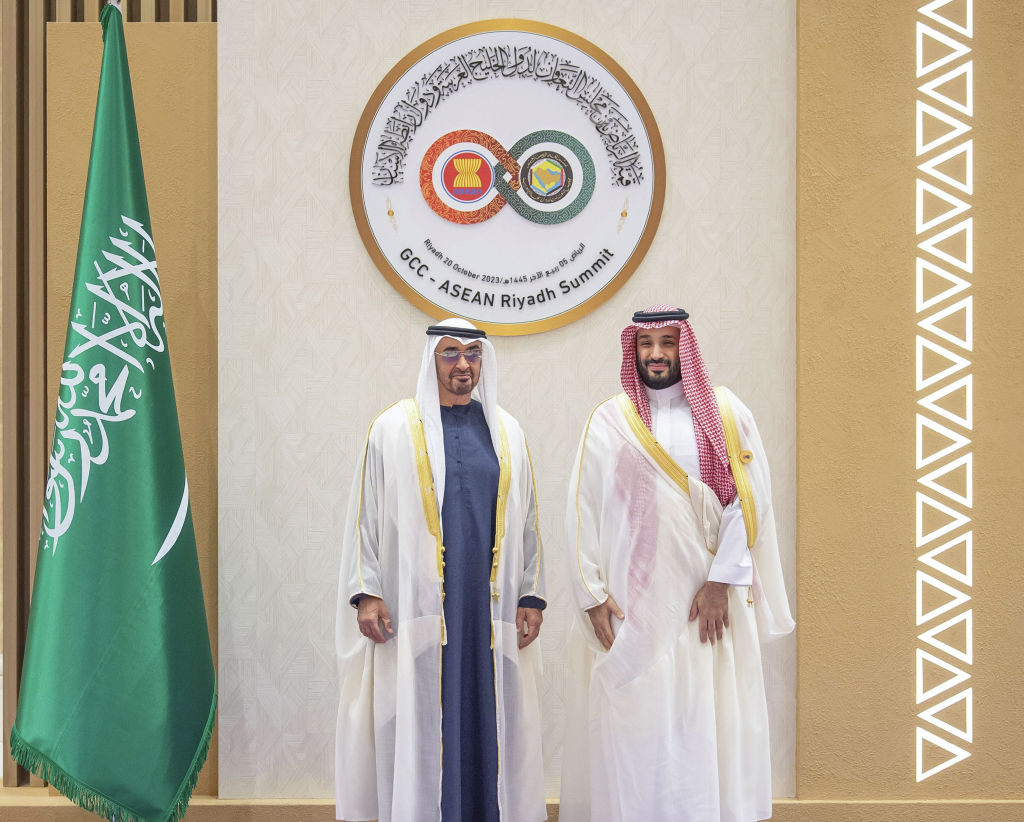
The development strategies of the two states are similar if not identical, based on the export of hydrocarbons, a close alliance with the United States and other Global North states, and neoliberal economic policies. Both are designing their economies for a post-oil future on the basis of advanced technologies, tourism, and grandiose projects. Politically, they are both absolute monarchies unwilling to accept any form of challenge, or even any hint of alternative political views, repressing the mildest forms of dissent.
In the long run, the size and financial clout of the Saudi regime are advantages it possesses. The population balance favors the kingdom, three times that of the UAE. Moreover, if we only include nationals of the two countries, disregarding migrant workers, the UAE has barely 10 percent of Saudi Arabia’s population.
The UAE has a much higher per capita income for its nationals and is way ahead of the kingdom in its development model: for example, the Saudis only introduced tourism visas in 2019. The UAE’s strategic geographic position, about halfway between East Asia and Europe, is a major asset for trade and manufacturing.
Disagreements and forms of competition are growing. Taking early advantage of the GCC Free Trade Agreement, the UAE established numerous productive and other enterprises in a series of “free zones,” mostly in Dubai. In July 2021, the Saudi regime ended free trade for outputs from free zones and imposed import tariffs on these products, targeting the UAE, which is most affected.
The same year, it decreed that all major international companies operating in the kingdom must have their HQ there. This prompted more than 660 companies to move to Riyadh, although its living conditions are not yet quite as relaxed as those in Dubai. Various incentives have been provided to support this move.
Although the UAE has a long head start, the Saudis are catching up, largely thanks to two factors: improved standards of entertainment and comfort in the kingdom, alongside the size and scope of potential profits for the companies concerned, which far outstrip anything the UAE can offer. This month, the Financial Times reported systematic delays in financial transfers between the two countries.
Another difference is the UAE’s focus on military interventionism. Since 1990, its forces have been involved in US-led operations in Afghanistan, Somalia, Kosovo, Libya, and Iraq and received the moniker of “little Sparta” from senior US military staff. By contrast, the Saudi military are widely reputed to be little more than a “parade” army. This has been one reason that few Saudi ground troops have been active in the fighting in Yemen, though the UAE suffered significant losses there.