

The Peace That Cost Millions Left a War Unresolved and an Unfinished Bill for De La Espriella

Colombia is not only shutting down negotiation tables. It is also taking stock of the bill. Four years after Gustavo Petro’s government launched what it called “Total Peace” as a strategy to engage simultaneously with guerrillas, dissident factions and criminal organizations, the country now faces an uncomfortable question: How much public money was spent sustaining those processes, and what concrete results did they actually produce?
President Abelardo De La Espriella has turned that question into one of the central arguments behind his break with the previous administration. His government dismantled the main dialogue mechanisms it inherited, questioned the resources devoted to negotiators, representatives, logistics, security and travel, and shifted toward a strategy centered on judicial submission and stronger state action against armed organizations that refuse to lay down their weapons.
According to a financial consolidation prepared by the Office of the High Commissioner for Peace using information from the Special Programs for Peace Fund and records from Colombia’s Integrated Financial Information System (SIIF Nación), which is administered by the Ministry of Finance, approximately US$40.6 million (COP 125.174 billion) was spent between August 2022 and June 2026 on political negotiations and socio-legal talks.
That figure does not, by itself, prove waste, every complex peace process comes with costs. What fuels the criticism is the relationship between the amount of money spent and the outcome talks that were suspended or closed, unfinished commitments, armed organizations that remain active and communities that continue to face recruitment, extortion, displacement and control by illegal groups.
US$40.6 million and a question that remains unanswered

The fiscal breakdown helps explain why the debate has intensified. According to the same financial consolidation based on SIIF Nación records, about US$34.9 million (COP 107.572 billion) was allocated to political negotiations with armed groups, while roughly US$5.7 million (COP 17.601 billion) went to socio-legal talks with criminal organizations. The distinction matters because not every actor was treated under the same legal framework, and not every process pursued the same objective.
The spending included several costly categories; Air travel associated with political negotiations reached approximately US$7.1 million (COP 21.979 billion), while protection schemes accounted for about US$6.9 million (COP 21.200 billion). Fees linked to those processes reached close to US$6 million (COP 18.378 billion), and logistics cost around US$4.1 million (COP 12.712 billion). Another US$3.9 million (COP 12.146 billion) went toward civil society participation, while approximately US$3 million (COP 9.164 billion) was directed to the National Participation Committee tied to the peace process with the National Liberation Army, or ELN.
Viewed individually, those figures can be explained as the operational costs of sustaining highly complex negotiations. The problem emerges when they are compared with the broader outcome. Most of the processes failed to produce a final agreement, and several deteriorated before the change of government, while some armed organizations retained military capabilities, sources of financing and a presence in strategically important areas.
The international dimension also contributed to the perception of excessive spending. Talks with the ELN included rounds in Caracas, Mexico City and Havana, while negotiations with the Gulf Clan reached Doha, Qatar. Financial reports associated with that process place its cost at roughly US$6.5 million (COP 20 billion). The talks were intended to advance confidence-building measures, possible temporary concentration zones and territorial commitments, but the change in administration prevented several of those measures from being fully implemented.
De La Espriella has used that contrast to criticize the previous administration. On September 11, he publicly claimed that more than US$2.3 million (COP 7 billion) had been spent over the previous four years on fees for representatives, spokespersons and negotiators. That figure should not automatically be equated with the roughly US$6 million (COP 18.378 billion) listed under the broader category of negotiation-related fees, because the two figures may cover different accounting categories.
That distinction matters as the debate over possible waste loses credibility if figures from different categories are combined as if they were the same. Yet even after separating them, a legitimate question needs to be asked, if the state spent more than US$40.5 million (COP 125 billion) sustaining a policy that failed to produce final agreements with its main counterparts, how much of that investment created lasting and measurable benefits for the population? From a public-finance perspective, that may be the most important question. The issue is not to assume that every peso spent on dialogue was wasted, but to determine whether the previous government established sufficient conditions, benchmarks and evaluation mechanisms to prevent negotiations from becoming open-ended processes without proportional results.
Closing ‘Total Peace’ does not end the conflict
Petro’s strategy attempted to respond to a profound transformation in Colombia’s conflict. After the 2016 Peace Agreement with the FARC, the country ended its confrontation with that guerrilla group as a unified national organization, but the power vacuum left behind in several regions was filled by dissident factions, the ELN and criminal organizations linked to drug trafficking, illegal mining and extortion.
“Total Peace” was built on the idea that such fragmentation required multiple channels of negotiation. Some groups were treated through a political framework, while others were approached through socio-legal mechanisms closer to judicial submission. The model was highly ambitious, aiming to reduce violence while the state simultaneously engaged with actors that differed significantly in their structure, interests and nature.
De La Espriella chose to break with that approach. On August 30, he said he would not allow a negotiation table to become a refuge for people who continued committing crimes. On September 4, he said that “the state does not negotiate its sovereignty” and defended judicial submission as the appropriate path for criminal organizations. Days later, he reiterated that “the option of dialogue is completely exhausted.” The message represents a substantial change in incentives. Under Petro, participation in a peace process could mean recognition as an interlocutor, temporary suspension of certain measures or access to direct engagement with the state. Under De La Espriella, the signal is different, those who abandon violence may find a legal path, while those who remain armed will face greater military and judicial pressure.
Still, formally terminating negotiations does not immediately change realities on the ground. Catatumbo is perhaps the clearest example, the region, located along the Venezuelan border, is home to coca crops, illicit corridors and armed organizations competing for control over territory, revenue and communities. An ELN offensive in early 2025 triggered a severe humanitarian crisis and led to the suspension of negotiations during the previous administration.
The new government may consider that dialogue exhausted, but the threat to civilians remains. In regions like this, success will not be measured by how many resolutions are issued, but by whether authorities can guarantee freedom of movement, education, employment, justice and security without allowing another armed group to take over territory vacated by a weakened rival.
Colombia’s Ombudsman’s Office has warned that violence continues to affect children and teenagers in particular. According to the agency, it became aware of 1,173 cases of recruitment by illegal armed groups between 2024 and July 31, 2026. The Ombudsman’s Office also warned of significant underreporting and stressed that a decline in reported cases does not necessarily mean the phenomenon itself has diminished.
That is why the assessment of “Total Peace” cannot be reduced exclusively to money. The fiscal question is essential, but it exists alongside a more difficult one, if negotiations failed to dismantle the main illegal armed structures, the state must explain what strategy can now do so without deepening the human cost of the conflict.
Wasteful spending, fiscal oversight and results that remain difficult to prove
Scrutiny of public spending takes on another dimension when Colombia’s Comptroller General enters the picture. The watchdog has identified 344 findings and approximately US$376 million (COP 1.16 trillion) in resources associated with potential fiscal damage or risks within a much broader universe of peace-related programs. That figure is not the cost of the negotiation tables. The US$376 million (COP 1.16 trillion) covers a far wider framework that also includes components related to implementation of the 2016 Peace Agreement and other state programs. Presenting that amount as money spent exclusively on “Total Peace” would be inaccurate and would distort the scope of the audit.
What is important to have in mind is that the Comptroller’s findings increase pressure to review how peace-related resources were planned, executed and supervised. It is not enough to show that a contract existed or that a budget was spent. Authorities must also establish whether that spending met measurable objectives and whether adequate controls were in place. Any sophisticated negotiation requires protection, travel, technical teams, logistics, community participation and monitoring mechanisms. The appropriate standard should be whether those resources helped reduce violence, facilitate disarmament, protect civilians, open humanitarian corridors or improve the state’s institutional presence.
That is where one of the previous strategy’s main vulnerabilities becomes apparent. Some ceasefires may have temporarily reduced certain armed clashes, but other forms of violence persisted. Several groups also maintained the ability to finance themselves through illicit economies and to exert pressure over local populations.
The concept of wasteful spending, therefore, should not be limited to whether a flight cost too much or whether a contract could have been cheaper. It also involves asking whether the state continued financing processes after there were sufficient signs of stagnation, noncompliance or strategic exploitation by the armed organizations involved. For De La Espriella, that criticism provides a political advantage but also creates an obligation. He can denounce spending under the Petro administration and dismantle structures he considers ineffective, but he will have to prove that a strategy based on greater state pressure produces better results and uses public resources more efficiently.
The challenge now is proving the alternative works
The first test will be preventing a more aggressive security strategy from generating new human and fiscal costs. Colombia has a long history of successful operations against top commanders that are later followed by fragmentation, internal struggles, and the emergence of smaller organizations that are harder to control and heavily dependent on illicit economies.
Recovering territory also requires more than deploying soldiers and police officers. It demands justice, roads, healthcare, education, credit, formal employment and rural investment. If security forces enter a region but civilian institutions fail to remain, another armed actor can fill the vacuum and quickly rebuild local networks of control.
The second challenge will be developing credible legal mechanisms for people who want to leave armed groups. De La Espriella has insisted that he will not politically negotiate with criminal organizations, but the state will still need tools to receive collective surrenders, recover weapons, obtain information on illegal networks and facilitate demobilization under clear rules.
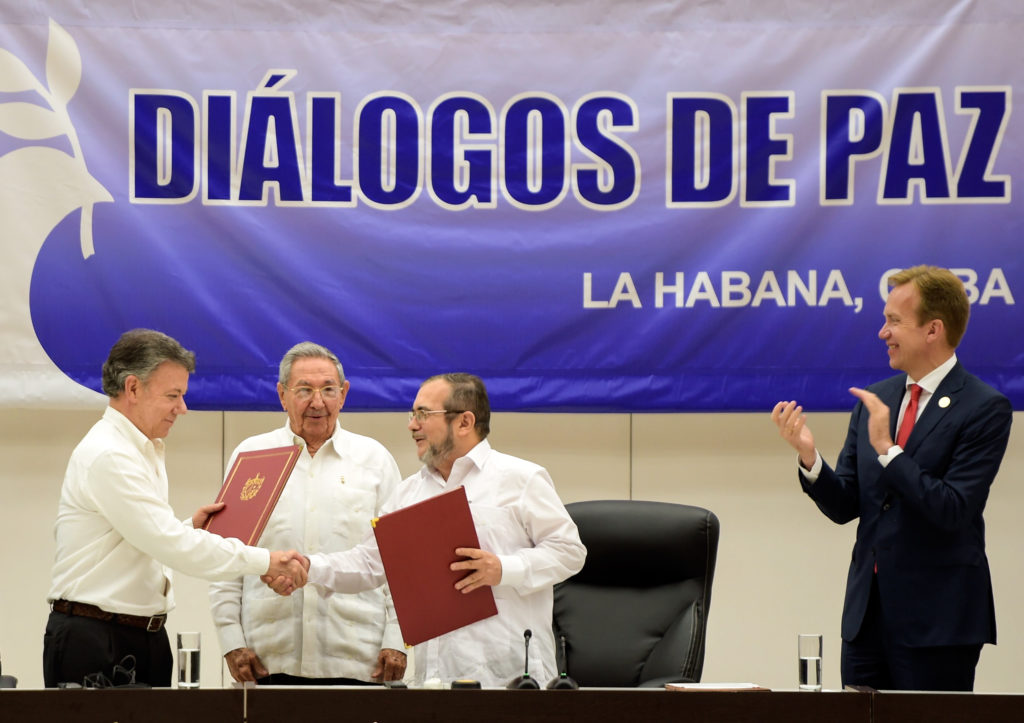
The third challenge will be preventing the end of “Total Peace” from being confused with abandoning the 2016 Peace Agreement. Former president Juan Manuel Santos has urged De La Espriella to continue implementing that accord, which still commits the state to rural reform, reintegration, substitution of illicit economies, assistance to victims and development in regions historically affected by conflict.
The distinction is essential as a government can consider its predecessor’s negotiations unsuccessful or too expensive while still recognizing that rural inequality, weak institutions and illicit economies continue to fuel new forms of violence. De La Espriella wants to present his policy as a correction to four years of high costs, concessions and insufficient results. His argument carries political weight because there are concrete figures behind it: roughly US$40.6 million (COP 125.174 billion) spent overall; around US$7.1 million (COP 21.979 billion) on air travel; about US$6.9 million (COP 21.200 billion) on protection schemes; close to US$6 million (COP 18.378 billion) on fees; and millions more on logistics and participation.
But the real verdict will come later. If Colombia sustainably reduces recruitment, extortion, displacement, and the presence of illegal armed organizations, the new strategy may be vindicated as a correction. If state pressure merely fragments those groups and shifts violence into other regions, the country will have changed policies without changing the outcome.
Wasteful spending, after all, is about spending too much; it can also mean spending for years without transforming the reality that justified the expense in the first place. Colombia already knows the cost of trying to negotiate simultaneously with multiple armed actors. De La Espriella must now prove something harder: that every public dollar, every security operation, and every policy decision can produce results that communities actually feel in their daily lives. Closing the negotiating tables was the easy part. Proving there is a more effective alternative will be the true measure of his government.