

The Most Polluted Reservoirs In The United States
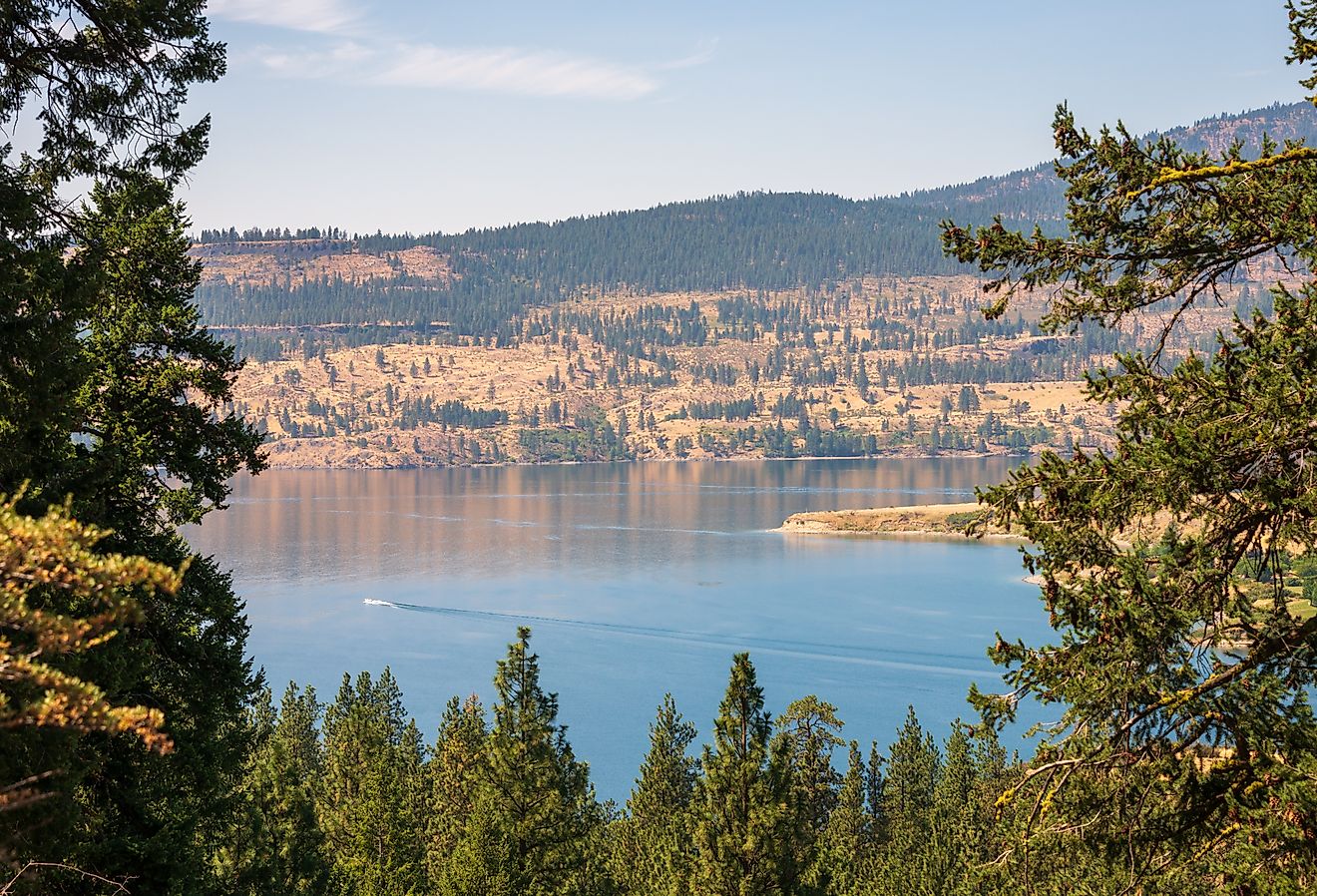
Most of these reservoirs look like fine places to launch a boat, but that’s the problem. Anglers still pull bass and catfish from water that carries a do-not-eat order, and the danger rarely shows on the surface. It settles into the sediment and climbs into fish tissue instead. There is no federal ranking of the country’s most polluted reservoirs, so the ones below were chosen from the hard paper trail: fish-consumption advisories, Clean Water Act listings, and Superfund records from the EPA, USGS, and state agencies. The contaminants run from PCBs and mercury to selenium, PFAS, and toxic algae.
Lake Roosevelt, Washington
Lake Roosevelt extends about 151 miles behind Grand Coulee Dam and holds the upper Columbia River after it crosses the Canadian border. For much of the twentieth century, a smelter in Trail, British Columbia, discharged slag and other metallurgical wastes upstream. U.S. Geological Survey investigations detected elevated arsenic, cadmium, copper, lead, mercury, and zinc in reservoir sediment, water, or aquatic organisms. USGS described heavily contaminated sediment in parts of the system and measured concentrations capable of harming bottom-dwelling organisms. Reservoir drawdowns expose wide bands of shoreline sediment, which prompted additional USGS studies of trace elements in material that can dry and become airborne. EPA is conducting a Superfund remedial investigation across the Upper Columbia River and Lake Roosevelt area, covering sediment, beaches, fish tissue, and other possible pathways for human and ecological exposure.
Watts Bar Reservoir, Tennessee

Watts Bar Reservoir took in contaminants carried down the Clinch River from the Oak Ridge Reservation, where nuclear and industrial operations released mercury, PCBs, radionuclides, and other pollutants. EPA records place 82 river miles of the Clinch River and its Watts Bar Reservoir arm within the area affected by Oak Ridge contamination.
USGS sediment-core studies estimated that about 76 metric tons of mercury accumulated in Watts Bar sediment. Researchers also calculated that roughly 91 percent of 335 curies of cesium-137 released by Oak Ridge operations stayed in reservoir sediments. PCBs entered the river system as well and built up in fish.
Tennessee fish-consumption guidance covers affected portions of Watts Bar and includes restrictions for species such as catfish and striped bass. Federal studies have found much of the historic mercury and radioactive material buried in reservoir sediment, while PCB exposure continues to be managed through fish advisories.
Cottage Grove Reservoir, Oregon

Cottage Grove Reservoir lies downstream from Black Butte Mine, where mercury mining contaminated the Coast Fork Willamette River watershed. Oregon issued a mercury-based fish-consumption advisory for the reservoir in 1979, the first such advisory for a water body in the state. Mercury reaching the reservoir can convert to methylmercury and build up progressively in fish, particularly long-lived predators such as largemouth bass.
A 2025 Scientific Reports study examined fish collected during 2021 through 2023 and measured a median total-mercury concentration of 0.710 micrograms per gram in 286 largemouth bass. The highest specimen contained 6.62 micrograms per gram, about 22 times EPA’s 0.3-microgram-per-gram fish-tissue criterion. Oregon Health Authority guidance tells children and people who are pregnant, may become pregnant, or are breastfeeding to avoid resident fish from Cottage Grove. Consumption limits also apply to other adults, with separate recommendations for certain stocked rainbow trout.
Lake Hartwell, South Carolina and Georgia

Lake Hartwell took on PCB contamination through the Twelve Mile Creek watershed after the Sangamo Weston capacitor plant in Pickens, South Carolina, discharged PCB-bearing wastewater into Town Creek. EPA records estimate that more than 400,000 pounds of PCBs entered the creek system before their use at the plant ended in the 1970s. The contamination led to the Sangamo Weston/Twelve Mile Creek/Lake Hartwell Superfund site and years of sediment removal and monitoring. South Carolina currently advises people to eat no fish of any species from Twelve Mile Creek or the Seneca River arm of Lake Hartwell. Hybrid and striped bass caught in other South Carolina portions of the reservoir also carry a do-not-eat recommendation. Mercury adds another concern, with state advice restricting consumption of largemouth and spotted bass in parts of the lake. EPA continues sampling fish tissue and sediment for persistent contaminants.
Lahontan Reservoir, Nevada

Mercury entered the Carson River during nineteenth-century gold and silver processing, when mills used the metal to recover precious metals from ore. Waste mercury traveled downstream and settled into river and reservoir sediments, including those at Lahontan Reservoir near Fallon.
EPA includes Lahontan within the Carson River Mercury Superfund Site and has reported extremely elevated mercury concentrations in fish from the reservoir. Nevada and federal guidance recommends no consumption of game fish or carp caught there. EPA risk assessments have identified concerns for frequent consumers, with particular attention to children and pregnancy because methylmercury can damage the developing nervous system.
Swimming, boating, and catch-and-release fishing are permitted at Lahontan. The consumption warning centers on fish tissue, where methylmercury concentrations rise as the chemical moves through the food web and builds up in larger predatory fish.
Grand Lake St. Marys, Ohio

Grand Lake St. Marys takes in heavy nutrient loads of phosphorus and nitrogen, much of it carried into the shallow western Ohio reservoir through agricultural runoff. Those nutrients feed dense cyanobacterial blooms capable of producing microcystin, a liver toxin that can complicate recreation and drinking-water treatment.
Ohio EPA’s 2024 Integrated Water Quality Monitoring and Assessment Report states that raw water at the City of Celina intake exceeded the state’s microcystin threshold every year beginning with the start of monitoring in 2009 through the period covered by the report. Exceedances occurred during every season in some years. The largest concentration cited by the state was 194 micrograms per liter in mid-May 2017. A scientific analysis covering 2009 through 2021 found a median weekly microcystin concentration of 23.2 micrograms per liter, with measurements reaching 185 micrograms per liter.
Lake Koocanusa, Montana

Lake Koocanusa takes in selenium through the Elk River watershed in British Columbia, where large open-pit coal mines release selenium into tributaries of the Kootenai River system. USGS monitoring has traced most of the reservoir’s selenium input to the Elk River, even though that tributary contributes a smaller portion of the combined water flowing into the reservoir.
Montana designated Lake Koocanusa as threatened by rising selenium concentrations in 2012 and adopted a reservoir-specific dissolved selenium standard of 0.8 micrograms per liter in 2020. EPA approved the standard in 2021. Regulators also use a fish-egg tissue standard of 15.1 milligrams per kilogram dry weight because selenium accumulates in aquatic food webs and can interfere with fish reproduction. USGS monitoring covers water, aquatic insects, fish tissue, and fish eggs, with particular attention to deformities and reduced survival during early development.
Lake Nacimiento, California

Lake Nacimiento in San Luis Obispo County appears on California’s Clean Water Act impaired-waters list for mercury. State fish-consumption advice rests on tissue measurements showing elevated concentrations in several species commonly caught by anglers.
California’s Office of Environmental Health Hazard Assessment reported average mercury concentrations of about 1.01 parts per million in black bass and 1.15 parts per million in white bass in the dataset used to prepare its guidance. Women ages 18 through 49 and children ages 1 through 17 are advised to eat no black bass, channel catfish, common carp, crappie, or white bass from Nacimiento. California’s 2026 Integrated Report also includes fish-tissue evidence above the 0.3-microgram-per-gram mercury guideline used in the state’s assessment. Separate serving recommendations apply to species with lower measured mercury concentrations, which makes species identification important before an angler keeps fish for a meal.
Brier Creek Reservoir, North Carolina

Brier Creek Reservoir lies downstream from the Ward Transformer Superfund site near Raleigh, where transformer operations released PCBs into soil, drainage channels, streams, sediment, and fish. EPA investigations traced PCB contamination through the drainage system into Brier Creek Reservoir, and North Carolina issued a do-not-eat advisory covering all fish caught there. EPA completed major downstream contaminated-sediment removal in 2023 and then continued long-term fish-tissue monitoring. The cleanup target requires PCB concentrations in fish from Brier Creek Reservoir and nearby Lake Crabtree to fall below 0.05 milligrams per kilogram. EPA has estimated that reaching that concentration could take about 15 years because PCBs already worked into aquatic food webs decline slowly after contaminated sediment is removed. Fish sampling is expected to continue for a decade or longer while concentrations are tracked against the federal cleanup target.
Monee Reservoir, Illinois

Illinois placed Monee Reservoir in Will County under a fish-consumption advisory after testing detected elevated PFOS in largemouth bass. PFOS belongs to the PFAS family of fluorinated chemicals, which resist environmental degradation and can build up in edible fish tissue.
Current Illinois guidance tells anglers to eat no largemouth bass from Monee Reservoir because of PFOS measured in fillets. The advisory applies to consumption of that species and does not close the reservoir to boating or other recreational use.
Illinois EPA has expanded PFAS sampling through its Fish Contaminant Monitoring Program as the state measures these chemicals in freshwater fish. Sampling focuses on edible fillet tissue, the portion used to calculate consumption advice. Results from Monee were high enough for the state to issue its no-consumption recommendation for largemouth bass, adding PFOS to the reservoir pollutants now tracked alongside older contaminants such as mercury and PCBs.
Donna Reservoir, Texas

Donna Reservoir and its canal system near the Rio Grande became a federal Superfund site after PCBs were detected in fish in 1993. Texas prohibited the taking of aquatic life from the site, and EPA warning signs tell anglers that possessing fish caught there is illegal. Investigations found PCBs in sediment and fish tissue, with eating contaminated fish identified as the principal human exposure route. EPA excavated more than 24,788 tons of contaminated sediment during a cleanup completed in 2020.
The problem did not disappear with the dredging. EPA’s 2024 Five-Year Review found that the cleanup was not yet protective because PCB concentrations in fish remained above remediation goals and people continued removing fish for possible consumption. The agency classified human exposure through fish consumption as uncontrolled at the site. Sampling and enforcement therefore continue decades after PCBs were first detected in the reservoir.
Spring Creek Reservoir, California

Spring Creek Reservoir near Redding was built to regulate contaminated drainage from the Iron Mountain Mine area before releases reach Keswick Reservoir and the Sacramento River. Water draining the mine contains exceptionally high concentrations of metals and extreme acidity. USGS measured pH values as low as -3.6 in Iron Mountain drainage and documented copper, cadmium, zinc, iron, aluminum, lead, and other elements. Sampling of Spring Creek Reservoir effluent also found elevated concentrations of several metals. Federal treatment and source-control projects have cut copper and zinc releases from Iron Mountain by roughly 80 to 90 percent since the mid-1990s, according to USGS. Operators use Spring Creek Reservoir to hold and regulate acidic drainage so releases can be timed and diluted before they reach the Sacramento River system. EPA placed Iron Mountain Mine on the National Priorities List in 1983 and has carried out multiple cleanup actions across the site.
Reading a Reservoir’s Paper Trail
What ties these reservoirs together is not a single pollutant but a pattern: a legacy industry upstream, a contaminant that settles into sediment and climbs into fish, and a monitoring program that outlives the operation that caused the problem. Donna, Lake Hartwell, and Brier Creek trace back to PCB-handling plants; Lahontan and Cottage Grove to mercury-era mining; Spring Creek to acid drainage still being neutralized decades later; Koocanusa and Grand Lake St. Marys to pollution that crosses a border or a property line and arrives as someone else’s runoff. In most cases the water stays open for boating and swimming while the warning lives on the fish. That gap, between a reservoir that looks fine and a fillet that fails a health benchmark, is the reason these advisories exist and the reason sampling continues year after year.