

The Mocha monopoly: how Yemen’s dominance of the global coffee trade birthed the Houthi rebels
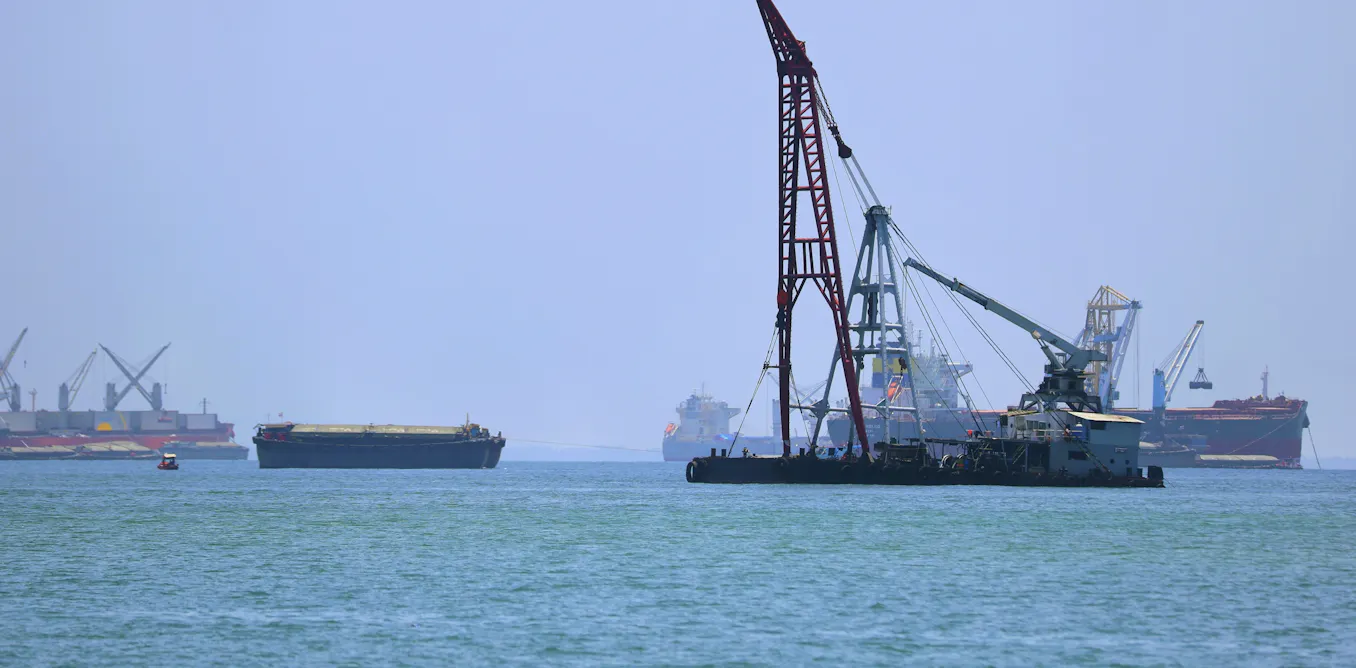
The Red Sea often makes headlines as the launch site for attacks on oil tankers and infrastructure by the Houthi rebels, a political and religious group that controls much of the northern and western areas of Yemen. But the history of this vital shipping route was once defined by the passage of another dark, liquid source of energy: coffee.
The Yemeni port of Mocha built its fortunes largely on coffee cultivated in Yemen’s highlands and shipped from its port to markets across the Middle East, Europe and beyond. Merchants from Arabia, India, Africa and Europe passed through its docks, making it a cosmopolitan crossroads long before the modern era.
Mocha gave its name to the coffee that travelled west and, centuries later, to the Moka pot, the ubiquitous Italian-designed stovetop espresso maker found in homes across Europe. While espresso is now synonymous with Italian culture, the beverage’s story traces back through centuries of trade routes to this Yemeni port town.
Brent Ninaber/Unsplash
Today, Yemen continues to shape the coffee trade. Over a quarter of Europe’s total coffee imports come from South East Asia – mostly Vietnam, as well as Indonesia and India. Until recently, all of this passed through the Red Sea, but since late 2023, Houthi attacks have made it unsafe for vessels to reach the Suez Canal. Instead, many ships sailing between Asia and Europe are rerouting via the Cape of Good Hope, an expensive 11,000km detour that takes them around the southern tip of Africa.
The conflict’s impact is being felt far and wide. As Italians panic over the price of their espresso, drinkers across Europe are switching to whole Arabica beans instead of Robusta, to savour smaller amounts of better quality coffee. The head of Italian coffee manufacturer Lavazza has warned that the entire supply chain is under intense pressure.
The history of Yemen – including the birth of the Houthis themselves – remains inextricably linked to the rise and fall of its centuries-long dominance over the global coffee trade.
Mocha’s monopoly
The history of Mocha is a two-act tragedy, a story of ecological ruin unfolding over three centuries that drew the route along which the coffee trade still sails today.
From the 16th to 18th centuries, Mocha was the gateway through which all of the world’s coffee passed. The plant was native to Ethiopia but was first cultivated commercially in Yemen’s terraced highlands. The Romans called the region “Arabia Felix”, and Arabia would give the coffee plant its name, Arabica.
The plant’s natural built-in pesticide is caffeine – the chemical that keeps the bugs away is also what gives us the buzz. Sufi orders in Yemen drank it to stay awake during their prayers at night. Later, Portuguese sailors used the beverage to keep alert as they navigated new maritime trade routes to places like Hormuz. The drink spread through the Ottoman world and into Europe, carrying the port’s name with it.
But Mocha’s monopoly would not last. Like all dazzling port cities, it had its share of swashbuckling smugglers. One apocryphal tale tells of a Sufi pilgrim, Baba Budan, who some time around 1670 strapped seven fertile seeds to his body and carried them from Mocha to the hills of Mysore, in India.
The Dutch East India Company had already taken a coffee plant from Mocha as early as 1616, eventually cultivating it on the island of Java in the Indonesian archipelago by the 1690s. A seedling from Amsterdam’s botanical garden also grew into a plant presented to Louis XIV. Its descendants crossed the Atlantic to Martinique and, from there, reached Brazil in 1727.
Within a century, Mocha’s monopoly had been ground down, one stolen seed at a time. Its harbour silted up, and the British development of Aden in 1839 ended its status as a major entrepot. The bustling port that named the drink became a small fishing town.
Read more:
Coffee shops: the hangout of choice for the hipsters of the 18th century
Qat, drought and the Houthis
As coffee prices collapsed under competition from colonial plantations, Yemeni farmers in the highlands turned to a different crop: qat. The mildly narcotic leaf is chewed through Yemeni evenings, but it loses its potency within hours of being picked, making long-distance export impractical.

Antti Salonen/Wikimedia Commons, CC BY-SA
Qat is also a ruinously thirsty crop. It now consumes more than 40% of Yemen’s renewable water resources, in a country drawing groundwater at twice the rate that it naturally replenishes. Wells around the capital Sana’a are drilled hundreds of metres underground, and the city is forecast to become the first capital in the world to run out of water, with Tehran not far behind.
Yemen did not merely lose its coffee monopoly to Java and Brazil. It traded the crop that built its golden age for one that is slowly draining the country dry.
This “hydrological bankruptcy” is linked to the Houthis’ rise in the impoverished north and their base in the city of Sa’ada. The conflicts there between the Houthis and the central government in the 2000s fed on a state failure of which water collapse was both symptom and accelerant.
Read more:
Climate crisis sees rise in illegal water markets in the Middle East
The radicalised Houthis of today were born out of a countryside of dying wells, failing farms, and young men for whom the old agrarian order held nothing. The movement’s grievances are political, but the terrain it conquered was prepared by ecological exhaustion.
The Houthis inherited the geographical privilege that once made Mocha rich: command of the Bab el-Mandeb strait, a narrow stretch of water at the entrance of the Red Sea between Yemen and Djibouti.
As early as October 2016, the Houthis claimed the destruction of an Emirati vessel as it approached the coast of Mocha, and would later fire on a US destroyer from the same coast. The waters that once carried the world’s coffee out of Mocha now carry missiles toward the ships that bring it past.
However, there are efforts to revive Yemeni coffee farming. UN agencies today fund a “qat-to-coffee” conversion programme, paying Yemeni farmers to return their fields to the crop their ancestors gave the world. This is, in effect, historical restitution in the form of development policy, a few hectares at a time.
Lessons from Vietnam
To understand the value of Yemen’s lost coffee trade, and how its economy could recover from ecological disaster, we can look to the Robusta beans on board today’s rerouted container ships. This coffee, which makes up much of Europe’s espresso blends, comes overwhelmingly from Vietnam. Vietnam’s coffee belt is also a landscape remade by war.
Between 1961 and 1971, US forces sprayed over 20 million gallons of military herbicides across the south of Vietnam, roughly 11 million gallons of which was Agent Orange. This defoliated some 3.1 million hectares of forest and mangrove, and immediately destroyed more than half of the mangrove forests in affected zones. The devastation was so systematic that scientists coined a word for it: “ecocide”.
Dioxin poisoned soil and water, seeding cancers among Vietnamese civilians and American veterans alike. It was a decade before the land could grow crops again. When Vietnam opened its economy, the World Bank and international donors financed the planting of coffee across the central highlands, much of it over terrain transformed by wartime deforestation. A country peripheral to the coffee trade became the world’s largest Robusta producer.
Rising coffee prices are often chalked up to heatwaves, poor harvests and freight rates, but this is only part of the picture. Coffee is a commodity whose geography was drawn by monopoly, smuggling, colonial transplantation, and war. Today, its maps are being redrawn by the long social and ecological consequences of all four. Just as the heatwaves scorching Vietnam’s highlands grow a monoculture planted on wartime ruin, the missiles over Bab el-Mandeb rise from a landscape that coffee’s complex history helped to parch.

A weekly e-mail in English featuring expertise from scholars and researchers. It provides an introduction to the diversity of research coming out of the continent and considers some of the key issues facing European countries. Get the newsletter!