

The Mecca Pact redraws the Indo-Pacific’s western edge
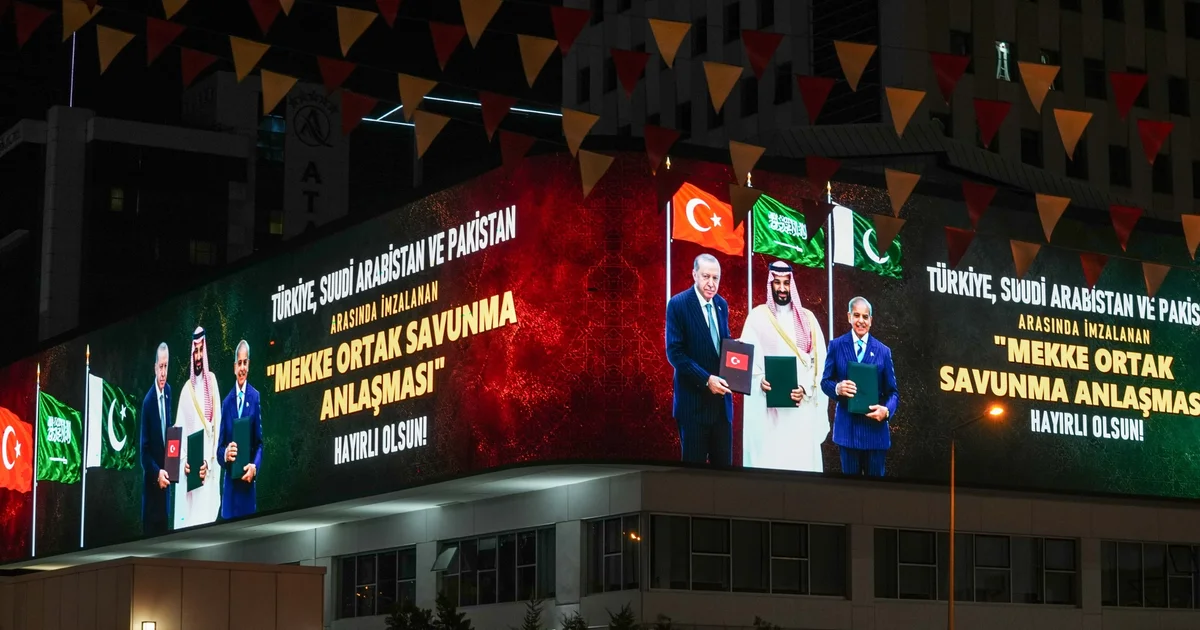
For Australia, the agreement is a reminder that the Indo-Pacific does not stop at India’s western coast. Australia is a founding member of the Indian Ocean Rim Association (Opens in new window) (IORA) and defines a peaceful, stable and prosperous Indian Ocean as a national interest. Gulf conflict affects fuel security, insurance costs, commercial shipping and access through the Strait of Hormuz, the Bab al-Mandab and the Red Sea. A pact that links Gulf infrastructure, Turkish naval and defence technology, and Pakistani military capacity therefore has direct consequences for Australia’s economic security. Australia should expand its monitoring and dialogue with all three members, use Indian Ocean institutions to reinforce maritime transparency, and consult closely with India and Gulf partners on shipping resilience. Treating the agreement as a distant Middle Eastern development would miss how quickly insecurity in the Gulf travels through the wider Indo-Pacific.
India faces the most immediate and politically sensitive implications. Pakistan has gained a formal security framework with two states that possess deep financial resources, technology and diplomatic influence. This sits alongside Pakistan’s deeper strategic and defence relationship with China, transforming what India once viewed mainly as a bilateral rivalry into a wider network of alignments. Türkiye’s close defence relationship with Pakistan already causes concern in New Delhi, while Saudi Arabia’s participation gives the arrangement greater weight. During a future India–Pakistan crisis, uncertainty over what constitutes an “attack” on Pakistan could complicate India’s calculations even if Riyadh and Ankara have no intention of becoming involved.
Yet India should not assume that the pact is directed against it. Saudi Arabia has strong energy, investment and political ties with New Delhi and has incentives to avoid importing South Asian rivalry into Gulf security. When Riyadh and Islamabad signed their bilateral pact in 2025, India responded (Opens in new window) that it expected Saudi Arabia to respect mutual interests and sensitivities while it assessed the implications. That remains the most effective approach to the expanded agreement. A measured response would preserve India’s influence in Riyadh, seek explicit consultation about contingencies involving Pakistan, and avoid pushing Saudi Arabia more firmly toward Islamabad.
New Delhi should nevertheless watch four areas closely: whether Turkish and Saudi technology complements Chinese-origin systems in Pakistan’s drone, missile and air-defence capabilities; whether intelligence or maritime cooperation connects the pact more closely to China; whether nuclear ambiguity becomes deliberate signalling; and whether the agreement provides Pakistan with diplomatic cover during a crisis. India can respond by deepening its own maritime and defence partnerships, strengthening dialogue with Saudi Arabia and using its current role as chair (Opens in new window) of IORA to keep regional security cooperation open rather than bloc-based.
The pact’s impact will ultimately depend on implementation. A permanent headquarters, contingency plans, exercises, logistics agreements and integrated surveillance would indicate an emerging alliance. Occasional meetings and arms deals would suggest a looser political compact. Clear rules for consultation would reduce the risk that one member’s crisis automatically entangles the others; their absence would leave deterrence dependent on dangerous assumptions.
The Mecca agreement does not displace the United States, create an automatic nuclear umbrella or fundamentally overturn India’s ties with the Gulf. Nor is it irrelevant to Australia. It is an experiment in regional self-reliance that joins three strategic theatres usually analysed separately. Washington must learn to share influence as well as burdens, Canberra must look farther west when defining the Indo-Pacific, and New Delhi must combine vigilance with diplomatic restraint. The agreement’s real stakes lie in that widening map of security, not in the NATO analogy.