

The major issues at the Lomé Conference
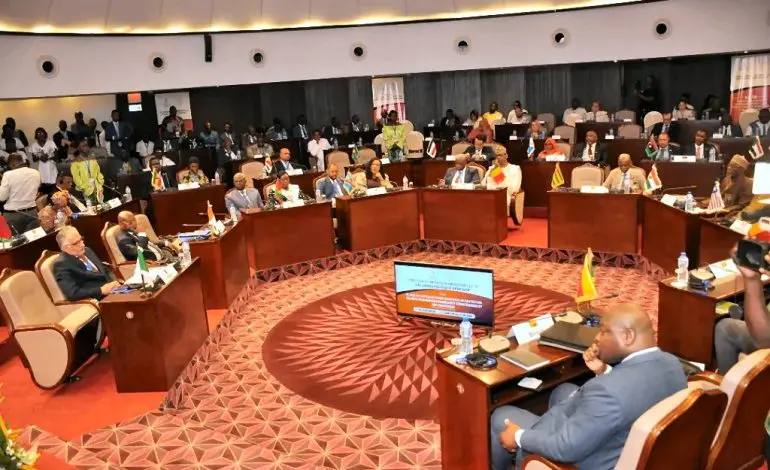
In the face of the crisis in the Middle East and its political and economic repercussions in Africa, the continent must make its voice heard. This is the central issue of the Ministerial Conference to be held on July 3 in Lomé.
In the face of major international crises—which impact Africa at various levels and sometimes with lasting effects—there is frequent criticism of the lack of a unified African response or joint action, with voices going unheard and only isolated reactions from a few states. This situation contrasts with the continent’s increasingly evident determination to break free from external dynamics that are incompatible with its interests in strategic and geopolitical autonomy.
Under the leadership of Council President Faure Essozimna Gnassingbe, Lomé embodies the vision of an active African diplomacy that does not allow itself to be sidelined by major global events. It was this vision of African diplomacy that guided the launch of the African Political Alliance (APA) on May 3, 2023, aimed at fostering the emergence of coordinated African positions on major international issues, promoting enhanced cooperation in the face of common challenges, and helping to strengthen Africa’s voice in global debates.
True to its objectives, the APA—an informal platform for political consultation, diplomatic dialogue, and strategic cooperation among African states—will convene several African states and institutions in Lomé on July 3, 2026, for an extraordinary ministerial conference to engage in a strategic exchange on the impacts of the crisis in the Middle East on Africa and possible joint responses. The conference’s proceedings will be extended to include Gulf countries and international partners as part of a high-level political dialogue between Africa and the Middle East.
It is important for Africa to take a stance on the crisis in the Middle East and the effects it is experiencing, and to engage with the Gulf countries, given that this crisis is one of the main factors contributing to geopolitical instability in the contemporary international system.
The Need for Strategic Responses
Beyond its regional dimensions, the crisis in the Middle East has economic, security, and strategic repercussions that impact the global economy and affect the interests of African states. Recent developments surrounding the Strait of Hormuz have highlighted the degree of interdependence among contemporary economies and the sensitivity of international markets to geopolitical developments affecting certain strategic maritime areas. For Africa, where a significant portion of energy supplies, trade, and logistics flows remains dependent on the stability of international maritime routes, these developments underscore the need for particular attention to issues of security, economic resilience, and stability.
Economically, the consequences of the crisis are reflected in particular by volatility in oil and gas prices, rising shipping costs, higher prices for food and agricultural inputs, rising inflation, and increased pressure on the public finances of net energy-importing countries.
On the security front, despite the signing of the memorandum of understanding between the United States and Iran on June 17, 2026, to end the war, intensified disinformation campaigns and certain emerging forms of hybrid conflict—which could affect Africa’s already fragile and complex security environments—persist. The fragility and complexity of African security environments were clearly highlighted by the second edition of the Lomé Peace and Security Forum, held on October 11 and 12, 2025.

Beyond the immediate consequences, the crisis in the Middle East highlights structural vulnerabilities that continue to limit the continent’s ability to withstand external geopolitical shocks. It also raises fundamental questions regarding economic resilience, collective security, energy and food sovereignty, and Africa’s strategic positioning within a shifting international order.
Although the crisis’s effects on Africa are multisectoral, the proceedings of the extraordinary ministerial conference—held under the theme “Africa Facing the Crisis in the Middle East: Impacts, Challenges, and Strategic Responses”—will focus on the economic, security, and strategic impacts.
Making Africa’s Voice Heard
The proceedings will thus help develop a shared understanding of the consequences of the Middle East crisis for Africa, promote a strategic exchange on African perspectives on the crisis, and contribute to the international dialogue in support of peace, de-escalation, and regional stability.
More specifically, the discussions will examine the economic and security consequences of the crisis for Africa, identify responses likely to strengthen the continent’s resilience and strategic positioning, foster dialogue between Africa, the Middle East, and international partners on the implications of the crisis, and contribute to efforts toward peace, de-escalation, and regional stability.
The stakes of the extraordinary ministerial conference for Africa are critical: to fill the void at the African level and ensure that Africa’s voice is heard on a crisis in which it is a collateral victim without being an actor or a stakeholder; draw clear lessons from the economic, security, and geopolitical consequences of the crisis for the continent’s present and future; enable Africa to strengthen its capacity to anticipate, respond to, and adapt to geopolitical shocks affecting the international environment; and identify approaches and perspectives likely to strengthen states’ resilience in the face of emerging challenges.
It is also a matter of Africa participating in international debates on the crisis in the Middle East by highlighting its own perspectives on the crisis regarding peace, de-escalation, dialogue, the consolidation of gains achieved through Pakistan’s mediation, and international stability. The crisis in the Middle East threatens international stability. The conference will also enable Africa and the Middle East to lay the groundwork for a structured political dialogue between the two regions.
Crédito: Link de origem