

Temporary protected status ends for Haitian and Syrian immigrants
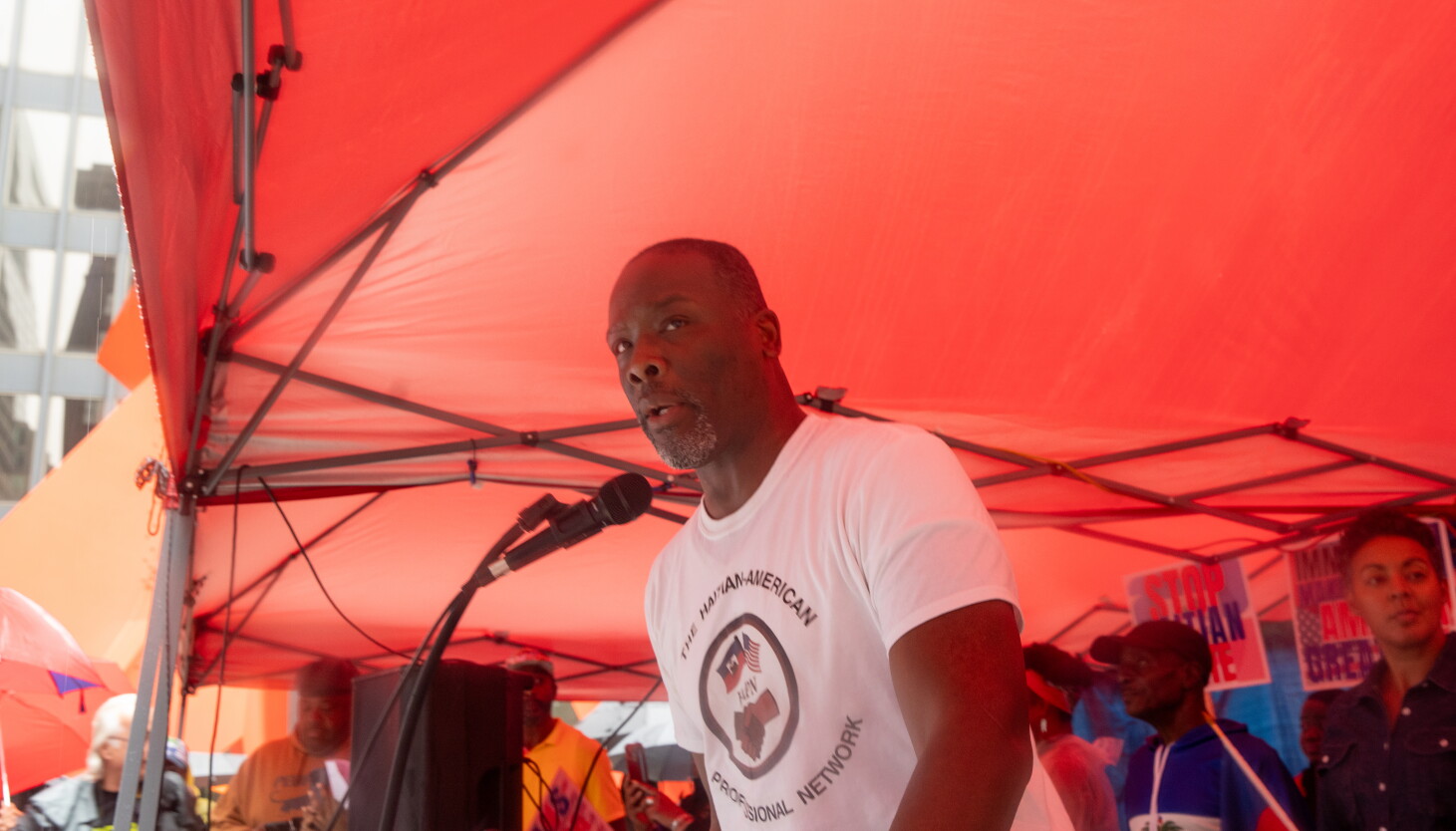
Temporary protected status ended Monday for more than 350,000 Haitians and 6,000 Syrians, leaving them vulnerable to being deported to the countries they fled — countries still coping with violence and instability.
In June, the Supreme Court allowed the administration of President Donald Trump to end the 36-year-old Temporary Protected Status program for hundreds of thousands of Haitian and Syrian migrants.
“People are feeling like this country has let them down too,” said Patrick Brutus, vice president and co-founder of the Haitian American Professional Network. “They’ve had to watch their country tumble into destabilization from afar, and now families may have to face leaving their children behind or taking children to a dangerous place they’ve never been.”
In a statement, a Department of Homeland Security spokesperson said TPS had been used as a “de facto amnesty program” for “too long.”
It was created by Congress in 1990 to prevent deportations to countries suffering from natural disasters or civil strife. The protections are available only to people who have been continuously present in the U.S. since the date of designation, and DHS can extend it in increments of up to 18 months.
Haitians were first granted TPS in 2010 after a 7.0 magnitude earthquake killed hundreds of thousands, with extensions granted as gang violence continues to displace more than a million people after the assassination of the country’s president in 2021.
Syrians were first granted TPS in 2012 during a civil war that lasted decades until the fall of the national government in late 2024. Ongoing fighting and persecution of minorities has led to thousands more deaths since.
The Trump administration has argued the immigrants were poorly vetted and that DHS, not judges, had sole authority to end the protections. They also argued the countries people have been granted TPS from are safe, though the U.S. Department of State urges Americans not to travel to both Haiti and Syria due to ongoing dangers there.
Even still, the U.S. Supreme Court’s 6-3 conservative majority agreed with the Trump administration, allowing it to end protections for Haitians and Syrians. The court allowed TPS for 350,000 immigrants from Venezuela and thousands more from other countries to be terminated in a separate decision last year.
Elsie Hernandez, founder of the Haitian American Museum of Chicago and a nurse who was on the ground in the aftermath of the 2010 earthquake, said things have only gotten worse in Haiti.
“You have people who have built their lives [in the U.S.], bought houses, opened businesses, and sent their kids to school,” Hernandez said. “It’s 16 years of a build-up of life, to have it all destroyed. … Temporary would mean the conditions they left have improved, but it hasn’t. It’s gotten worse.”
Immigrant advocates recommend those who had TPS get legal guidance as soon as possible, and for those who need to, trying to find legal guardians for their children and avenues to protect assets like homes and other property.
Lawrence Benito, executive director of the Illinois Coalition for Immigrant and Refugee Rights, said immigrant groups are preparing for an enforcement surge from ICE, and that the strategy for advocacy organizations to protect former TPS holders now is the same as other U.S. residents without legal status.
Those with final deportation orders are at the greatest immediate risk of being removed, while others would first have to go through immigration court. Some may still qualify for asylum or other routes to avoid losing legal status, such as if they have a family or work sponsor.
However, federal agents have increasingly targeted people at courthouses, which could both keep people away and mean they are detained before having the chance to seek other means of protection.
“If the past is any indicator, this is an opportunity for them to expand their operations, and we’re on alert,” Benito said.
Brutus worries the nearly million people from 17 other countries also on temporary protected status — including hundreds of thousands from Venezuela, El Salvador and Ukraine — could face the same.
“This is just a first test,” Brutus said. “My recommendation to others here under TPS, or any other similar condition, start to get ready with understanding your legal options and organize to put public policy on your side. … I’m hopeful Chicagoans will protect their own.”
Contributing: Associated Press