

Sudan’s sovereign resources in the hands of the major oil companies
At a briefing ahead of a Security Council meeting to discuss the situation in Sudan on Friday 26 June 2026, the United Nations Under-Secretary-General for Political Affairs, Rosemary DeCarlo, warned of the ongoing Sudanese war, noting that “the outbreak of full-scale fighting will lead to new waves of displacement towards areas already under enormous strain, and will also increase instability across the Kordofan region as a whole”.
She also reported that drone strikes targeting bridges and transport corridors across Darfur and Kordofan in recent weeks have caused severe disruption to humanitarian aid routes and cut off many communities, emphasising that “alongside these developments, the number of civilian casualties continues to rise day by day”.
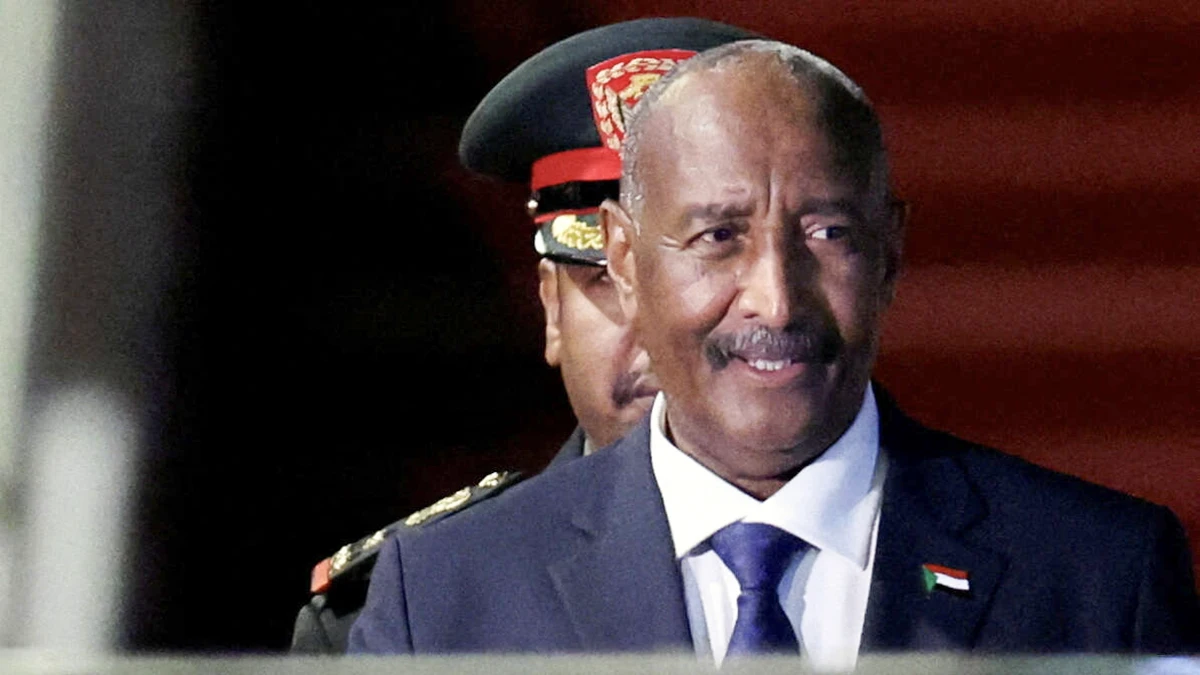
On the same day, the head of the Transitional Sovereignty Council in Port Sudan, Abdel Fattah Al-Burhan, confirmed the army’s commitment to a military resolution of the ongoing conflict in the country, rejecting any solution he described as “grey or moderate”.
During his address to worshippers after Friday prayers in the town on the Eastern Nile, he said that what he described as the “needle-pricking strategy” would continue until its objectives were achieved, emphasising that the armed forces had recaptured areas in Al-Jazeera, White Nile and Khartoum.
He criticised calls by some politicians to restructure the military, stressing that this matter does not fall within his remit, and emphasised that talk of the impossibility of military decisions is inaccurate, he said.
Depletion of resources
Meanwhile, reports point to a systematic depletion of state resources, as the military leadership headed by Abdel Fattah Al-Burhan has transformed national capabilities and economic resources from tools for development and public services into channels for financing the military effort.
Estimates suggest that the annual cost of the war in Sudan stands at 4,000 million dollars, whilst observers point out that the management of this “camp economy” is under the direct influence of figures from the former regime and representatives of the (Islamic movement) the “political wing of the Muslim Brotherhood”.
In this context, Suleiman Baldo, head of the Sudanese Observatory for Transparency, says that Port Sudan has channelled all state revenue towards supporting the war effort. Certain companies within the defence industry system have also monopolised exports of agricultural and livestock products to Egypt, and captured the lion’s share of gold revenues.
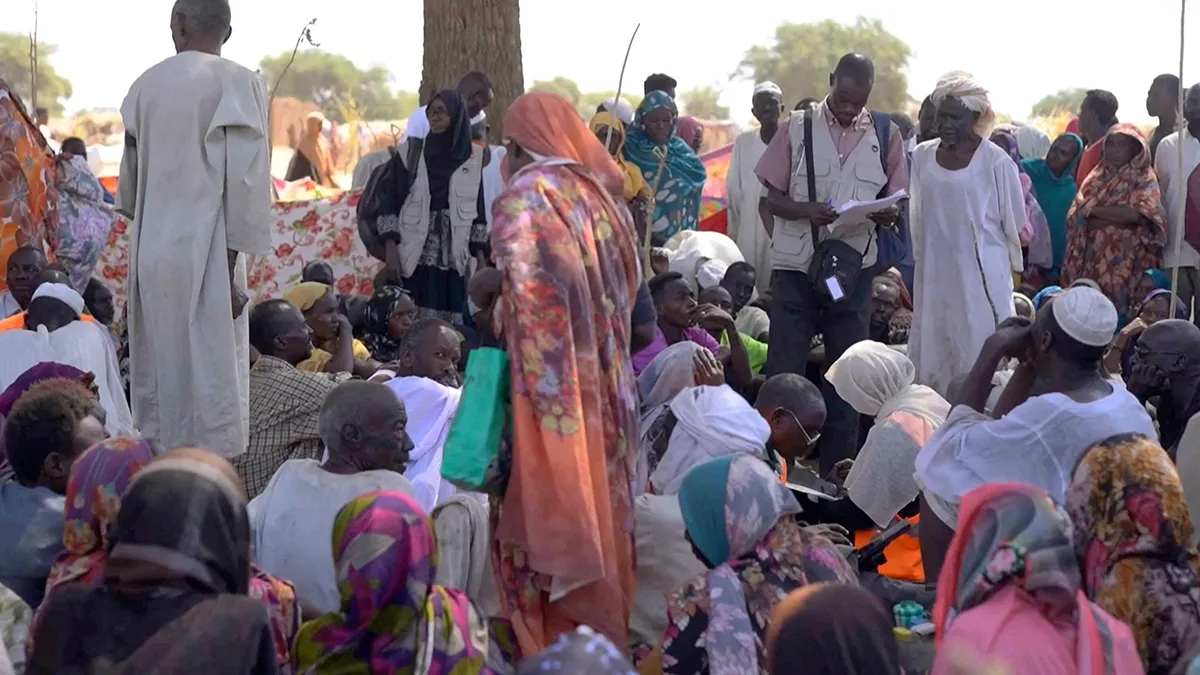
He emphasised that “this situation led to citizens being deprived of basic services, and caused the collapse of state institutions and the emergence of parallel systems; as the conflict resulted in the state’s inability to provide its services”.
He noted that “the current landscape of the war economy in Sudan is the culmination of a long history of political and economic control over resources, marginalisation, and the military apparatus’s authority over the country’s economy, which has led to a humanitarian and economic disaster borne primarily by the Sudanese people”.
The role of gold
Meanwhile, gold in Sudan has increasingly become part of a parallel economy fuelled by the war, which thrives on political and regional divisions, in the absence of a central authority capable of controlling resources and amid smuggling operations.

In this regard, an investigation by the platform revealed black holes in revenue from the yellow metal, where gold is used as an alternative currency to buy loyalties and weapons, and added: “Although annual gold production exceeds 70 tonnes with estimated revenues of 6 billion dollars, the Central Bank of Sudan reports that it records only 2 billion dollars, which raises questions about the whereabouts of the remaining 4 billion dollars, believed to be channelled directly into financing the war effort and procurement drives through companies within the army’s and the Brotherhood’s defence industrial complex”.
He pointed out that “the Defence Industries System has acquired 44% of the shares in Aryab Mining Company, giving the Islamist movement within the army total control over mining tailings estimated at 12 million tonnes in the Red Sea and Kassala states”.
According to open sources, around 90% of gold production is concentrated in the eastern and northern states under the control of the Brotherhood’s Brigades and the Port Sudan government, where around 60 tonnes are smuggled annually through complex networks managed by Hassan Al-Burhan, brother of Abdul Fattah Al-Burhan, and in coordination with Brotherhood leaders in the Ministry of Mining.

According to an analysis published by Sahih Sudan, the Department of Military Operations in Port Sudan relies entirely on “a parallel financial system designed to circumvent international scrutiny, based on three main pillars that have been exposed through reliable investigative reports, the first of which is the ‘gold pipeline’, as gold represents the main lifeline feeding the coffers of power, where the army and the Islamic terrorist movement have taken control of production areas in the northern states, along the Nile and in eastern Sudan”.
“Arms trade experts estimate that the volume of gold smuggled or exported outside official channels ranges from 40 to 70 tonnes per year, with a market value ranging from 2,500 to 4,500 million dollars, as it is transported via private cargo aircraft to regional transit hubs to be remelted and liquidated for the sale of arms”.
According to the analysis, “the network of shell companies ranks second, as these firms—established by the Islamic terrorist movement—operate from safe havens and regional commercial centres in Turkey and East Africa (such as Kenya and Uganda)”.

Iranian presence
Meanwhile, the United Nations describes Sudan as a “laboratory for atrocities”. The ongoing attacks have killed 700 people this year alone, causing the displacement of thousands and the destruction of infrastructure and airports, which hinders humanitarian access, whilst data from the International Conflict Observatory indicates that these drones have become a “death trap” for civilians, and 80 per cent of child deaths and injuries in the current war are attributed to them.
Port Sudan relies heavily on drones during the ongoing war, having obtained most of them from Iran; open-source reports indicate that Iran supported the army with some 40 Muhajir 6 drones, and also supplied around 300 militarily modified reconnaissance aircraft and munitions worth nearly 500 million dollars.
The US broadcaster Fox News reported last May on the growing role of Iranian drones in the Sudanese conflict, and confirmed that Iran is playing a “deadly role in yet another conflict” by supplying the Sudanese army with military equipment and attack drones.
According to a verified analysis, “Analytical estimates of the volume of Iranian supplies between 2023 and 2026 indicate a flow of between 20 and 40 Mohajer-6 combat drones and their derivative models, alongside the shipment of between 100 and 300 units of small, militarily modified reconnaissance aircraft, as well as shipments of micro-guided munitions with a total weight of 50 to 120 tonnes, and an estimated total value of between 200 and 500 million dollars”.
These figures are based on the cross-referencing of satellite imagery of military depots and airports in Port Sudan, the monitoring of cargo flights operated by Qeshm Fars Air—which is subject to US sanctions—along with open-source intelligence from international platforms such as the Conflict and Critical Threats Observatory. According to the same source.
Reuters confirms that the flow of Iranian supplies has brought about a notable tactical shift by increasing the capacity to carry out air strikes and expanding the Air Force’s operational range to cover vital supply lines stretching from the east of the country to the heart of the capital and the central states.

Eritrea… A transit route for arms
An independent analysis revealed that the Port Authority of Sudan does not rely on a single route, but rather “operates a complex logistics network across three main corridors through which arms and funds move in parallel”.
The first of these routes runs directly via the air corridor from Iran through secret and continuous cargo flights at a rate of one to three flights per month at the peak of operations; the total volume transported via this airlift stands at between 800 and 2,000 tonnes of military equipment over 24 months, with cargo loads ranging from 40 to 60 tonnes per flight.
Furthermore, according to the analysis, “the maritime corridor via the port of Port Sudan serves as a busier route for the transport of heavy materials, as the de facto authority exploited its nominal sovereignty to facilitate the entry of between 15 and 25 military naval shipments annually, including weapons, spare parts and fuel, with an estimated annual value ranging from 300 to 700 million dollars.
The analysis indicated that Eritrea is used “as a transit point and temporary storage facility, relying on networks of commercial intermediaries and front companies established by the leaders of the Islamic terrorist movement abroad to conceal the original origin of the shipments and circumvent international financial control mechanisms”.
Credit: Source link