

Sudanese cartoonists reflect on a war the world stopped watching
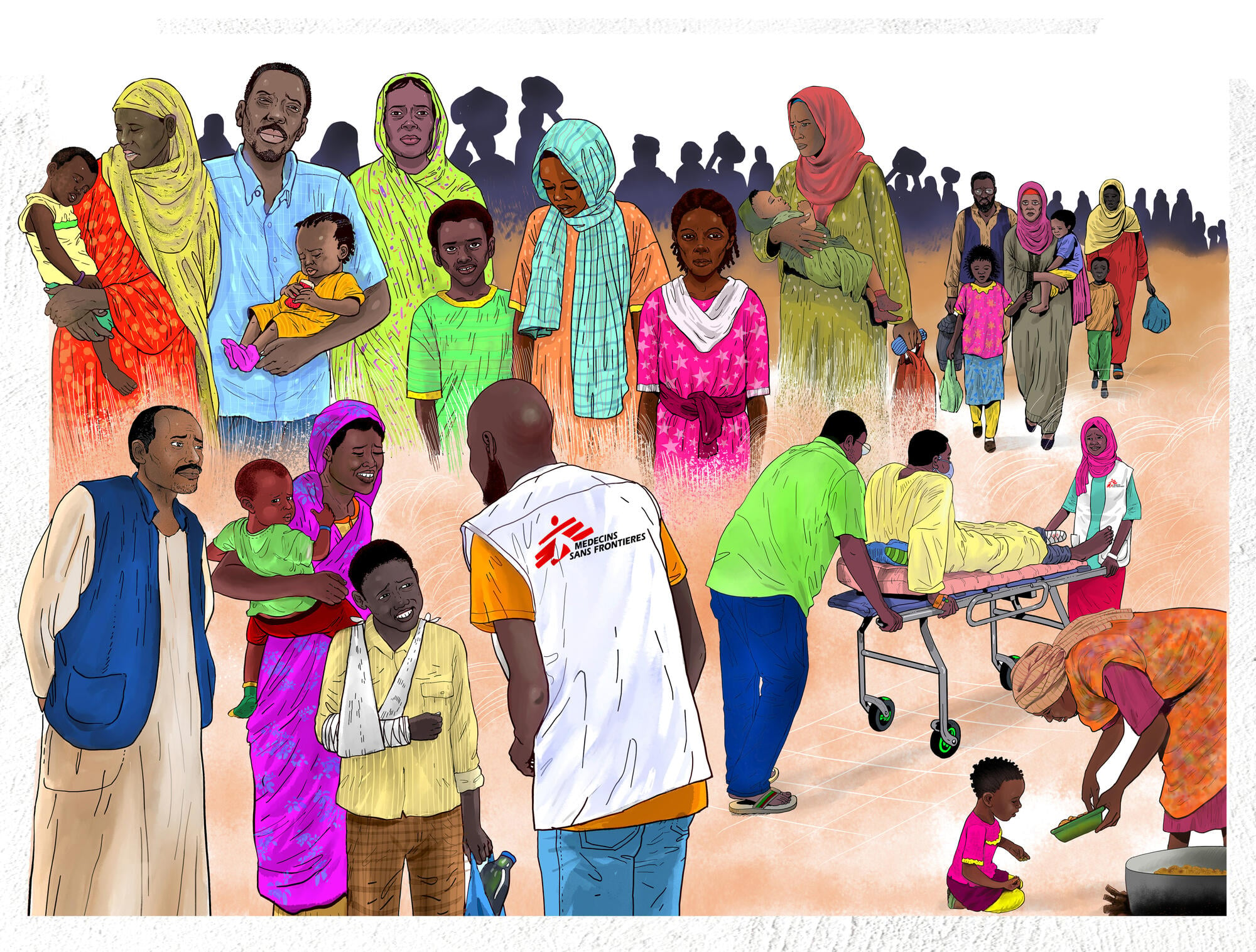
As the violence has intensified, many international organisations have withdrawn from Sudan due to security concerns or funding cuts, further diminishing access to healthcare for communities already lacking adequate services. Despite the significant health challenges people face, cartoons can provide a sense of hope.
“Cartoons give both the artist and the viewer a chance to see some hope, even when the drawings are about disease, displacement, and war,” says Mustafa Kiobi, another illustrator who participated in the series. “I want my work to reach our people across Sudan, to plant hope and ease some of the suffering.”
An image may not change the world, but it can document the struggle to access life’s essentials and carry that story to people who may not have been paying attention.
“For me, art is not a solution to every problem, but it opens a door by making the problem visible,” says Amani Al-Zein, an illustrator and designer for Khartoon Magazine. “Turning to art is a shortcut for carrying humanitarian messages.”
So, who tells Sudan’s story?
The little news coverage that Sudan has received is a story in itself, reflecting what many describe as a ‘crisis of compassion’.
MSF’s collaboration with Khartoon Magazine is yet another attempt to give Sudanese cartoonists space to portray their country, its suffering, its resilience, and its humanity.
“We cannot stop the war with drawings, but we can refuse to look away,” says Fandoglu.
Credit: Source link