

Southern professor completes lecture series in Egypt | News
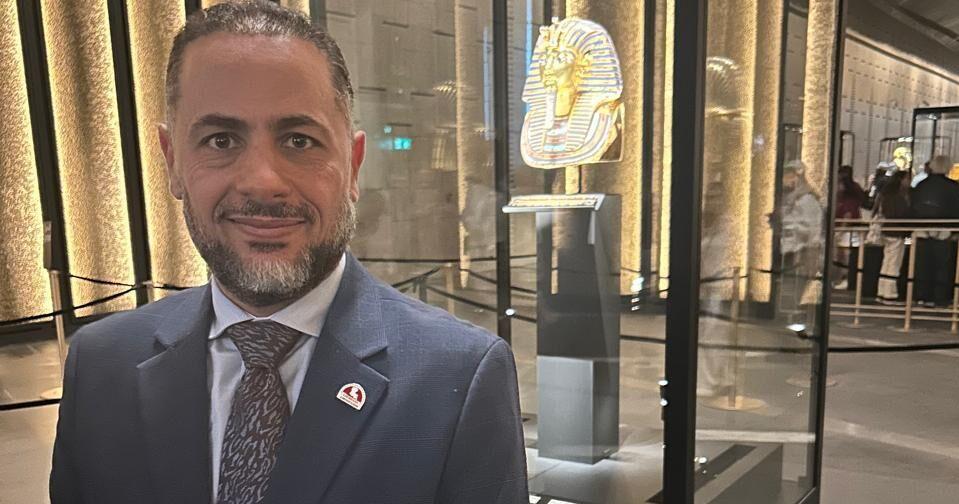
Dr. Haitham Eid leads the Southern University at New Orleans museum studies master’s program, the only one of its kind in Louisiana. In April, he completed a speaking tour in Egypt as part of the prestigious U.S. Department of State Speaker Program. He gave keynote addresses and lectures at the Grand Egyptian Museum, the American University in Cairo and the Arab Academy for Science, Technology, and Maritime Transport. He also joined roundtable discussions with cultural leaders, scholars and professionals.
This interview has been edited for length and clarity.
On your speaking tour, what contemporary issues in museum studies did you highlight?
Museums are now envisioning themselves as civic institutions that bring people together, create more peaceful communities and a more peaceful world. The world is facing an interconnected polycrisis, from wars to pandemics to social justice issues, and all of these compound and compel the civic society to act.
Southern University at New Orleans museum studies professor Haitham Eid
Museums are taking this responsibility and trying to be a space for communities to come together to build cohesion and understanding between the community and the world. That was most of the discussion I had on my speaking tour. Of course, there were more specific issues related to Egypt and the museums in Egypt — a wonderful tour to the Grand Egyptian Museum — so I was fortunate to be a part of this.
Why was Egypt an apt place to deliver your lectures on these themes?
This is a program sponsored by the U.S. Department of State, the Speaker Program. I did a few programs with them before, one with Egypt as well that was last year, another one virtually with Libya. I was born and raised in Egypt, so of course I speak Arabic. I’ve been here for 23, 24 years in the U.S., so I have these experiences from Egypt to the United States, and I can speak to both cultures, both institutions. I had a discussion with a State Department officer, and we coordinated the program to Egypt.
You also participated in some roundtable discussions with professionals and scholars in the museum space. What were your biggest takeaways from them?
I was very inspired by the resilience of museum professionals in Egypt although they suffer from lack of resources, very limited support from governmental organizations. The landscape of museums in Egypt is different from the U.S. We have nonprofit organizations (that) mostly govern museums in the U.S. In Egypt, nearly all museums are governmental organizations, so with lack of resources, funding, it becomes very hard to do your daily work. But the resilience is amazing. The innovation to overcome these obstacles was just very amazing. That’s one of the takeaways — regardless of the challenges and the lack of resources, we can create or do great work in our institutions.
Are there any memories that stand out from your time abroad?
I think, when you do these types of programs, one of the things that you need to always maintain is flexibility.

Southern University at New Orleans professor Haitham Eid stands in the King Tut Ankh Amun Gallery in front of the Golden Mask of King Tut Ankh Amun at the Grand Egyptian Museum on April 8, 2026.
One time, I was traveling back from Alexandria to Cairo for a meeting with the director of the Supreme Council of Antiquities. We received a call that he was called for another meeting with the prime minister of Egypt for something pressing. They wanted to postpone to another day or later in the evening. We had to rework the schedule to do that. With international travel, I think that’s the mindset you need to have, to be flexible, willing to adapt.
In another incident, I was supposed to deliver a lecture in English. They gave the instruction that it would be in English. I went to the venue; it was a university in Aswan. I started speaking in English. I felt like people were not very comfortable. I was like, do you prefer Arabic? They said yes. So, I delivered the entire lecture in Arabic.
What other thoughts did you have from this experience that you want to share with your students and colleagues?
The history, the culture, the sights in Egypt are just profound and inspiring. I always advise people, especially students, to travel to Egypt if they can. I can be biased about this, but it’s truly transformational. I try to take some of the students to Egypt when possible through a study abroad program we have here at SUNO. I’m excited that our program, and myself, started this study abroad program a few years ago. We’re trying to go to Egypt in October. Also, I lead community trips different from the study abroad trips, just trying to bring these two countries together and these cultures together to build more understanding.
Credit: Source link