

South Sudan forms Ebola task force amid regional outbreak threats

JUBA – South Sudan has formed a national Ebola task force as the country strengthens preparedness measures amid concerns over the spread of the virus in the neighboring Uganda and the Democratic Republic of Congo.
The task force was established by President Salva Kiir Mayardit on September 7, 2026, following a formal request submitted to the President on August 21.
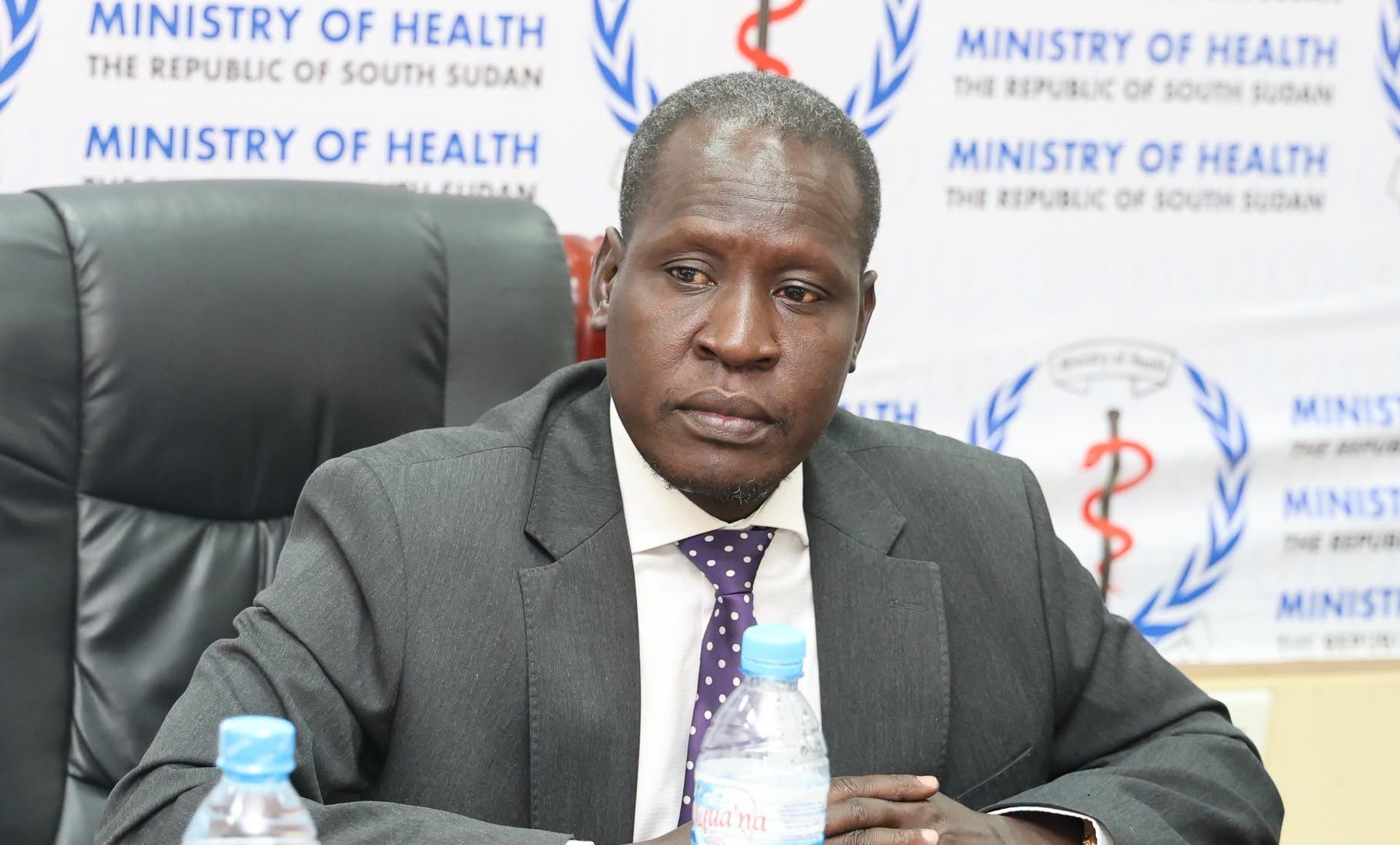
Speaking during the inauguration ceremony of the task force in Juba on Tuesday, Health Minister Thompson Luke said the government is putting in place preparedness measures along shared borders with countries considered at risk of Ebola importation.
“Our request as the National Ministry of Health and the National Public Health Institute was informed by the outbreak of Ebola in our neighboring countries, particularly in DRC and the Republic of Uganda,” Luke said.
The new task force comprises members from the Ministry of Health, the National Public Health Institute, security agencies, finance, wildlife authorities, the University of Juba, religious leaders, and civil society.
The Inspector General of Police, Chief of Defence Forces, and Director General of Internal Security are among those appointed to the task force.
Luke said the presence of security agencies was important because Ebola preparedness involves border management, surveillance, and protection of the public.
He said the committee’s responsibilities include strengthening disease surveillance and early warning systems, laboratory and clinical preparedness, infection prevention and control, public communication, logistics and supplies, and health screening at points of entry.
He said they will also oversee simulation exercises and help mobilize financial and technical resources for Ebola preparedness.
According to Luke, Ebola was confirmed in Ituri province in the DRC in May, before cases were subsequently reported in Uganda.
He said international and continental health agencies had classified South Sudan and several other countries in the region as being at high risk of Ebola importation due to sharing borders with the affected areas.
“On the basis of that, we thought, since continental and international health agencies have categorized countries bordering DRC as high risk of importation of Ebola outbreak, we thought it to uplift the status of response mechanism,” Luke said.
Uganda declared Ebola-free
Uganda recorded 19 or 20 Ebola cases, according to Luke, including two deaths and 18 recoveries.
He said Uganda was declared Ebola-free on 28 August.
“So now, the threat is only confined to an expected spillover to Uganda or South Sudan, but for the meantime, Uganda is cleared of Ebola,” Luke said.
South Sudan has not recorded any Ebola cases from the latest regional outbreak, he added.
“The spillover of Ebola was managed to be fought vigorously by your health workers in the National Public Health Institute in coordination with the ministry,” Luke said.
WHO and Africa CDC to provide technical support
The minister said the World Health Organization and Africa Centres for Disease Control and Prevention would provide technical support to the task force.
“Africa CDC is part of the ministry of health. It supports the ministry of health technically. WHO is also a technical arm of the ministry of health all over the world,” he said.
He said the two organizations would help with technical expertise, coordination, and resource mobilization.
Luke also praised members for attending the inaugural meeting, saying nine of the 12 presidentially appointed members were present.
“I am impressed by this attendance of the inaugural meeting. The presence of 93% of the members is unprecedented, and I appreciate that,” he said.
He urged members to maintain the same level of commitment as the task force begins its work.
The task force is expected to coordinate South Sudan’s national preparedness efforts and strengthen measures aimed at preventing Ebola from entering the country.