

South Sudan decries sanctions, arms embargo at global human rights forum in China
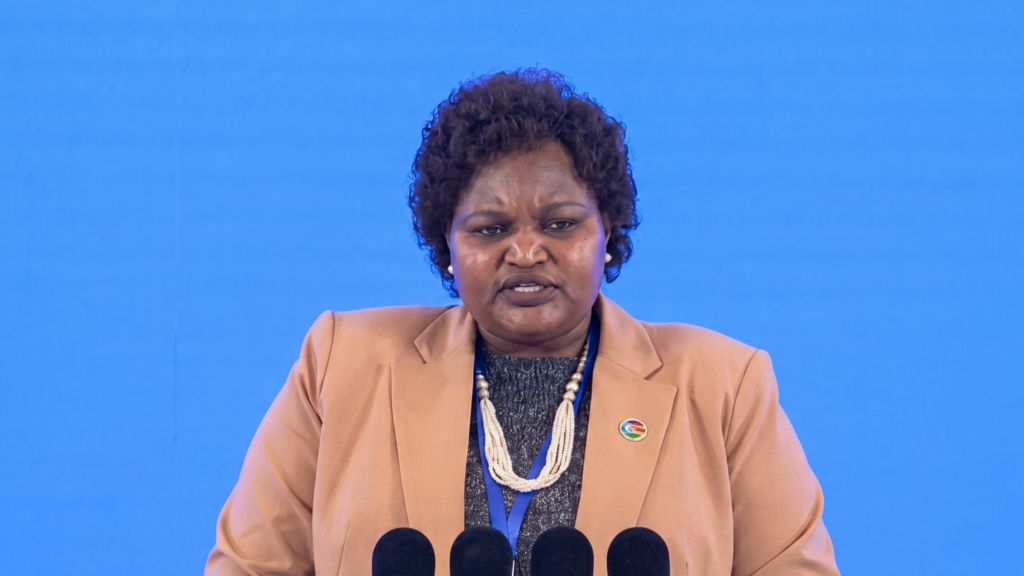

BEIJING – South Sudan has criticised international sanctions and an arms embargo imposed on the country, arguing that such measures undermine state authority and complicate efforts to achieve lasting peace and development.
Speaking at the 2026 Forum on Global Human Rights Governance in Beijing on Thursday, South Sudan’s Undersecretary in the Ministry of Foreign Affairs and International Cooperation, Agnes Oswaha, said countries in the Global South continue to face structural inequalities and external pressures that hinder their development.
Addressing delegates from more than 100 countries and international organizations, Oswaha said the international system remains unequal and requires significant reforms to make it more inclusive, fair, and responsive to the needs of developing nations.
“The realities of today’s world tell us we still have a long way to go,” she said. “Inequalities within and among nations remain a grim reality that is yet to be addressed.”
She argued that countries in the Global South continue to grapple with challenges ranging from foreign debt burdens and sanctions to what she described as manipulation by external actors.
Using South Sudan as an example, Oswaha said the country continues to be affected by international restrictions, including an arms embargo and targeted sanctions.
“In the case of the Republic of South Sudan, we are faced [with the] anxious imposition of arms embargo and targeted sanctions, which embolden opposition groups,” she said. “These are groups that have taken arms against the state.”
South Sudan has long called for the lifting of the United Nations arms embargo, arguing that the restrictions weaken the government’s ability to maintain security and implement peace agreements. Critics of the embargo, however, say the measures were imposed in response to years of conflict and concerns over human rights violations.
Oswaha also stressed the importance of multilateral cooperation in addressing global challenges, including climate change, pandemics, armed conflicts and insecurity.
“Multilateralism remains indispensable,” she said. “The challenges and opportunities of our time, from catastrophic climate change, pandemics, security, and conflicts are global concerns rather than national issues.”
She called for reforms of international institutions to better uphold the principles of sovereignty, equality among nations, collective action and impartial adherence to international law.
“For us to overcome and progress, we must address them collectively and effectively,” she said. “We must reform our multilateral institutions in such a way that they can promote the principles of sovereignty, equality, collective actions, and impartial adherence to international law.”
The two-day forum opened in Beijing under the theme “Joint Development, Shared Human Rights: The 40th Anniversary of the Adoption of the Declaration on the Right to Development and a New Vision for Global Human Rights Governance.”
The gathering attracted more than 400 participants, including government officials, scholars, diplomats and representatives of international organizations, who are discussing the future of global human rights governance and development-centered approaches to human rights.