

Shafaq News..Iraq factions resist disarmament as coalition exit nears
Shafaq News
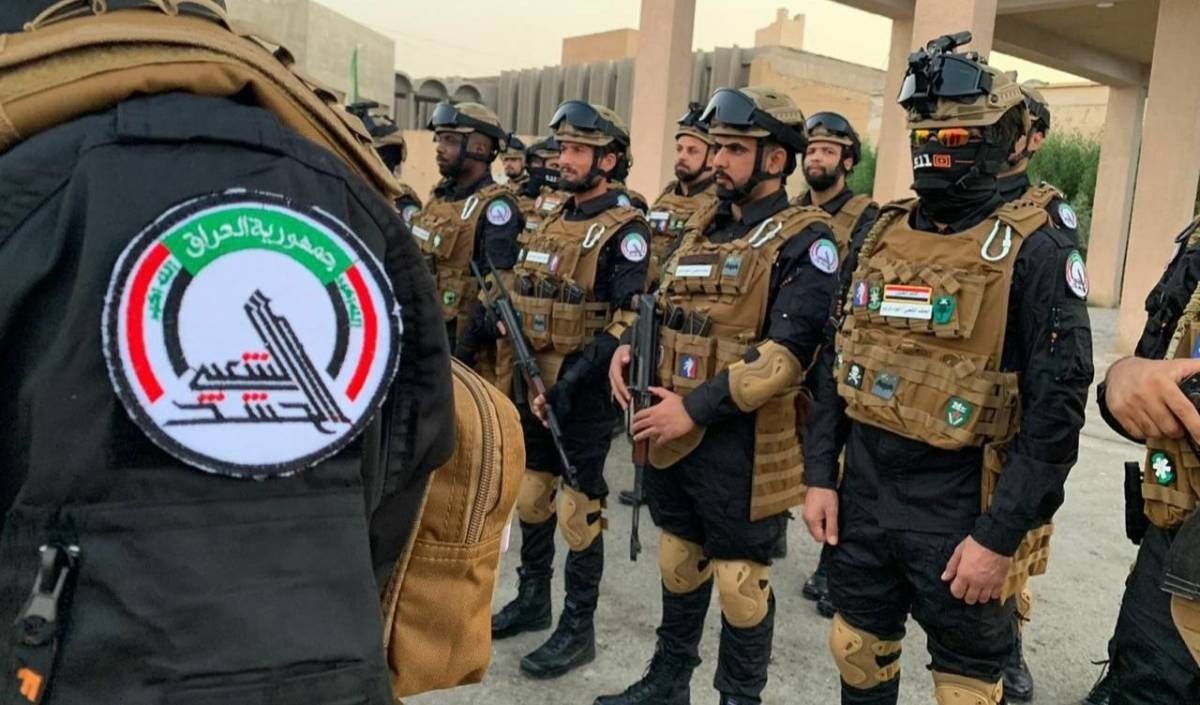
Iraq’s most powerful armed factions say they will give up
their weapons only after the country secures full sovereignty, a condition they
do not expect to be met by the end of September. Prime Minister Ali Falih
al-Zaidi has linked efforts to bring faction weapons under state control to the
September 30 end of the US-led Coalition’s mission, arguing that the departure
of foreign forces would remove one of the factions’ principal justifications
for remaining armed. Some Iran-aligned groups reject that sequence.
The clearest statement of their terms came from Kataib
Sayyid al-Shuhada, an Iran-aligned faction inside the state-funded Popular
Mobilization Forces (PMF) and a group the United States designated a terrorist
organization in 2023. Its spokesman, Kadhim al-Fartousi, told Shafaq News the
faction would not disarm while foreign forces and outside threats to Iraqi
sovereignty remained, and that its arsenal exists to defend the country rather
than to serve any single government. The factions, he said, treat weapons and
sovereignty as one bargain.
Washington’s pressure on the question is concrete. The
House-passed version of the US National Defense Authorization Act for Fiscal
Year 2027 (H.R. 8800), which as of September 11, 2026 has not yet been enacted
into law, would limit the obligation of certain US security-assistance funds
for the Iraqi security forces to no more than 25 percent until the Secretary of
Defense certifies that Baghdad has taken credible steps to “reduce the
operational capacity of Iran‑aligned militia groups not integrated into the
Iraqi security forces” through a publicly verifiable disarmament,
demobilization and reintegration process; strengthen the authority and
operational control of the Prime Minister of Iraq as Commander‑in‑Chief over
the Iraqi security forces; and investigate and hold accountable members of
“Iran‑aligned militias or the Iraqi security forces” who operate outside the
formal chain of command and engage in attacks on US or Iraqi personnel or
otherwise act in an illegal or destabilizing manner.
Alina Romanowski, the former US ambassador to Iraq, told an
Atlantic Council panel in Washington that sanctions would remain Washington’s
main instrument and would tighten until the United States reaches a broader
settlement with Iran.
For Baghdad, she said, the working relationship between
al-Zaidi and President Donald Trump is the most effective way to soften that
pressure and turn it toward economic cooperation. The two met in Washington
over the summer.
Al-Zaidi has little margin to absorb any of it. An
independent banker with no prior senior office, he took power in May as a
compromise candidate of the Coordination Framework —the alliance of Shia
political forces that includes the parties tied to the factions he is now asked
to confront— after months of deadlock following the 2025 election. At 41, he is
the youngest prime minister in Iraq’s history.
Fahd al-Jabouri, a leader of the National Wisdom Movement, a
Shia party within the Coordination Framework, said disarmament is settled in
principle and needs only time. He described a document, expected to be signed
in the coming weeks, that would set out a mechanism for the handover, and
called it a near-agreement among the government, the factions, and the
Framework.
September 30, in his account, opens the process rather than
ends it, with the handover running toward the close of the year.
There are talks to point to. A three-member committee formed
by the Framework —the former prime ministers Mohammed Shia al-Sudani and Nouri
al-Maliki, with Badr Organization leader Hadi al-Amiri— has met the factions in
recent weeks over the guarantees they want, among them the coalition’s
departure and national control of Iraq’s air defenses.
Issam al-Faili, a professor of political science at
al-Mustansiriyah University in Baghdad, reads the legislative track less
hopefully. “The long-delayed PMF Service And Retirement Law, which would
fix the force’s ranks, pay, and command structure in law, is being used to fold
the factions into the PMF rather than to dissolve them,” a path that would
keep their weight inside the state. Some groups are making any reorganization
conditional on the law’s passage, he added, and the bill remains stuck.
Read more: Iraq’s PMF Service and Retirement Law: Is political exploitation inevitable?
That reading fits a proposal reported in August, under which
weapons handed over by the factions would be stored at PMF sites rather than
passed to the defense or interior ministries or the counter-terrorism service.
The PMF still contains the Iran-aligned factions themselves, so the arrangement
would put the weapons under a state command in name while leaving them inside
the same network. Shiite political figures have described the shift as a move
from disarmament toward what they term weapons management.
Sajad Jiyad, an Iraqi analyst and fellow at Century
International, part of The Century Foundation, made a similar case at the
Atlantic Council. The emerging timeline, he said, ends the coalition’s mission
but not the factions’ armament; the groups see no reason to disarm while US
sanctions still target their commanders, and no political guarantees are on the
table.
He described the government’s approach as pressure paired
with incentive: sanctions and the threat of force on one side, the promise of
foreign investment, particularly in energy, on the other. That investment, he
said, is meant to revive an economy he estimates has lost billions of dollars
to disrupted oil exports, leaving the state struggling to cover salaries and
pensions.
Jiyad put al-Zaidi’s real problem at home. Relations with
Washington are the warmest in years, he said, carried by the rapport with Trump
and by back-channel diplomacy. But the prime minister holds no bloc or party of
his own to shield him from the established leaders who have run Iraqi politics
for two decades. Should the effort fail, Jiyad suggested, al-Zaidi could weigh
resignation rather than let wider sanctions fall on the state —a possibility he
raised, not a stated intention.
A thinner US presence brings its own risk, Romanowski added:
it narrows Washington’s options for a quick military response if the factions
escalate, including against the Kurdistan Region, which has taken repeated
drone and missile fire.
Haitham Numaan, a professor of political science at the
University of Exeter, is more doubtful still. Al-Zaidi’s outsider standing
gives him some room, he said, but a prime minister produced by the existing
order cannot break with it, and the factions are bound too tightly to powerful
blocs for him to take them on directly.
What has happened so far, in his view, is a set of political
maneuvers meant to convince Washington that change is coming. He warned that
Iraq could be pulled into a wider US-Iran confrontation, whatever Baghdad
intends.
Read more: Iraq’s disarmament deadline pits Baghdad against Iran-aligned factions
That danger stopped being hypothetical while the talks were
still underway. Saudi Arabia said several drones launched from Iraq struck its
East–West pipeline in the Riyadh and Medina regions, causing casualties and
property damage and forcing a precautionary shutdown of a line that carries
crude toward the Red Sea coast. Riyadh said it reserved the right to protect
its sovereignty, security, and installations.
No faction claimed the attack, a silence that stands out
from the openness with which the same groups had set out their terms weeks
earlier.
Al-Zaidi’s response tracked the demand Washington has been
pressing. After authorities concluded the drones had flown from a site inside
Maysan, he ordered an investigation into the province’s operations command and
removed its commander, while security forces opened a large-scale search for
those responsible, a campaign the Counter-Terrorism Service could join.
The move asserted his authority as Commander-in-Chief, the
same authority the US defense bill would have him strengthen, and it exposed
the limit of the arrangement his government has been negotiating: weapons kept
inside the state yet still inside the factions’ network had, by Riyadh’s
account, just been fired across a border at a neighbor whose investment Baghdad
is counting on to rescue its economy.
September 30 will close the coalition’s military mission,
the final phase of a drawdown that began when US forces left federal Iraq in
2025. The factions’ weapons will still be in the country the next day. Under
the arrangements now discussed, they would pass into state-run PMF storage
rather than be surrendered, a distinction the government and the factions have
yet to settle.
Read more: Tension meets dialogue as Iraq approaches September 30
Written and edited by Shafaq News staff.