

“Seventeen Years of Excellence: Advancing Knowledge Innovation and Service” | Opinion
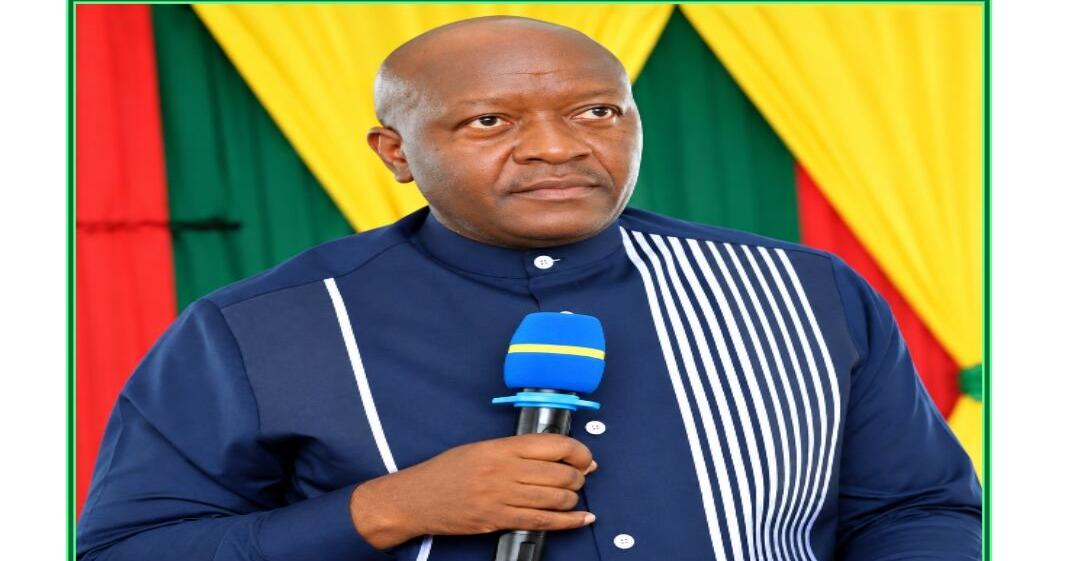
Address by Hon. Augustine Kpehe Ngafuan
Minister of Finance and Development Planning, Republic of Liberia
At the 17th Founders’ Day Celebration of William V. S. Tubman University
Monday, September 14, 2026
Harper, Maryland County
The President of the University, Prof. Dr. Olu Q. Menjay;
Rev. Bishop Michael Tuan Sieh, Sr.,
Suffragan Bishop of the Episcopal Church in Liberia;
The Superintendent of Maryland County and other officials of Government;
Traditional and religious leaders;
Members of the diplomatic corps and our development partners;
Faculty, staff, students, alumni, and friends of this great institution;
Distinguished guests;
Members of the press;
Fellow Liberians:
Good morning.
I stand today on grounds that remember.
These grounds remember the vision that gave birth to Tubman College of Technology in 1978. They remember the first 87 students who came here to study architecture, civil engineering, electrical engineering, electronics, and mechanical engineering, and who left with skills to help build a nation.
These grounds also remember the silence. They remember December 1989, when war interrupted instruction, emptied classrooms, scattered students and faculty, and left buildings looted and broken. For years, what had been built in hope stood as a painful reminder of what conflict can take from a people.
But Harper remembers something else. Harper remembers how to rise.
Liberia remembers how to rise. And Tubman University is one of the clearest proofs that a nation can be wounded without surrendering its future.
That is why this Founders’ Day is more than an anniversary. It is the story of an institution born from vision, tested by war, restored by courage, and summoned to a new season of excellence.
We honor that past today by deciding what its sacrifices require of us now. So today, we remember. And then we recommit.
We remember the people of Maryland County, who donated land in honor of President William V. S. Tubman; President William R. Tolbert, Jr., under whose leadership the college was built and opened; and the administrators, faculty, students, and workers who established its reputation.
We remember President Ellen Johnson Sirleaf, whose administration made its rebuilding part of Liberia’s postwar renewal, and Dr. Elizabeth Davis-Russell, whose determination helped turn a damaged college into a comprehensive university.
We honor all who refused to accept that quality higher education must stop in Monrovia. And we salute the present Board of Trustees and Prof. Dr. Olu Q. Menjay as they guide this new chapter.
Before I go further, permit me to thank Honorable Nathaniel Toe, Superintendent of Maryland County, the chiefs and elders, the women and youth groups, and all who came to the River Gee-Maryland border last night to welcome us. I also thank Dr. Menjay and the Tubman University family for the warmth we have enjoyed since arriving on campus Saturday night.
Several sons and daughters of Maryland County who serve with distinction at the Ministry are here with me: Reverend John Monger, the most senior Director in the Department of Budget; Ms. Carolyn Myers Zoduah, Senior Technical Focal Point for the Budget; Mr. Benedict Williams, Senior Compliance Officer for Audit; and Mr. Dash Wilson, Assistant Director for Transport. As we prepare the 2027 National Budget, this journey has become a practical budget hearing.
Seventeen years ago, on September 14, 2009, an Act signed by President Sirleaf elevated the former Tubman College of Technology to William V. S. Tubman University. I remember that season personally. I was Minister of Finance then, and I am Minister of Finance again today.
At the time, some questioned whether a university could succeed this far from Monrovia, with difficult roads, damaged infrastructure, limited faculty, and a national budget already carrying the burdens of postwar reconstruction.
So putting government’s scarce resources to this effort appeared then like a leap of faith.
But faith is not the denial of difficulty. Faith is the decision that difficulty will not have the final word.
The Government provided seed resources, the university opened, and 287 students began a new journey. Today, the university serves nearly 3,000 students across six colleges and more than twenty degree programs.
What some considered too risky has become indispensable. What began as seed has become a living tree whose branches reach across the Southeast and the entire Republic.
This history teaches us an important lesson: public investment, when joined with visionary leadership and determined people, can change the destiny of a region.
This anniversary carries an added national significance. While here in Harper attending this program, I want to report that I have just received an update from the Commissioner General of the Liberia Revenue Authority, Mr. James Dorbor Jallah. The Commissioner General shared with me a picture of our revenue generation dashboard that records government revenue collection in real time.
And the dashboard is showing that my country, your country has just crossed the historic threshold of one billion United States dollars in domestic revenue collected within a single year. For the first time in the 179-year history of our Republic, Liberians are mobilizing domestic revenue on this scale.
This achievement belongs not just to our illustrious leader, President Joseph Nyuma Boakai, Vice President Jeremiah Kpan Koung, LRA Commissioner General James Dorbor Jallah, or myself. It belongs to all Liberians – whether in government and out of government. It belongs to the Liberian people: the market woman who pays her taxes, the worker whose income is taxed, the business that complies with the law, and the customs officer or revenue agent who does an honest day’s work. A nation that wants greater control over its future must raise more of the resources needed to finance that future.
Many Liberians remember the years before December 1989 as our “normal days.” Even during many of the strongest prewar years, the national budget remained well below the level Liberia is now mobilizing.
Conditions across eras differ, so revenue alone cannot prove that every aspect of life is better today. It does prove that postwar Liberia is expanding the capacity of the state and that recovery can grow into renewal.
Why, then, do we celebrate one billion dollars? Because of what public revenue makes possible when it is honestly collected, wisely allocated, carefully spent, and publicly accounted for.
We celebrate salaries kept current and improved for some public servants, including teachers. We celebrate seven vehicles, including ambulances and employee buses, for Jackson F. Doe Memorial Regional Referral Hospital; the modern emergency ward under construction there; a new 650 kVA generator; and more reliable supplies of drugs and medical materials.
I stopped at Jackson F. Doe on Friday and saw both real progress and urgent needs. We also celebrate a new College of Nursing complex and a large auditorium at Grand Gedeh University, along with roads, schools, health facilities, and transport investments reaching communities across Liberia.
And here at Tubman University, public revenue is taking physical form.
In 2009, approximately US$1.5 million in early government support helped launch the transformation of this institution. In the 2026 National Budget, Tubman University’s allocation is approximately US$6.4 million. Within the current program, about US$1.1 million is supporting priority capital works and rehabilitation.
Those figures are visible in the repairs at the Academic Complex and the Elizabeth Davis-Russell Building; renovation of residences, staff quarters, classrooms, the old Engineering Building, and the Monrovia office; reconstruction of the perimeter fence; drainage works; and construction of the new College of Engineering and Technology Building. That complex is a promise taking physical form, with new spaces being prepared for teaching, design, discovery, and practical work.
The government is not doing this university a favor by supporting these projects. We are carrying out a national duty. The taxes paid by citizens must create opportunity in every region of our country.
Let me be equally clear about what one billion dollars does not mean. We do not claim that it has solved, or will suddenly solve, all of Liberia’s problems.
No government only two years and eight months into its tenure could honestly claim to have solved problems accumulated across generations. Countries with budgets many times larger than ours still face serious needs. A billion dollars is evidence that Liberia has more capacity to do the work, and therefore a greater duty to perform.
The true measure of revenue is not what enters the government’s account. It is what enters the life of the citizen: a salary paid on time, medicine in a clinic, a bus reaching a distant county, a road lowering the cost of trade, a working laboratory, or a scholarship that keeps a gifted student in school.
On the road from Monrovia to Maryland, and during my visit to Grand Kru, I saw the two Liberias we must bring together. The paved road now reaches Tappita. Between Zwedru and Fish Town, I saw two National Transit Authority buses, one heading toward Monrovia and the other toward Harper.
There was a time when an NTA bus would hardly dare put its tires on the road to the Southeast. The road is not yet perfect, but those who work here no longer have to travel through Cote d’Ivoire to move from one part of Liberia to another. That matters.
I also heard concerns about roads, schools, health services, employment, and transport. While life is improving for many, life is still challenging for many. Our delegation came to listen as well as observe. As we prepare the 2027 budget, we will carry these realities back to Monrovia. And we will act.
We cannot fund every request at once. Revenue performance, procurement, logistics, weather, and distance all affect execution. But scarcity must never excuse indifference. It must compel us to choose carefully, spend wisely, complete what we start, and report truthfully on results.
That obligation applies to government and to the university. Public support carries public responsibility. Procurement must be transparent, projects completed to standard, and facilities maintained. Students deserve an education whose quality matches the sacrifices their families and taxpayers make.
This brings us to the heart of today’s theme. Knowledge, innovation, and service are not decorative words for an anniversary banner. They are the duties of a serious university.
Knowledge asks: What do we understand?
Innovation asks: What can we do differently and better?
Service asks: Whose life will improve because of what we know and what we create?
A serious university must bring all three together. Knowledge must leave the textbook and enter the rice field. Innovation must leave the laboratory and reach the marketplace. Service must leave the mission statement and enter the villages, clinics, schools, businesses, courts, farms, ports, and public institutions of Liberia.
That is how education becomes economic transformation.
Economic transformation begins when an agriculture graduate helps a farmer increase yields, an engineer designs a road that survives our rains, a health-sciences graduate brings care closer to a rural family, a teacher awakens confidence in a child, or a business graduate creates jobs instead of waiting for one.
That is why higher education is productive infrastructure.
A laboratory, a trained professor, reliable internet, a research grant, and a scholarship are all infrastructure. They create the minds that design, finance, construct, manage, and maintain the roads, bridges, hospitals, businesses, and institutions our nation needs.
I commend the progress already underway. The Smart School System has digitized registration, billing, course selection, and other student services. A homegrown online testing platform is modernizing examinations.
The Liberia Telecommunications Authority has committed to stronger connectivity. The Board has approved graduate programs in Educational Leadership, Business Administration, and Construction Management, opening a new frontier for advanced learning in the Southeast.
These achievements show that innovation is not something Tubman University must wait to import. Innovation already lives here.
But an anniversary must also allow honest self-examination. Celebration without reflection becomes a ceremony without progress.
This university faces teething challenges that we must continue to address.
The new five-year Strategic Plan, “Transformation for Worthy Service,” provides the right framework. Its five pillars are governance, academic excellence, research and innovation, sustainability, and infrastructure. Those pillars must now become measurable action.
At the plan’s 2028 midterm evaluation, the test will not be meetings held or reports written. It will be whether graduates are finding work and creating businesses, faculty qualifications are improving, research is solving local problems, student life is better, new revenue is being raised, and buildings are completed and in use.
The plan sets demanding goals. It seeks to have 80 percent of graduates secure employment within six months, at least 10 percent of graduates establish businesses within three years, and non-government revenue grow by 20 percent over five years. These goals cannot be achieved by the university alone.
Government must remain dependable, but it cannot be the only partner. The private sector should help train the workers it needs by sponsoring laboratories, supporting research, providing internships and apprenticeships, and shaping relevant curricula. Development partners should align support with the strategic plan.
Alumni should see the university as a responsibility they still carry through scholarships, mentoring, equipment, expertise, and internships. The university must also raise responsible income from professional education, applied research, consulting, grants, alumni giving, and carefully governed enterprises without pricing poor Liberian students out of education.
I therefore propose a compact for Tubman University’s next five years.
First, complete before multiplying. Let us finish, equip, and maintain what is already underway. An unfinished building teaches no class, and an unequipped laboratory conducts no experiment.
Second, connect learning to work. Every program should build partnerships with employers and communities. Internships, career guidance, and entrepreneurship must become part of the pathway from classroom to career.
Third, invest in the people who teach. No university can rise above the quality of its faculty. Strengthen the Grow-Our-Own approach, expand graduate training and research, and retain excellent teachers.
Fourth, give students responsibility and voice. Students should be represented when policies affect their lives; student leadership must be constructive, informed, peaceful, and accountable.
Fifth, make Tubman University the Southeast’s problem-solving laboratory. Let research address coastal erosion, climate-resilient roads, renewable energy, sustainable mining, public health, fisheries, food processing, sanitation, and trade. The best research agenda is the one that improves life outside the university gate.
To the faculty: help Liberia discover what it needs to know. To the administration and Board: lead transparently and put students first. To our partners: there is talent in Harper waiting for opportunity. To the alumni: come home, not necessarily by changing your address, but by changing your level of engagement.
And to the students of Tubman University, I speak to you from my heart.
I first stood before students on this campus for Career Day in February 2014. I came as Minister of Foreign Affairs after traveling nearly fifteen hours by road, convinced that anyone who represents Liberia abroad must know its realities at home. I spoke frankly about life. Twelve years later, the central truths have not changed.
This campus is being rebuilt for you, but Liberia cannot build your character for you. Government can finance a classroom, but it cannot force you to learn. Your family can sacrifice for your tuition, but cannot sit your examination. Do not come here only to collect a degree. Develop the competence to solve problems, work with others, communicate clearly, act with integrity, and continue learning.
Remember that time is your most valuable asset. Youth leaves many roads open, and in the language of finance, options have value. Study, practice, build healthy friendships, learn useful skills, and serve your community. Idleness, drugs, dishonesty, and distraction close doors that may be hard to reopen. No powerful person has ever reversed the hands of the clock. Use your time well.
Keep your eyes on your dream. In the biblical story, Peter walked on water while his attention remained fixed on Christ; when he surrendered his focus to the wind, he began to sink. Every generation faces wind: poverty, disappointment, peer pressure, family burdens, fear, and uncertainty. Face it, prepare for it, and keep your eyes on the shore.
Cultivate the attitude of success. Intelligence matters, but character determines whether knowledge becomes useful. Discipline, humility, integrity, respect for time, and respect for others will travel farther than any transcript. Your attitude helps determine your altitude.
Prepare for uncertainty by becoming versatile. Do not imprison yourself within your major. An engineer must communicate; a business student must understand technology; a health professional must understand the community.
Above all, be ambitious, but let your ambition be larger than yourself.
In 2014, I urged young Liberians never to pursue personal ambition at the expense of the national ambition. I repeat that appeal today. Liberia needs your dreams to include Liberia. We cannot log out of our country. We must remain logged in to our country. We must remain alert to its problems, invested in its progress, and willing to do our share.
If you become an engineer, remember the community cut off by a broken bridge. If you become a nurse, remember the mother far from a clinic. If you become a teacher, remember the child who thinks poverty has decided the future. In public service, remember that public money is the sweat of the people and a sacred trust.
Your education must become somebody else’s evidence that Liberia can work. You are studying as Liberia rebuilds roads, expands digital systems, invests in energy, confronts drug abuse, and seeks greater economic self-reliance. Our country needs engineers, researchers, health professionals, teachers, ethical managers, and entrepreneurs. It needs builders more than commentators and problem-solvers more than excuse-makers.
The Southeast is not the edge of Liberia. It is a frontier of possibility, with fertile land, forests, minerals, fisheries, a long coastline, cultural wealth, and opportunities for trade and tourism. Resources do not create prosperity by themselves. Knowledge turns them into value, innovation into enterprise, and service into better lives.
That is why the future of southeastern Liberia and the future of Tubman University are inseparable.
Distinguished ladies and gentlemen:
Two days from now will mark two years since I returned as Minister to the Ministry of Finance and Development Planning. I returned with the conviction that Liberia can enlarge its possibilities if we enlarge our revenue, protect public resources, invest in our people, and move with deliberate speed.
Standing here today brings my public-service journey full circle. I was at the Minister of Finance when government made an early investment in the rebirth of this institution. I am back at the Ministry as Tubman University celebrates the 17th anniversary of its founding and adopts a bold new strategic plan. The circumstances are different, but the duty is the same. We must choose faith over fear, investment over neglect, and national possibility over regional isolation.
Let me therefore make our commitment clear.
We will work for predictable support within the limits of the national budget. We will insist on value for money and visible results. We will prioritize completion of ongoing infrastructure. We will work with the university to mobilize partners for student transportation, stronger connectivity, improved residences, faculty development, research, and the learning spaces this growing institution requires.
We will do so because this is not only Maryland’s university. It is not only the Southeast’s university. It is a national university located in the Southeast and serving the Republic of Liberia.
Seventeen years ago, Liberia planted again on ground once devastated by war. Today that seed has become a university. The task of the next seventeen years is not merely to keep it alive. The task is to make it excellent, innovative, sustainable, and second to none.
Let the buildings rising on this campus become symbols of minds rising across Liberia.
Let the light coming to these classrooms become the light of discovery.
Let every diploma carry the name of a graduate and a promise of service.
Let every student who enters these gates know that geography does not limit genius, poverty does not cancel potential, and Liberia’s future will not be built only in the capital. It will be built in Harper and in every community where a trained mind chooses worthy service.
These grounds remember what war destroyed.
May they now testify to what peace, knowledge, innovation, honest work, and national unity can build.
Rise, Tubman University.
Rise in knowledge.
Rise in innovation.
Rise in service.
Rise for the Southeast.
Rise for Liberia.
And as Tubman University rises, may Liberia rise with it.
Happy Seventeenth Founders’ Day.
May God bless William V. S. Tubman University, and may God bless the Republic of Liberia.
I thank you.
Credit: Source link