

Samsung and SK hynix boost China chip production despite U.S. curbs
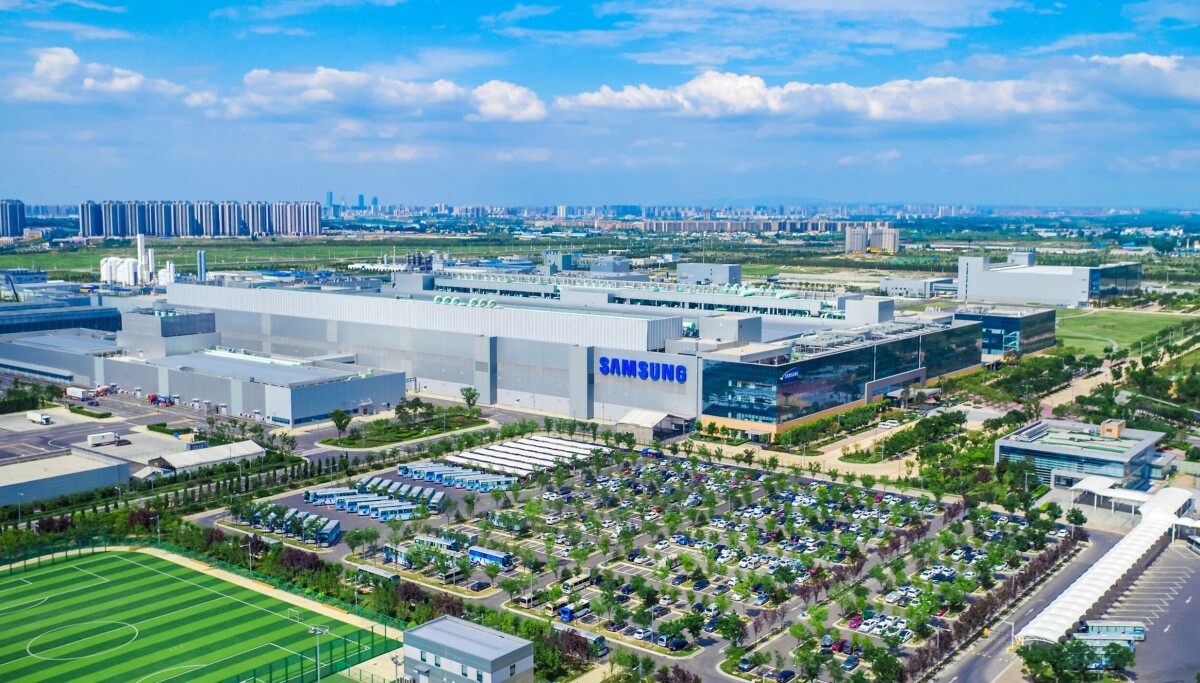
The two Korean chip giants are expanding legacy-memory output in China as AI demand boosts profits despite tighter U.S. equipment restrictions.
NEWS ANALYSIS
Washington may have expected its multilayered semiconductor restrictions on Beijing, dating back to the Biden-era export curbs in 2022, to gradually reduce Samsung Electronics’ and SK hynix’s reliance on their Chinese production bases.
But the strategic importance of their Chinese chip factories has only grown amid the AI-driven memory boom, as even relatively old-generation memory chips made in China are enjoying strong demand and high margins.
Samsung and SK hynix have ramped up capacity and investment in their Chinese operations and expanded NAND production since 2025, which keeps China’s share of their overall memory production broadly at levels seen before Washington imposed export restrictions on chip equipment against China.
“China’s share of our production has remained largely unchanged, and we have no plans to scale back our operations there,” a senior executive at SK hynix told the Korea JoongAng Daily.
Samsung’s Xi’an plant handles 40 percent of the company’s total NAND flash production. SK hynix’s Wuxi factory accounts for 40 percent of its total dynamic random-access memory (DRAM) output, while its Dalian plant handles 30 percent of total NAND output.
In 2025, Samsung’s equity investment in its Xi’an factory surged 68 percent from a year earlier to 465.4 billion won ($334 million) — funds expected to go toward upgrading production lines. Before that, there was a pause in such investment between 2020 and 2023.
SK hynix’s investment sum is even greater, exceeding 1 trillion won for its DRAM production plant in Wuxi and its NAND flash plant in Dalian. At the Wuxi plant, the company invested 581 billion won, up 102 percent from 287.3 billion won in 2024, while the Dalian plant received 440.6 billion won, a 52 percent increase.
The two companies are accelerating chip factory construction in Korea to keep up with demand, but a significant surge in supply won’t come anytime soon. At a July conference call, Samsung forecast that a meaningful increase in wafer capacity won’t happen before 2028, an outlook previously echoed by multiple analysts.
Their China operations, though limited to conventional memory processes, have become just as strategically important as their high bandwidth memory (HBM) lines — prices for legacy DRAM and NAND have in fact climbed even more steeply than HBM prices, prompting chipmakers to shift some production lines in Korea back toward conventional DRAM to chase that profitability.
Domestic outlets earlier reported that SK hynix’s second Dalian factory — equipment for which is set to arrive this year — will begin production next year, adding 40,000 to 60,000 wafers a month and lifting the site’s overall capacity by 50 percent.
“As demand for enterprise solid-state drives surges due to rapid AI data center expansion, NAND flash supply has to keep up, which is why the company is moving quickly to ramp up supply there,” said another source with knowledge of the matter.
SK hynix acquired Intel’s NAND business in 2021, taking over the original Dalian factory in the process. Construction on a second Dalian line broke ground around the same time but stalled for years amid a memory chip glut and strict U.S. export controls on chip equipment before resuming this year.
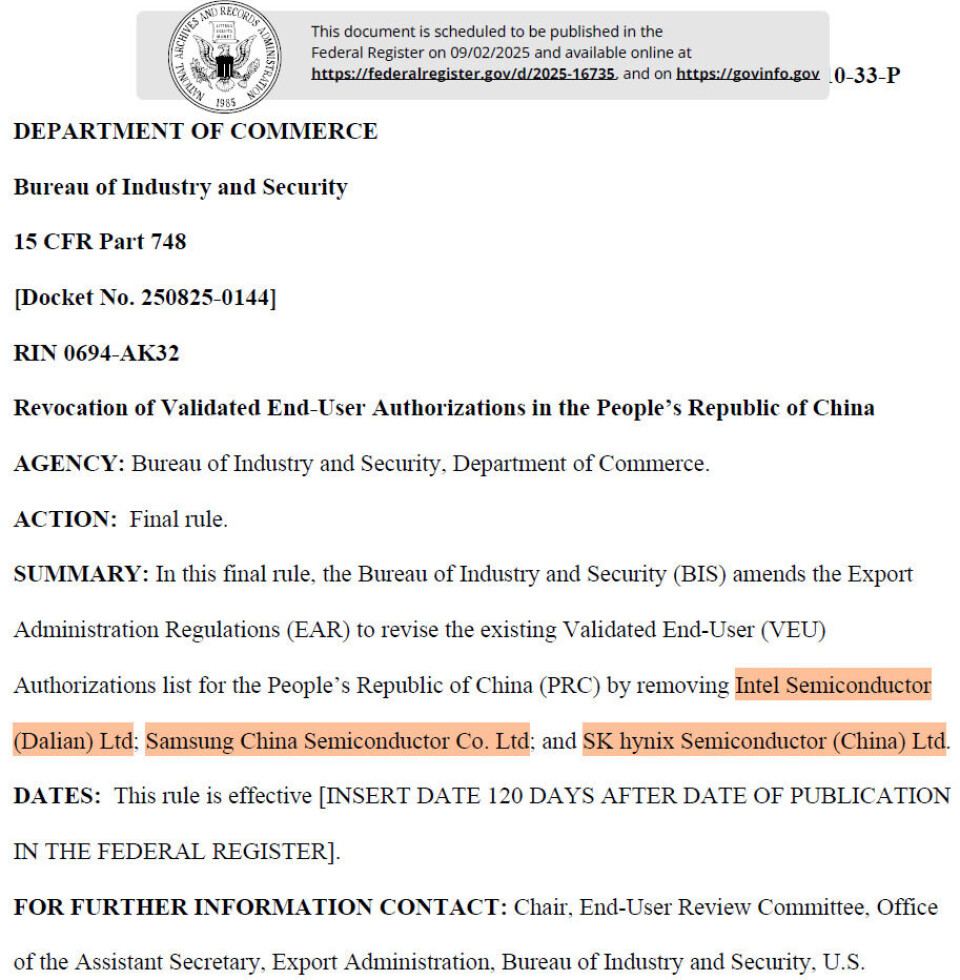
Korean chipmakers’ ramp-up in China comes amid heavy U.S. export controls. The U.S. Commerce Department once granted Samsung’s and SK hynix’s Chinese factories validated end user status, allowing them to freely import some controlled U.S. chip equipment without obtaining a license each time.
However, the United States terminated that status in 2025, and Korean chipmakers now have to renew licenses annually to bring related equipment into their facilities in China. Their China factories are heavily reliant on etching tools from U.S. firms including Applied Materials and Lam Research.
To sidestep that restriction without risking a U.S. export ban, Samsung and SK hynix have reportedly spent two years testing Chinese-made tools for use in their China operations, according to Reuters — tools that do not require the precision of HBM production, since those operations run legacy processes.
That would have marked a significant leap for Chinese toolmakers — if the world’s leading chipmakers adopted their equipment, it would move China a step closer to technological self-sufficiency. However, Samsung and SK hynix denied the report, both maintaining that they have not conducted any testing that violates U.S. regulations.
BY LEE JAE-LIM [lee.jaelim@joongang.co.kr]