

Safaricom turns to Pesapal’s PoS network to bring tap-to-pay to M-PESA

Safaricom, Kenya’s largest telecommunications company and operator of M-PESA, is bringing tap-to-pay to physical shops through a partnership with Pesapal, a Kenyan payments company that provides point-of-sale terminals to merchants.
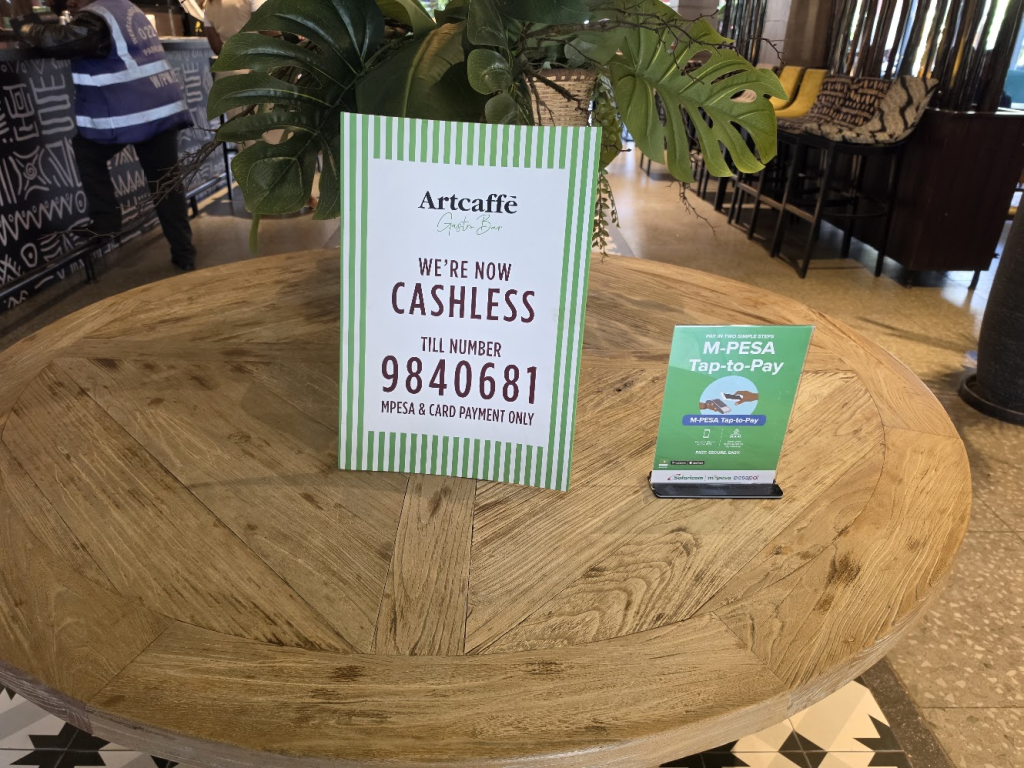
Customers with near field communication (NFC)-enabled Android or iPhone devices can now tap their phones on compatible Pesapal terminals to pay a merchant through M-PESA, rather than manually entering the merchant’s Till Number, a code used to receive M-PESA payments. Customers without NFC can scan a quick response (QR) code instead.
The partnership lets Safaricom put M-PESA on thousands of existing checkout terminals without building its own POS network. It adds M-PESA tap and QR payments to the terminals that Pesapal’s merchants already use, changing how customers pay without changing the underlying Till Number system.
The rollout starts with 30,000 Pesapal terminals in Kenya, mostly in restaurants, hotels, and selected supermarkets, according to Agosta Liko, founder of Pesapal. Safaricom is using the network to let customers pay by tapping their phones at checkout. Consumers pay no extra charge, just as they would when paying through an M-PESA Till Number.
Liko told TechCabal on Thursday that Pesapal spent six months testing the service and is now making it available to all merchants with compatible terminals.
“Thousands of businesses trust our platform, and by teaming up with Safaricom, we are delivering the faster, error-free transactions their customers expect. Today, we activate the future of payments,” he said.
How it works
A merchant’s existing M-PESA Till Number remains the account that receives the money, while Pesapal provides the terminal and Safaricom handles the M-PESA transaction. Customers can now pay by tapping their phone on the terminal instead of entering a Till Number manually.
A cashier first enters the amount on the Pesapal terminal. A customer with an NFC-enabled phone then taps it against the machine, which opens Safaricom’s My OneApp with the merchant’s Buy Goods number and payment amount already populated. The customer checks the details and authorises the transaction with an M-PESA PIN or biometrics.
Customers whose phones do not support NFC can scan a QR code displayed on the same terminal. Safaricom’s existing scan-to-pay function also works with QR codes displayed by other merchants, so customers do not need a Pesapal terminal to make a QR payment.
Safaricom says its scan-to-pay service is already available at more than 60,000 merchant outlets and is targeting 500,000 within the next year.
It is all about speed
Safaricom is also using My OneApp to let customers complete payments without manually entering a Till Number. Customers can scan printed or handwritten receipts and, where the information is available, have the app identify the merchant’s Till or PayBill number and payment amount. According to Safaricom, the app has more than 7 million downloads.
The different products serve the same broader purpose: reducing the information customers must type before completing an M-PESA payment. A traditional merchant payment can require a customer to find a Till Number, enter it, enter an amount, wait for a prompt, and then enter a PIN. The new system moves much of that process to the merchant’s terminal and the customer’s phone.
The arrangement also gives Pesapal’s POS machines a larger role in Kenya’s payments market. POS terminals have traditionally been associated with card payments, while M-PESA transactions have generally started on the customer’s phone. Putting the two together makes the terminal part of the M-PESA transaction without changing the underlying merchant account.
Kenya had over 57,000 POS terminals in August 2026, according to the latest Central Bank of Kenya (CBK) data provided by the companies, up from 54,454 at the end of 2025. Pesapal says about 30,000 of those machines run on its platform. The figures are not directly comparable, but they show the scale of Pesapal’s network.
“Most of Pesapal’s terminals are deployed at restaurants, hotels and selected supermarkets,” Liko said.
With the move, Safaricom can now reach existing physical checkout points without building and distributing its own POS network. Pesapal can also give its merchants another option to accept M-PESA payments through hardware already at the counter.
The service is available to all Pesapal merchants with compatible terminals and comes with no additional merchant fee. Tap-to-pay is exclusive to Pesapal for now, giving the company an early position as Safaricom expands the service.
“For now, Pesapal is the partner on board, but there are ongoing discussions with other POS providers to integrate,” a Safaricom representative said.
The QR side of the rollout has also gone through a regulatory process. Kenya introduced the Kenya Quick Response Code Standard in 2023 to guide banks and payment service providers on issuing QR codes for digital payments. Pesapal worked with the CBK before launching the new QR functionality, Liko said.
Safaricom and Pesapal have not disclosed how many M-PESA transactions currently happen through QR codes or how many merchant payments still require customers to enter Till Numbers manually. The companies have also not disclosed how many of Pesapal’s remaining terminals they expect to upgrade for NFC payments.
Safaricom’s target of 500,000 scan-to-pay outlets within a year shows its distribution ambition, but the company has not provided an adoption target for customers or a transaction target for the service.
Not an M-PESA 1Tap moment
Safaricom has tried to make M-PESA contactless before. In 2017, it launched M-PESA 1Tap, which allowed customers to pay by tapping NFC-enabled cards, wristbands and stickers on merchant terminals. The company expanded the service beyond its initial trial areas but discontinued it that same year after the product failed to gain enough adoption.
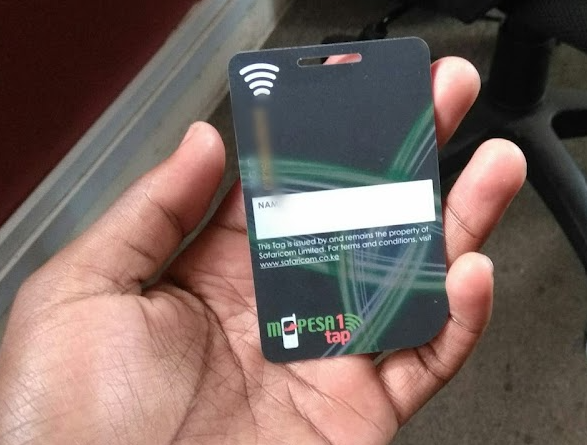
The new system removes one of the barriers to 1Tap. Customers no longer need a separate Safaricom card, wristband, or sticker because their smartphone becomes the payment device. Customers without NFC also have a QR option, while My OneApp provides the software layer for completing the transaction.
The history makes adoption the central question for the new partnership. A payment method can be faster on paper and still fail to become a habit if customers do not know it exists, merchants do not make it visible, or the checkout experience is inconsistent.
The companies are also relying on behaviour that smartphone users already know. Tapping a phone on a terminal is familiar from contactless card payments, while scanning a QR code is already common across digital payments. Safaricom is applying those behaviours to M-PESA while leaving the underlying Till Number system intact.
James Maitai, Safaricom’s group chief technology officer, said the company wants M-PESA to move beyond simply processing payments.
“Our partnership with Pesapal is an important part of that journey, bringing together our respective capabilities to shape the next generation of everyday payments,” Maitai said.
True scale demands moving beyond surface-level integrations to robust execution. We’ve filtered the noise out of Moonshot 2026, optimising the conference strictly for high-calibre connections between startup founders, global financial operators, enterprise leaders and individuals rewiring Africa’s technical frameworks. Get 20% off Early Bird tickets for a limited time.

.
Crédito: Link de origem