
Russia’s Ukraine war set to overspend its budget by $28 billion: Report
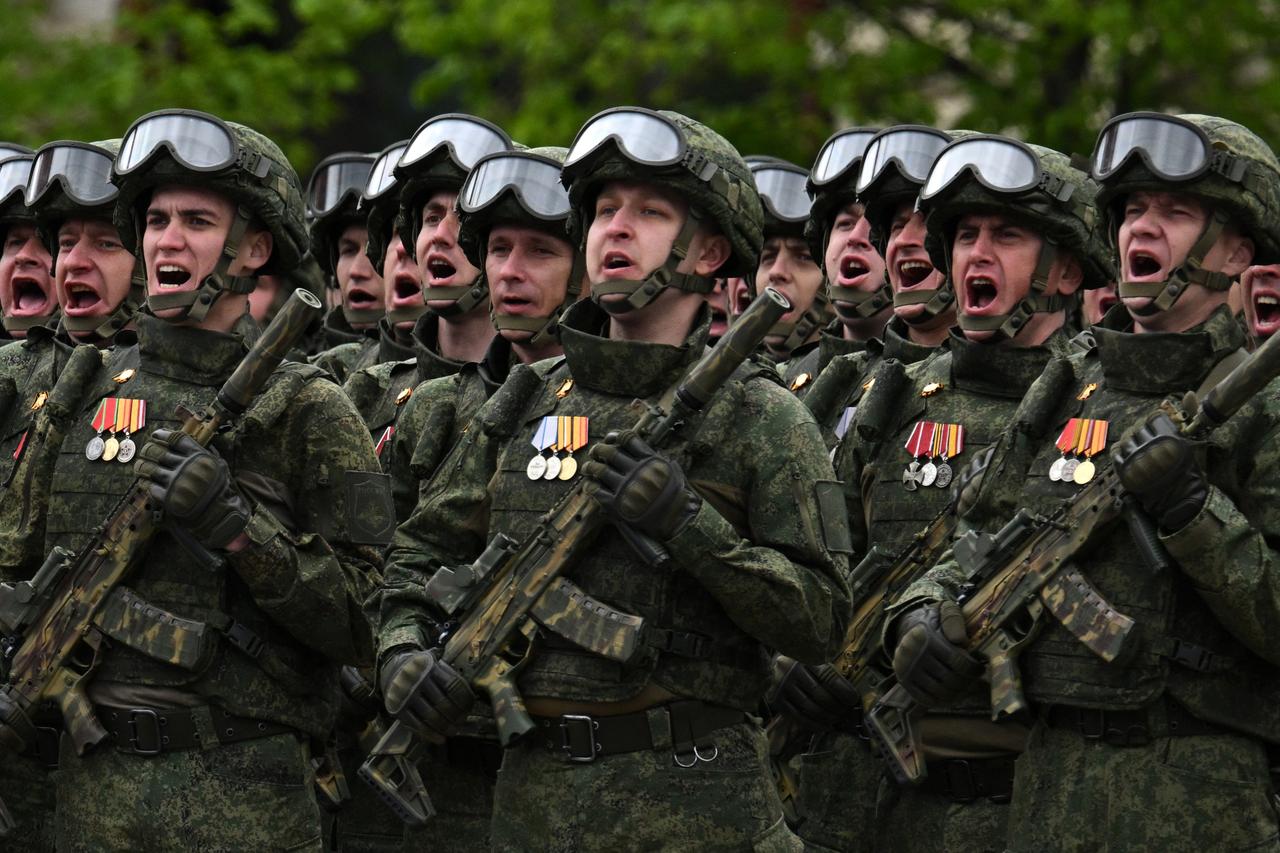
Russia’s war in Ukraine is on track to exceed its military budget by at least 2 trillion rubles ($28 billion) this year, with the potential for the overshoot to double in a worst-case scenario, according to a letter from Finance Minister Anton Siluanov reviewed by the Financial Times (FT).
This is likely to force Moscow to freeze hundreds of billions in spending on public procurement, corporate subsidies and the financing of public institutions.
The letter, addressed to the cabinet in February, warned that the overspend on the conflict could reach 4 trillion rubles in a “negative scenario.” It also projected overruns of 4 trillion rubles each in 2027 and 2028.
To offset the shortfalls, Siluanov asked the cabinet to freeze 2.9 trillion rubles in planned non-conflict spending for 2026, 5.4 trillion rubles for 2027 and 7.1 trillion rubles for 2028.

Russia’s MiG-29 jet fighters of the Strizhi (Swifts) and Su-30SM jet fighters of the Russkiye Vityazi (Russian Knights) aerobatic teams fly in formation over central Moscow during the Victory Day military parade on May 9, 2026. (AFP Photo)
A deficit already larger than planned for the entire year
The Kremlin allocated 16.84 trillion rubles ($238 billion), nearly 40% of this year’s total budget, to defense and security, and planned a 3.8 trillion ruble deficit for all of 2026.
In just the first four months of the year, however, the budget was already 5.9 trillion rubles, or 2.5% of gross domestic product (GDP), in the red. That is Russia’s largest deficit since Putin ordered the full-scale invasion of Ukraine in 2022.
In an interview with Russian newspaper Kommersant, Siluanov acknowledged the pressure, saying the finance ministry was revising the budget to account for “changes in macroeconomic conditions (and) the need to concentrate additional resources on important priority areas.”
“Our reserves are not endless. We can’t allow any weak points in our finances while such major transformations are going on in the world,” he said, adding, “The cabinet is working constantly to stabilise and balance state finances.”
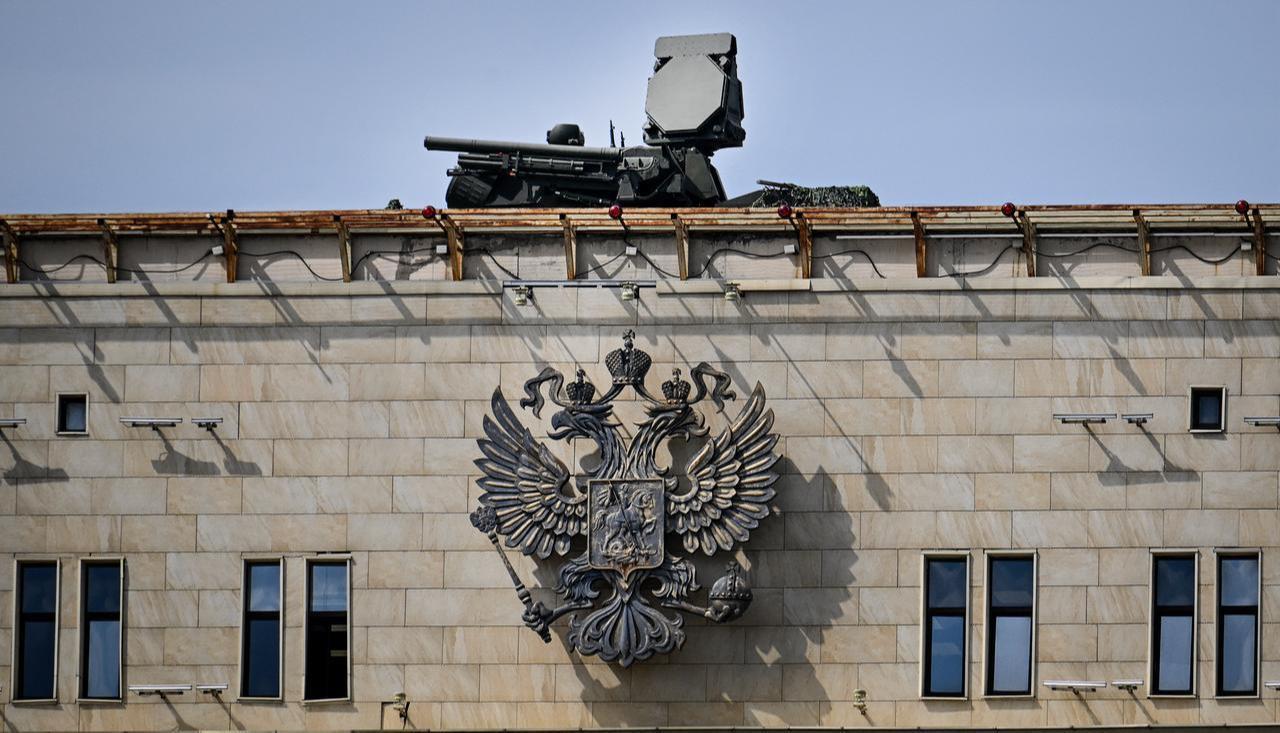
The Pantsyr S-1 air defense missile system (NATO name SA-22 Greyhound) is seen atop the Russian Defense Ministry headquarters in Moscow on May 5, 2026. (AFP Photo)
Iran war oil windfall provides relief, but not enough
Russia’s budget has received some relief from the Iran war, which sent oil prices above $100 a barrel for the first time since 2022. But the additional windfall is unlikely to be sufficient to cover all of the Kremlin’s ballooning war expenses, according to the Financial Times.
Siluanov said Russia received 200 billion rubles ($2.8 billion) in surplus energy revenue in April, but noted expected energy revenues had fallen short by roughly the same amount in March.
The boost from higher oil and gas prices has been further tempered by payments to Russian oil companies to limit domestic petrol price rises, as well as the strength of the rouble, which is trading near its highest levels against the dollar in more than three years.
In January, the finance ministry had already made a separate request for government agencies to cut non-essential expenditure by 10%, excluding social and defense spending from the cuts.
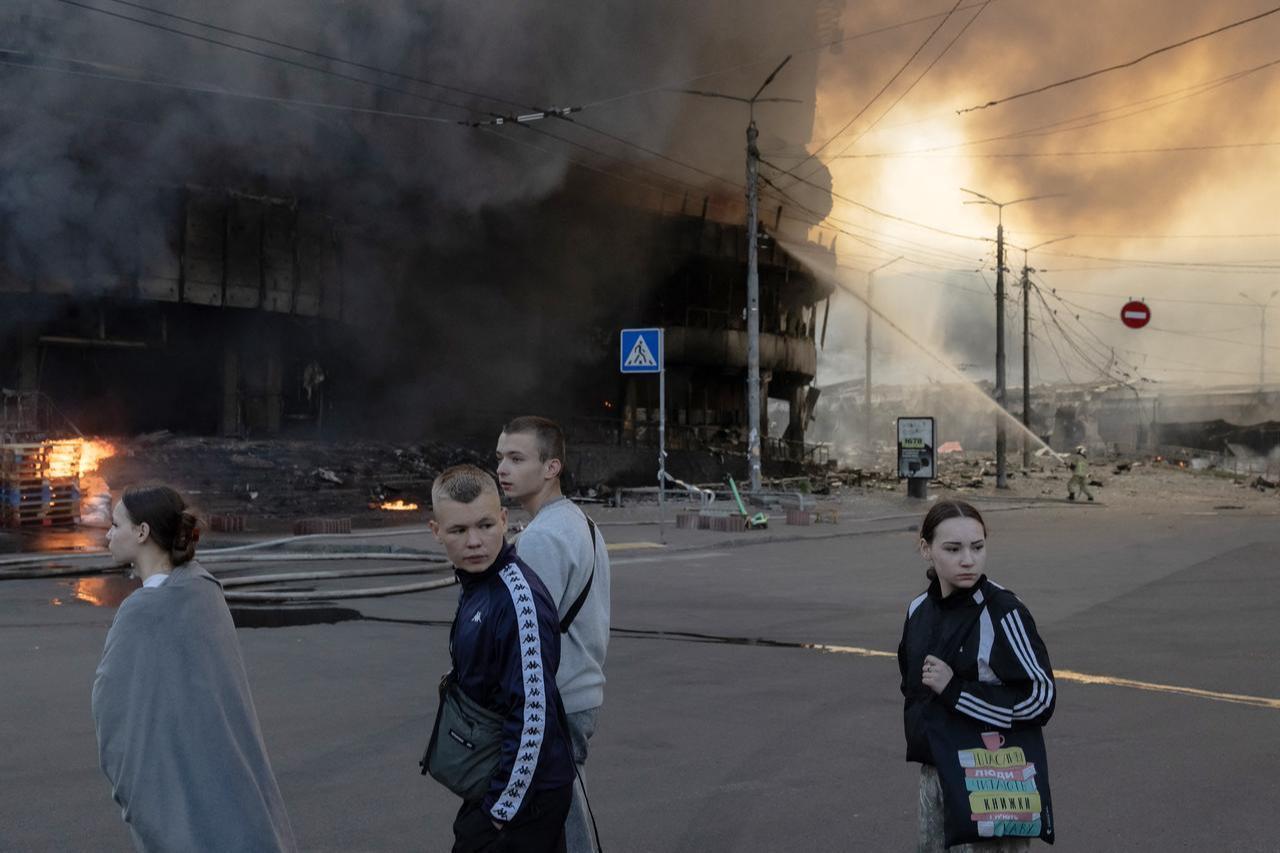
People walk past a shopping building on fire following Russian strikes in Kyiv on May 24, 2026. (AFP Photo)
Economy slowing with growth forecast cut to 0.4%
Russia’s economy ministry this month cut its 2026 growth forecast by nearly a full percentage point, to just 0.4%. It now expects GDP to grow 1.4% in 2027 and 1.9% in 2028, a sharp downgrade from September predictions of 2.8% and 2.5% respectively.
Speaking to the FT, Sofya Donets, chief economist at Moscow-based T-Investments, said the budget had become the central preoccupation of Russia’s economic debate.
“The economy is not in spectacular shape, but it is resilient. Still, the budget is the number one topic—in the media, in central bank statements, and in behind-the-scenes talks,” Donets said. “People are looking at the budget to understand: who is next? Will there be room for rate cuts, and which taxes will be raised next? When will they come for us?”
Speaking to the FT, Renat Suleimanov, a member of Russia’s parliament, told a Siberian news outlet last week that the war must end “as soon as possible” because of the economic fallout from military spending.
“What development, investment, and capital allocation can you talk about (when) 40% of the federal budget is defense and security? Tanks and shells don’t have any consumer value . . . they ensure employment and wages in the defense industry, but they also drive up inflation and cut other spending, like social services and investment,” Suleimanov said.
Speaking to the FT, Alexandra Prokopenko, a former Russian central bank official and now a fellow at the Carnegie Russia Eurasia Center in Berlin, said Siluanov’s letter showed war spending was shielded at the expense of everything else.
“The finance ministry needs money for the war, so whatever happens, it’s not defense and security that gets cut, but procurement, subsidies to corporates and financing public institutions,” Prokopenko said.

May 29, 2026 12:24 PM GMT+03:00