

Russia’s Mobilization Looming as Putin Sticks to Ambitions
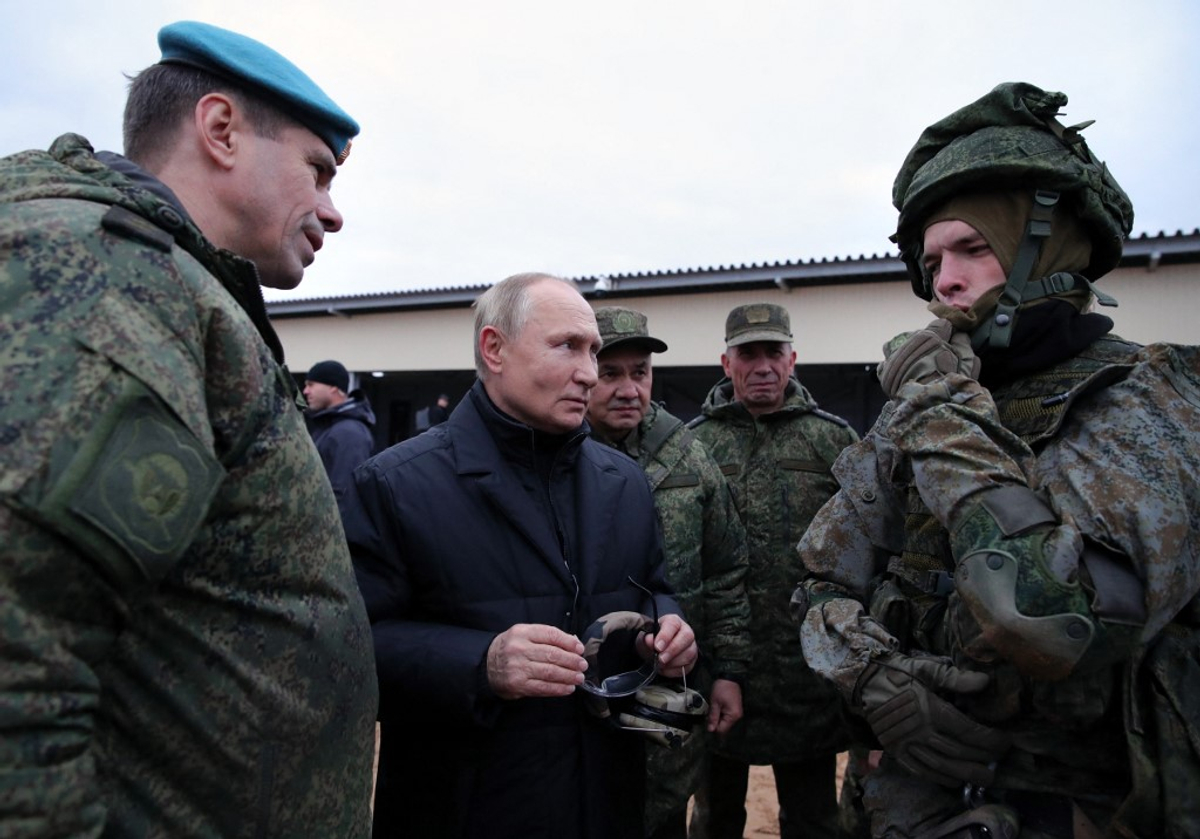
Russia has not announced another mobilization, and there is no public evidence that Russia’s ruler Vladimir Putin has issued a final order for one.
At the same time, Russia is testing the machinery required to conduct a new call-up, raising the cost of recruiting contract soldiers and attempting to capture the remaining Ukrainian-held areas of Donbas with an army suffering heavy losses for increasingly limited territorial returns.
JOIN US ON TELEGRAM
Follow our coverage of the war on the @Kyivpost_official.
All this comes while the US dispatches its top officials, including the head of the CIA, John Ratcliffe, to Moscow.
Deny, deny, deny
Talk of mobilization in Russia has been in the air for several months now.
Russian military officers conducted a mobilization-readiness exercise in Kaliningrad in July, testing how the region would house, feed and arm a large number of new recruits, Western intelligence officials told The Wall Street Journal.
The Kaliningrad exercise was reportedly one of several conducted across Russia. While the exercises do not establish that Putin has decided to order another call-up, they indicate that the administrative system is being prepared in case he does.
President Volodymyr Zelensky said Kyiv believes Russia could mobilize another 300,000 troops after parliamentary elections scheduled for Sept. 18–20. He said the number could eventually reach 500,000 in 2027, with recruitment concentrated in Russia’s peripheral regions rather than Moscow and other major cities.
Other Topics of Interest
Trump Says US ‘Working Very Hard’ to End War in Ukraine Amid CIA Chief’s Visit to Moscow
The US president said John Ratcliffe travelled to Russia on a routine trip, while the Kremlin said the CIA director did not meet Putin.
“We believe it will not take place in the central cities,” Zelensky said. “But I don’t think they will be able to hide it very well.”
The European Union Agency for Asylum (EUAA) records Russia’s inactive mobilization reserve at approximately 25 million people, based on a 2022 claim by then-Defense Minister Sergei Shoigu. Russia’s active mobilization reserve officially consists of two million people, although researcher Igor Gretskiy said the actual figure may be below one million and that the number is a state secret.
The report does not present either figure as an estimate of how many reservists Russia could immediately train, equip and deploy.
Yet, Moscow denies all the reports regardless.
Former Russian President Dmitry Medvedev, now known for his dubious social media commentary, said in March that there was no need for a new mobilization. In July, he called reports of an impending call-up “nonsense” and a “lying provocation” by Ukraine.
State Duma Defense Committee Chairman Andrei Kartapolov has likewise said there is “no need” for mobilization, while prominent state television figures have complained that rumors of another call-up are spreading across Russia.
On Aug. 21, Russia’s UN Ambassador Vasily Nebenzya said mass mobilization was “not planned or expected, as far as I know.”
He then added: “But let’s see what happens after the elections: who among us will be right and who won’t.”
Kremlin spokesman Dmitry Peskov followed on Aug. 25 by calling the reports “information canards” deliberately spread by Ukraine to destabilize Russia.
Echoes of 2022
The Kremlin has a habit of denying its obvious intentions.
On Sept. 13, 2022, Peskov said neither full nor partial mobilization was under consideration. Eight days later, Putin announced the mobilization of approximately 300,000 reservists.
By Oct. 28, 2022, Shoigu said 82,000 of the 300,000 mobilized personnel had been deployed to Ukraine and 218,000 were undergoing training. Mediazona calculated from marriage-registration data that approximately 492,000 men had been mobilized by mid-October, although the EUAA said it could not verify the methodology.
The call-up produced an immediate exodus and protests. OVD-Info said at least 200,000 people left Russia during the first week. It recorded 2,457 arrests at anti-mobilization protests between Sept. 21 and Oct. 10, including 976 in Moscow, 655 in St. Petersburg and 121 in Dagestan.
Women accounted for 56% of detainees in cases where gender was known. OVD-Info also documented military summonses being issued to detained protesters inside police stations in Moscow, Voronezh, Irkutsk and Ryazan.
In Dagestan, police clashed with anti-mobilization protesters and fired warning shots. At least 100 people were detained at a protest on Sept. 25, according to Reuters.
Russia subsequently declared that the call-up had been completed, but Putin never issued a decree formally terminating it.
According to Daniil Chebykin, a Yerevan-based Russian regional political activist and founder of the Omsk Civic Association, recruitment has quietly continued, with Russian authorities offering increasingly large payments to men who sign military contracts.
Why Russians don’t want to serve
Yet, the scheme effectively exhausted itself.
Chebykin told Kyiv Post that support for the war is substantially lower than official narratives suggest.
He is involved with Tvyordy Znak, a project that helps Russians avoid mobilization or leave the military after reaching the front. He said that when its anti-mobilization hotline began operating in 2022, most requests came from civilians trying to avoid being drafted.
By 2026, an increasing share of requests came from soldiers who had already reached the front and wanted to escape.
Even the relatively small Tvyordy Znak project receives more than 200 requests per day, Chebykin said. Other organizations, including Idite Lesom and Stoparmy, work with similar cases.
The men seeking help generally fall into two groups. Some were mobilized in 2022 and initially supported the war or accepted the Kremlin’s explanations but changed their views after experiencing military service and frontline conditions.
Others are younger conscripts caught in what Chebykin describes as a system of permanent mobilization. Electronic draft notices can trigger restrictions on travel and access to state services, while conscripts face pressure to sign contracts that allow the military to deploy them to Ukraine.
Higher salaries and signing bonuses are losing some of their appeal as inflation reduces their real value and information about Russia’s casualty rates becomes more difficult to ignore.
Chebykin said soldiers also become disillusioned by their treatment at the hands of commanders and by the difference between state propaganda and what they encounter in Ukraine.
“They increasingly understand that they are not fighting Nazis and that they are not defending Russia from NATO,” he said. “They see how they are treated by their own commanders and begin questioning why they are there at all.”
Russia still cannot take Donbas
Russia’s manpower problem is clearest when battlefield losses are compared with territorial results.
According to the Institute for the Study of War (ISW), Russia controls approximately 79.9% of Donetsk region and 99.77% of Luhansk region.
That leaves roughly 5,300 square kilometers (2,046 square miles) of Donetsk region outside Russian control, including major elements of Ukraine’s fortified Slovyansk–Kramatorsk–Druzhkivka–Kostiantynivka belt.
The ISW has counted 15 separate deadlines set by Putin since 2022 for Russian forces to seize all of Donetsk region. Russia has missed every one.
The latest results are particularly damaging to Moscow’s claim that its forces are advancing everywhere.
Between Aug. 1 and Aug. 22, the ISW observed Russian forces seizing or infiltrating approximately 8.5 square kilometers (3.3 square miles) of Ukrainian territory. During the same period, Russia lost control of approximately 27 square kilometers (10.4 square miles).
Even counting infiltrated areas as gains, Russia lost more than three square kilometers for every square kilometer it entered. On those measurements, its net territorial position moved backward by approximately 18.6 square kilometers (7.2 square miles).
Ukraine’s General Staff reported approximately 29,120 Russian casualties between July 31 and Aug. 22 – around 1,270 killed or wounded per day. The casualty figure is a Ukrainian estimate and cannot be independently confirmed, but ISW used it to illustrate the increasingly negative relationship between Russian losses and territorial gains. (ISW)
Mobilization would deepen Russia’s economic problem
A new call-up would arrive as Russia’s fiscal room is narrowing.
The federal budget deficit reached approximately 6.46 trillion rubles – around $79 billion – during the first seven months of 2026.
Russia’s National Wealth Fund held 3.69 trillion rubles, or $46.2 billion, in liquid assets on Aug. 1. The accumulated seven-month deficit was therefore approximately 1.75 times larger than the fund’s remaining liquid portion.
Though Russia is not four months from insolvency – and Moscow can issue debt, raise taxes, cut civilian spending and sell assets – the liquid reserve created to absorb economic shocks is no longer large enough to cover the deficit already accumulated this year.
The state has also expanded its direct control over private property. Research cited by Reuters found that Russia confiscated approximately $50 billion in assets between 2022 and mid-2025. By March 2026, the head of Russia’s Federal Property Management Agency said around 805 companies had entered state ownership through court decisions.
The seizures illustrate the extent to which the Kremlin is concentrating economic resources as the war continues.
Mobilization would also remove more workers from an economy already facing severe skilled-labor shortages.
Russia’s Labor Ministry estimates that the country will require almost 140,000 additional welders and gas cutters and another 150,000 machinists, millers and CNC operators by 2032. Those occupations are essential for producing and repairing military equipment, industrial machinery, pipelines and damaged infrastructure.
The same workforce is being asked to expand military production, repair facilities damaged by Ukrainian strikes and provide recruits for the army.
Ukraine is adding to the repair burden
Repeated Ukrainian strikes have made that labor constraint more important.
Russian gasoline production covered only around 65% of seasonal demand by July 10 after attacks and unplanned refinery shutdowns disrupted production. Moscow responded by restricting fuel exports and arranging imports from Belarus, Kazakhstan, India and other suppliers.
By Aug. 24, AI-95 gasoline was reportedly available at only 22% of Russia’s operating filling stations, according to data from the Benzonavt monitoring service.
The pressure also reaches military production.
Ukraine struck the Kamensky Combine in Rostov Oblast on Aug. 16. Ukraine’s General Staff said two workshops producing explosives and propellants were destroyed and four others damaged.
The plant produces solid rocket propellant for Uragan, Smerch and Tornado-S multiple-launch rocket systems. Ukrainian forces struck it again eight days later, although the consequences of the second attack remain under assessment.
Each repeat strike forces Russia to devote additional workers, equipment and money to repairs while attempting to replace battlefield losses and expand weapons production.
Ratcliffe’s Moscow visit and the NATO warning
CIA Director John Ratcliffe traveled to Moscow on Aug. 25 for talks with Russian intelligence officials.
The Kremlin said Ratcliffe did not meet Putin, although the Russian president was briefed on the discussions. Neither side disclosed the agenda.
Washington informed Kyiv that a senior delegation was traveling to Moscow and asked Ukraine to suspend strikes until it had left Russia, according to CBS News. Kyiv reportedly complied.
It was the first known visit to Moscow by a serving CIA director since William Burns traveled there in November 2021 to warn Russia against invading Ukraine.
The Wall Street Journal reported that US intelligence had identified early Russian preparations for a possible mobilization and separate plans to test NATO’s resolve.
A separate US intelligence assessment said Putin could use a limited assault on a NATO member within the next few years, with scenarios ranging from a cyberattack to a small-scale land incursion (The Wall Street Journal).
Euronews reported one theory being that Ratcliffe traveled to Moscow to warn against further Russian escalation. The report linked the theory to US intelligence concerns that a new mobilization could be used not only for the war against Ukraine but also for provocations intended to test NATO. (Euronews)
There is no public evidence that Ratcliffe delivered such a warning or that mobilization was discussed.
Asked on Aug. 26 whether Ratcliffe had gone to warn the Kremlin against testing NATO or to discuss sanctions on Iran, Trump replied, “None of the above,” and called the trip “semi-routine.” He suggested that it could contribute to efforts to end the war.
Ratcliffe had, however, publicly described Russia’s battlefield problem just weeks earlier. In July, he said US intelligence was consistent with open-source estimates that a new Russian recruit entering frontline combat could be killed or wounded within 20 to 35 minutes because of Ukraine’s drones. He also said Russia had captured only around 1% of Ukraine during the previous 18 months
The Kremlin’s choice is becoming narrower
Mobilization would not solve Russia’s problems immediately. Hundreds of thousands of men would have to be processed, equipped and trained before they could support large-scale operations.
It would also risk another exodus, deepen labor shortages and force the Kremlin to explain why years of paid contract recruitment have failed to produce a decisive result.
Avoiding mobilization carries its own cost. Russia would have to continue paying larger bonuses, using more coercive recruitment methods and committing most new soldiers to replacing casualties rather than creating new offensive forces.
If Putin ultimately orders another mobilization, it will not be evidence that Russia’s existing strategy is succeeding. Rather, an admission that the strategy no longer supplies enough men to pursue the objectives he refuses to abandon.