

Russia’s Economic Policy Outlook Shows Africa’s Stagnating Result-Oriented Expectations
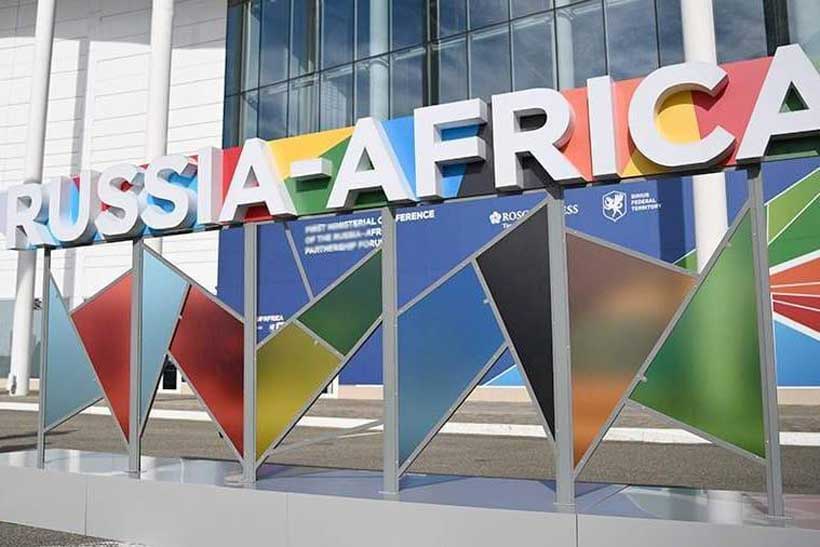
Russian Foreign Ministry spokesperson Maria Zakharova told a briefing held on August 20, 2026, that “a substantial package of intergovernmental documents and commercial contracts is planned to be signed during the Russia-Africa summit, scheduled for late October.” Given the “mutual interest in stepping up our trade and investment cooperation, we plan to focus the agenda of the upcoming summit meeting on economic matters,” she said.
There, the attendees can discuss in substance a wide range of matters, including boosting Russian-African ties in agriculture, healthcare, education, and scientific-technical and cultural cooperation. “We expect to sign a substantial package of interstate documents and commercial contracts during the event. Well, and we also note, of course, with satisfaction, our partners’ considerable interest in the forthcoming event. Many African capitals have already confirmed their attendance and declared their intention to send representative delegations to Moscow, including heads of state entities and businessmen, of course,” Zakharova explained.
“We have a huge potential in this sphere, which has not yet been fully realized, as everyone admits. Key priorities have also been determined: to cooperate on peaceful uses of nuclear power; to develop independent payment systems, food security, and digitalization, including the adoption of artificial intelligence,” Zakharova underlined.
It is time to face rising realities and the balance of investment power in this 21st century. Whether Russia colonized Africa or never colonized Africa, the most convincing and essential factor is Africa simply has to work with the world’s players. Africa should collaborate with potential foreign investors with adequate funds, in practical terms, ready to invest in its development as exemplified by China. And there is still a growing sense of analytical debates over Russia’s policy approach, though. Ultimately, at least three fundamental assumptions, or appropriately primary principles, can be described as follows:
Stay ahead of the geopolitical week.
MD Briefing delivers expert analysis across five global fronts — the Indo-Pacific, energy, geoeconomics, European security, and the Middle East — every Monday morning. Free.
*Russia’s forthcoming October 2026 The Russia-Africa summit is framed as a chance to consolidate dozens of prior agreements and shift toward concrete economic cooperation in trade, investment, nuclear energy, food security, digitalization, and independent payment systems, yet critics note that rhetoric and signed MoUs have so far produced limited tangible results on the ground.
*Despite historical Soviet-era goodwill and frequent high-level visits, Russia remains a marginal player in African infrastructure, industry, and agriculture compared with China, the EU, and the United States; many announced projects have stalled, financing instruments are weak, and younger Africans see little contemporary economic impact beyond anti-Western messaging.
*Experts and African partners urge Moscow to move beyond nostalgia for past assistance, deliver on existing pledges with real capital and project execution, leverage platforms such as the African Continental Free Trade Area (AfCFTA), and engage Africa’s large youth and middle-class markets if it wishes to convert political alignment into sustained, mutually beneficial economic partnership.
The African Continental Free Trade Area (AfCFTA) provides a unique and valuable platform for businesses to access an integrated African market of over 1.4 billion people. The growing middle class, estimated at 380 (twice the aggregate of Russia’s population), among other factors, constitutes huge market potential in Africa. The African continent, currently, has enormous potential as a huge market, which some experts often refer to as the last business market frontier. Nevertheless, Africa’s trade with the European Union stands at $400 billion, and with China, almost $300 billion. And based on military equipment and weapons and agricultural products such as ice cream, chicken meat, fertilizers, and grain exports, Russia quoted a bilateral trade figure as $27 billion in June 2026.
The world is, increasingly, becoming multipolar. Therefore, Africa’s strength has to be directed at continental development and entrepreneurship, not at building solidarity for geopolitical games. Many African countries are enacting economic reforms; demand is growing for high-quality, competitive products. Russian businesses are interested in this niche, but Russian operators are extremely slow. The ‘snail-pace approach’ reflects their inability to determine financial instruments for supporting trade with Africa and corporate investments in Africa.
There is some level of optimism for a change, though. Russia plans to hold the next Russia-Africa summit in late October 2026. And Sergey Lavrov, minister of foreign affairs of the Russian Federation, indicated in an explicit message mid-July that “in these difficult and crucial times, the strategic partnership with Africa has become a priority of Russia’s foreign policy. Russia highly appreciates the readiness of Africans to further step up economic cooperation.”
At a meeting of the ministry’s collegium, Lavrov strongly suggested the necessity of borrowing a chapter on policy approaches and methods adopted by China in Africa. In fact, Lavrov’s suggestion exposes the inability to play catch-up and, most significantly, Russia’s financial fragility. Lavrov also said, “It is in the interests of our peoples to work together to preserve and expand mutually beneficial trade and investment ties under these new conditions. It is important to facilitate the mutual access of Russian and African economic operators to each other’s markets and encourage their participation in large-scale infrastructure projects. The signed agreements and the results will be consolidated at the forthcoming Russia-Africa summit.”
During the past years, there have been several meetings of various bilateral intergovernmental commissions both in Moscow and in Africa. The first Sochi summit discussed broadly the priorities and further identified opportunities for collaboration. There were 92 agreements signed in Sochi, which totaled RUB 1.004 trillion (equivalent to $12.5 bn), and approximately 240 agreements during the African Leaders Summit held in St. Petersburg, according to official documents. It, however, requires understanding the specific tasks and emerging challenges. The current tasks should concretely focus on taking practical and collaborative actions leading to goal-driven results. Notwithstanding the lapses, Lavrov hopes “the signed agreements and the results will be consolidated at the forthcoming Russia-Africa summit.”
Accentuating the importance of multilateral cooperation between Russia and Africa, Advisor to the President of the Russian Federation Anton Kobyakov said, “The current situation in the world is such that we are witnesses to the formation of new centers of economic growth in Africa. Competition for African markets is growing, accordingly. There is no doubt that Russia’s non-commodity exporters will benefit from cooperating with Africa on manufacturing, technologies, finances, trade, and investment.”
Kobyakov pointed to modern Russia, which already has experience of successful cooperation with African countries under its belt, as ready to make an offer to the African continent that will secure a mutually beneficial partnership and the joint realization of decades of painstaking work carried out by several generations of Soviet and Russian people.
The Soviet Union was quite extensively engaged in Africa, comparatively. Historical documents show that after the Soviet collapse, there were approximately 380 mega-projects across Africa. In the early 1990s, Russia exited, closed a number of diplomatic offices, and abandoned all these, and now there are hardly any signs of Soviet-era infrastructure projects across Africa. And now post-Soviet relations are interestingly engulfed in extensive geopolitics; Russia has only engaged in trading anti-Western slogans on the continent, which also threatens the African Union’s steps to consolidate African unity.
In addition, Russia has only been criticizing other foreign players during the past two decades without showing any of its own template model of building relationships directed at transforming Africa’s economy. Moreover, Russian officials have underestimated the fact that Russia’s overall economic engagement is largely staggering; various business agreements signed are still not fulfilled with many African countries. Its foreign policy goal is simply to sustain the passion for declarations, signing several MoUs and bilateral agreements with African countries. Grappling with reality, there are equally many investment challenges, including official bureaucracy and the governance system in Africa.
Despite this policy rhetoric and attractive summit outlines, Russia still plays very little role, particularly in Africa’s infrastructure, agriculture, and industry. Investing in agriculture to ensure food security and investing in industry to add value to raw materials in the continent. While, given its global status, it ought to be active in Africa with noticeable corporate investments, similar to policy models of Western Europe, the European Union, the United States, and China, it is all but absent, consistently engages in geopolitical symbolism and rhetoric, and plays a negligible role, according to Professor Gerrit Olivier at the Department of Political Sciences, University of Pretoria, and former South African Ambassador to the Russian Federation.
Now at the crossroads, it could be meandering and longer than expected to make the mark. If existing challenges, obstacles, and impediments are not addressed, Russia’s return journey could take another generation to reach its destination, Africa. If not at the crossroad, then possibly at the periphery of Africa. With the current rapidly changing geopolitical world, Russia has to redefine and reassess policy parameters and adopt a more strategic approach, working with absolute consistency within the principle of finding common solutions to Africa’s development expectations and consolidating its economic sovereignty.
*This is part of the forthcoming book: Putin’s African Dream: Emerging Challenges and Opportunities (Third e-handbook).