

Russian Military Presence in the Arctic: NATO-Russia Rivalry
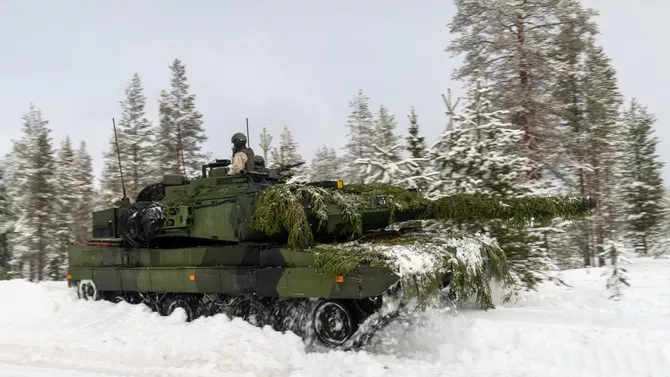
Russia, perceiving the Arctic as an area of growing NATO presence, is increasingly resorting to – and will continue to resort to – actions on the threshold of open conflict, which allow it to test the reactions of regional states.
These include aggressive aerial and maritime manoeuvres near Air Defence Identification Zones, snap military exercises, and bomber flights, as well as the use of NOTAM notices to restrict operational space (military and civil) in the Barents Sea and North Pole regions. A significant element also involves actions directed at critical infrastructure, including subsea installations (gas pipelines and telecommunications cables), alongside GPS signal jamming in Northern Europe, which directly affects transport security and the use of the waters. In practice, this allows Moscow to exert pressure and destabilise the situation in the region without the need for open confrontation, as it does against Poland, for instance.
In the context of asymmetric rivalry, one cannot overlook the role of Svalbard, which remains one of the most vulnerable points in the Arctic, where political, economic, and security interests collide. The archipelago, formally demilitarised under the Svalbard Treaty and administered by Norway, holds a special status as over 40 countries have access to it, making it an area of great international significance. Moscow has been developing its military capabilities in the region for years and views the area around Svalbard as vital for controlling northern routes, while NATO states have been increasing their presence somewhat gradually. Crucially, under current regulations, the archipelago is not intended for a permanent military presence; thus, the United States also has no military facilities there, although scientific and satellite infrastructure of civil importance is operational.
One of the less frequently discussed yet no less important elements of Russian activity in the Arctic is the use of military infrastructure for deterrence purposes. An example is the base in Alakurtti, located near the border with Finland, which, beyond its training function, also serves as a signal to NATO states regarding Russia’s presence, despite its limited importance for controlling sea routes. At the same time, some installations in the region are of a dual-use nature, combining military functions with the servicing of the Northern Sea Route, illustrating the link between military activities and economic objectives. Therefore, it must be noted that the Russian presence in the Arctic does not only serve to increase combat capabilities but also to build the image of a state capable of controlling the region and to strengthen its negotiating position in anticipation of future disputes over access to raw material resources.
All the factors mentioned above present challenges for NATO countries, which continue to struggle with limitations in their Arctic operational capabilities. In the face of an increasingly dominant Russia, rising Chinese activity, and expanding Russian-Chinese cooperation in the Arctic, NATO is taking a range of actions. In the 2022 NATO Strategic Concept, the Arctic was highlighted as a strategic area for the first time. The Alliance has also significantly increased its military potential in the Arctic; for example, missile and air defences have been bolstered, the number of naval units has increased, particularly in the „GIUK Gap” region, and investments in the development of technologies such as unmanned platforms and satellite systems have been stepped up.
NATO is constantly developing its capabilities in the collection and analysis of intelligence data obtained by regional research bases and is cooperating within initiatives such as the ICE Pact (Icebreaker Collaboration Effort), aimed at increasing the production of modern icebreakers. NATO also conducts military exercises in the Arctic region, examples of which include Cold Response, Arctic Challenge Exercise, and Nordic Response. Additionally, with the accession of Finland and Sweden to NATO, the Alliance’s resources in this area have been significantly strengthened, including through joint exercises in border zones and the intensification of intelligence activities.
Despite numerous initiatives aimed at increasing the strength of NATO states in the Arctic, the Alliance itself lacks a coherent strategy towards Russia, including Russian-Chinese cooperation, as well as key operational capabilities. In the face of these challenges, NATO states should place particular emphasis on issues such as increasing the ability to scale and maintain their presence in the region, investment in rapid response units, multi-domain situational awareness, communications, infrastructure supporting rescue operations, logistics, personnel trained to operate in extreme conditions, and tactics and equipment for crisis situations.
Depending on NATO’s success in these areas, several possible scenarios for the development of relations between NATO and Russia emerge. Firstly, Russia and NATO states may engage in „peacetime competition”. Secondly, Russia may restrict NATO’s access to the Arctic and use the region as a platform for operations in the Atlantic. Such a scenario could also materialise if a conflict between NATO and Russia broke out in another area and spilled over into the Arctic region. The third scenario focuses on a defensive Russian posture in the Arctic, though it is worth noting that this defensiveness does not translate directly to such a stance in other theatres of operations, such as the Baltic or Ukraine. In this case, it would be NATO attempting to exert pressure on Russia in the Arctic to balance its advantages in other regions.
In the context of the strategic importance of the Arctic for NATO, the link between the situation in the Baltic region and the dynamics in the Arctic remains crucial. It is worth noting that a potential conflict between Russia and the Baltic Sea states could easily spill over into the Arctic area. In such a scenario, Russia could deploy its submarines to intimidate NATO forces and disrupt shipping in the Atlantic. NATO’s response could involve a significant escalation on Russia’s northern peripheries.
Greenland is another region of particular importance. Its strategic significance stems primarily from its geographical location – the island controls key routes between North America and Europe, serves as a natural hinterland for early warning and defence systems, and its raw material wealth attracts the attention of Russia, the USA, and China alike. Russia, by developing its military presence in the North, including through the use of bases such as Nagurskoye, capable of servicing nuclear-capable bombers and surveillance systems, is increasing the pressure of military competition. At the same time, Denmark’s limited military capabilities for controlling and monitoring the region mean that the security of Greenland relies heavily on the presence of allies, including the USA. Hence, the European reaction to President Trump’s announcements regarding the desire to acquire Greenland was particularly interesting, with the French Republic, alongside the Nordic countries, becoming very actively involved.
It is worth highlighting that unmanned systems could become one of NATO’s most important tools in the Arctic, as they allow for a significant increase in reconnaissance, a reduction in reaction times, and constant monitoring of movements in seas, straits, and critical infrastructure – including under the ice – at a relatively low cost. Maritime and underwater unmanned platforms are of particular importance here, as they can create a distributed network of sensors, support mine countermeasures, observe adversary movements, and protect communication routes.
However, the lack of a coherent NATO strategy for the Arctic, limited infrastructure in the North, and technical difficulties associated with operating in polar conditions remain problematic, meaning that superiority in this area will depend not only on the purchase of the platforms themselves but primarily on the ability to rapidly test, deploy, and maintain them in the region. Here, NATO will naturally seek alternatives, and a significant number of private companies are certain to emerge with investments not only in maritime drones but also in polar maritime drones specifically for the Arctic.
Russia’s approach to the Arctic is undergoing a marked change due to the prolonged war against Ukraine, which has forced a departure from the previous model based on a relative balance between economic development and security towards entering a „war economy”, the militarisation of activities, and cooperation with partners from Asia, primarily China. Key questions remain regarding Moscow’s ability to sustain development in the Arctic without foreign capital and technology, the extent of support from Beijing, and the impact of the growing NATO presence on the Kremlin’s future decisions. Furthermore, changes in United States policy, including the approach of the Donald Trump administration, will affect the level of US engagement and Alliance cohesion – for example, the issue of Greenland – which, in turn, may encourage Russia to further strengthen its military presence. Russia will undoubtedly do everything in its power to manifest its presence, especially in the military dimension.
Based on the analysis, it must be stated that the Arctic will remain an area of sustained engagement for Russia, even if some of its capabilities have been weakened by the war against Ukraine. Moscow will not abandon its military presence, infrastructure development, or attempts to maintain superiority in the North, as this region remains one of the pillars of Russian military development and economic ambitions. For NATO, this necessitates treating the Arctic as one of the priorities in defence planning, which involves extending the competition with Russia far to the north.
See the original article here