

Russia Grounds Izhavia Permanently: Airline Flew Unchecked Yak-42, Falsified Maintenance Records
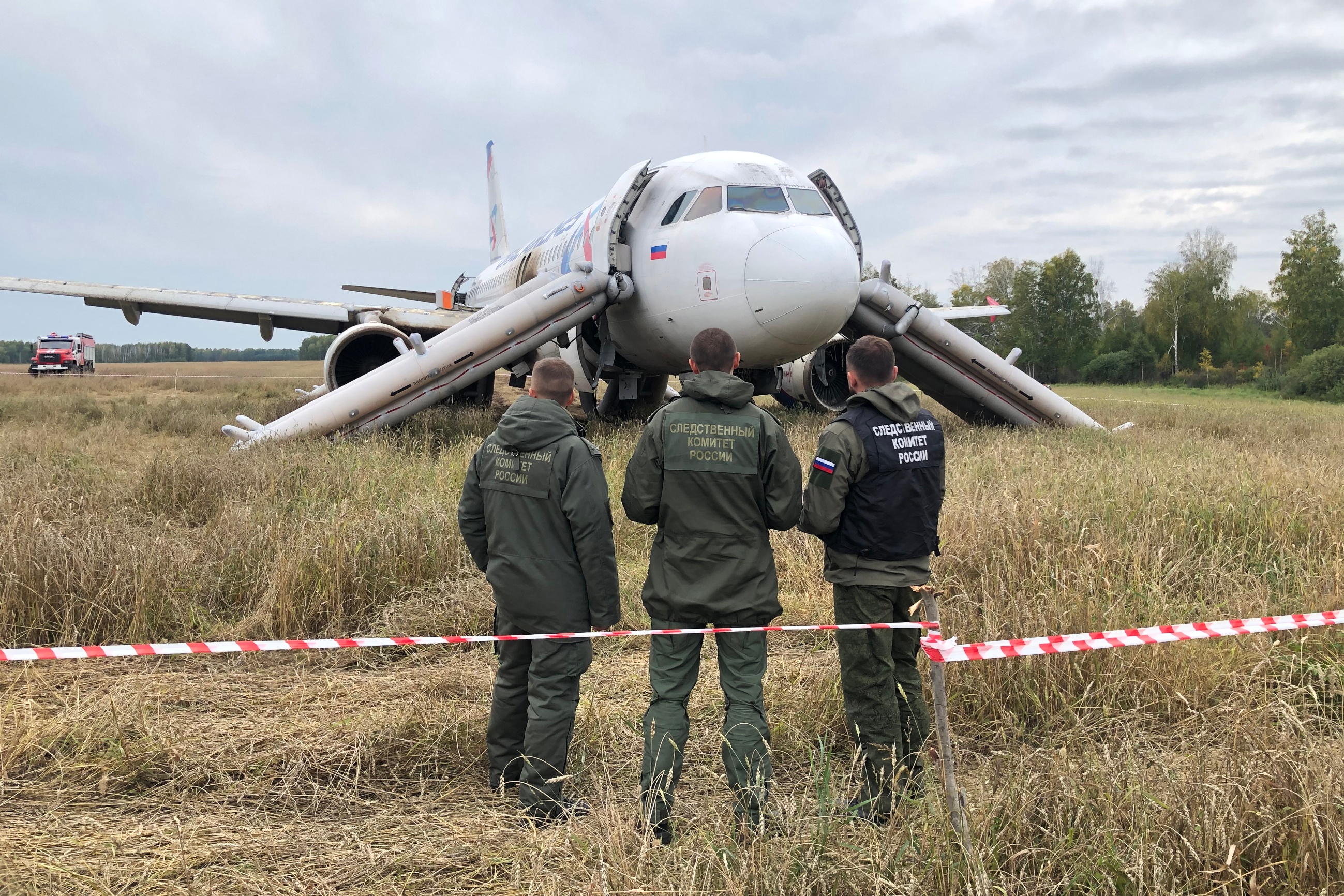
A Soviet-era Yakovlev Yak-42 jet operated by Russian regional carrier Izhavia flew four revenue flights without completing the required pre-flight maintenance checks — and the airline’s safety management system, the organizational architecture designed to catch exactly that kind of failure before it becomes an accident, was not functioning at all. Those two findings, confirmed by Russia’s Federal Air Transport Agency during a re-inspection in late July 2026, ended three decades of state-owned scheduled air service from Izhevsk and left 46,000 passengers scrambling to rebook flights through February 2027.
Russia’s Federal Air Transport Agency, Rosaviatsiya, permanently revoked the air operator certificate (AOC) of regional carrier Izhavia effective August 1, 2026. The decision, signed by agency head Dmitry Yadrov on July 28, is irreversible under current Russian aviation law — a revoked AOC cannot be reinstated, distinguishing this enforcement action from the temporary suspensions that have been used with other carriers. Izhavia, wholly owned by the government of the Udmurt Republic and based at Izhevsk Airport, operated the only scheduled domestic air service connecting the regional capital to a dozen Russian cities including Moscow, St. Petersburg, Sochi, Kaliningrad, and Yekaterinburg.
What Inspectors Found: Unchecked Flights, Falsified Logs, a Dead Safety System
The shutdown traces back to a preventive inspection conducted by Russia’s transport watchdog Rostransnadzor from late March through mid-April 2026, which surfaced a cluster of serious violations. The most operationally significant finding was that a Yakovlev Yak-42D aircraft — registration RA-42455 — had been authorized to operate four commercial passenger flights without completing mandatory pre-departure maintenance procedures. Inspectors also documented that Izhavia’s Safety Management System (SMS) was entirely non-functional.
That last finding matters more than it might appear in a list of violations. Under the International Civil Aviation Organization’s Annex 19 framework, every commercial carrier is required to maintain an SMS — a structured, proactive system for identifying safety hazards before they produce accidents. An SMS is not a checklist or a documentation requirement; it is the organizational mechanism through which an airline detects that a Yak-42 is leaving without required maintenance, reports unreported incidents, and corrects crew scheduling problems before a regulator has to find them. Izhavia’s SMS had stopped performing any of those functions. The unreported flap-deployment failures on Boeing 737-800 aircraft found during the re-inspection — failures that should have been captured in the SMS’s incident-reporting pipeline — are a direct consequence of that collapse.
Rosaviatsiya restricted Izhavia’s AOC on April 30, gave the airline until July 28 to implement corrective measures, and watched it fail. Izhavia acknowledged the findings and submitted a corrective action plan. When re-inspectors returned between July 20 and 23, they found the SMS still non-functional, the crew work-and-rest violations still ongoing, maintenance personnel still working excessive shifts, and — critically — falsified attendance records. Yadrov’s revocation order followed five days later.
“Aviation safety does not tolerate laxity,” Rosaviatsiya stated in its public announcement of the closure. “Without this, the carrier will have to leave the market.”
Who Was Izhavia?
Izhavia’s roots go back to 1944 as the Izhevsk Aviation Enterprise; the current airline took its form in 1992 when Aeroflot was divided into regional carriers and the Izhevsk division became JSC Izhavia. The airline is unusual even within Russia’s regional sector: it owned and operated Izhevsk Airport alongside its flight operations, making it one of the last vertically integrated airline-and-airport entities to survive the post-Soviet restructuring. It employed approximately 902 staff, including 35 pilots, 53 cabin crew, and 21 maintenance technicians as of the July 2026 inspection.
The carrier’s recent trajectory told a story of declining traffic before the regulatory crisis reached its conclusion. Izhavia carried roughly 683,000 passengers in 2025, down 2% from the previous year, while posting revenue of approximately 6.9 billion rubles (approximately $87 million USD at August 2026 rates) and a net profit of 1.67 billion rubles (approximately $21 million USD). In the first half of 2026, passenger traffic fell a further 26.4% year-on-year to 245,500 — a structural decline suggesting the airline was losing ground in its own region before it lost its license.
The fleet at the time of closure consisted of two Boeing 737-800s and four Yakovlev Yak-42D turbofan jets, with an average age of approximately 26 years. The 737-800s are considered commercially attractive assets likely to be absorbed by other Russian carriers. The Yak-42Ds — a Soviet-designed aircraft that first flew in 1975 — will likely be cannibalized for spare parts or transferred to other operators with limited commercial interest.
How Did Russia’s Carrier End Up Flying Uninspected Aircraft?
The answer requires stepping back from Izhavia specifically to the structural context in which it was operating. When Western sanctions were imposed on Russia following the February 2022 invasion of Ukraine, they severed Russian airlines from the global supply chains that keep commercial aircraft airworthy: original manufacturer spare parts, certified maintenance facilities in Europe, aircraft leasing markets, and the technical support networks of Boeing and Airbus.
Four years later, the effects are quantifiable. Across Russia’s 11 largest airlines — which together handle more than 90% of domestic passenger traffic — approximately 130 of 673 aircraft, or about 19% of the fleet, were grounded as of June 2026 due to maintenance backlogs and parts unavailability. For some carriers, the figures are far worse: Russia’s largest charter operator, Azur Air, had only six of its 23 aircraft cleared to fly following an engine-safety inspection — roughly 74% of its fleet grounded. S7 Airlines, Russia’s largest private carrier, had a third of its aircraft offline, primarily its Airbus A320neo family jets whose Pratt & Whitney PW1100G engines require overhauls impossible under current sanctions.
To keep aircraft flying, Russian carriers have deployed three main strategies: cannibalizing other aircraft for parts, routing procurement through intermediary countries such as Turkey and the United Arab Emirates, and authorizing components that have not been certified by the original equipment manufacturer. Russia’s commercial aircraft manufacturing sector, meanwhile, produced just one domestically built commercial aircraft in all of 2025, against a plan of fifteen. In 2021, before the conflict, Russia added 52 commercial aircraft to its fleet.
Under these conditions, an airline with a 26-year-old mixed fleet, Soviet-era jets whose designer (the Yakovlev Design Bureau) ceased production in 2003, and a maintenance department stretched thin enough that technicians were working excessive shifts — was operating at the edge of what any safety management system could absorb. Izhavia’s SMS collapsed rather than absorbing the pressure.
Izhavia Had Been Here Before
This is not the first time Izhavia faced enforcement action. In 2019, Rosaviatsiya suspended the airline’s AOC over financial performance and chronic flight delays. The certificate was reinstated after remediation. At the time of the April 2026 restrictions, Izhavia management cited that 2019 suspension as a “valuable learning experience” from which they had built more robust processes — a claim the July re-inspection rendered hollow.
The Izhavia case also sits within a broader regulatory crackdown. Following the July 24, 2025, crash of an Angara Airlines Antonov An-24 near Tynda, which killed all 48 people on board, Russia’s government ordered Rostransnadzor to conduct inspections of 51 regional carriers beginning December 1, 2025. The An-24 involved was built in 1976 and was among roughly 50 Soviet-era turboprops still flying Russian regional routes with service lives extended unilaterally by Rosaviatsiya after the Antonov Design Bureau (now Ukrainian) severed technical cooperation. Aviation incidents in Russia quadrupled between 2024 and 2025; air fatalities rose from 12 in 2023 to 37 in 2024 to 53 in the first part of 2025.
At least 30 Russian airlines were reported near insolvency at the start of 2026.
What Happens to Izhavia’s Passengers — and Its Airport?
The 46,000 passengers holding Izhavia tickets for flights through February 1, 2027 were offered a choice of full refund or rebooking on partner carriers. Rossiya (part of the Aeroflot Group) and S7 Airlines were designated as the primary receiving carriers, with Aeroflot, Red Wings, Nordwind, Pobeda, NordStar, and Smartavia also absorbing affected travelers. S7 specifically launched a new daily service on the Domodedovo–Izhevsk route effective August 1 to cover the immediate capacity gap.
Izhavia confirmed the certificate cancellation and pledged to “fully meet its obligations to passengers until all issues related to transportation are resolved”.
For the Udmurt Republic, the grounding creates an asset-management problem as much as a transport one. Because the airline and Izhevsk Airport are legally combined, the government must decide whether to sell the two entities separately or together. Udmurtia’s regional administration indicated it plans to hold an open auction at market valuation no earlier than the end of 2026. Alexander Brechalov, the regional head who had described the airline’s aging fleet as a “so-so prospect,” resigned from his position on July 29 — one day after the revocation order was signed.
Under Russian aviation law, the revocation is permanent: Izhavia cannot resume operations under its current AOC. A new investor acquiring the company as a legal entity could, in theory, apply for an entirely new AOC — but doing so requires demonstrating precisely the safety governance capabilities whose absence ended the airline’s commercial life in the first place.
What Comes Next for Russia’s Regional Carriers
The Izhavia shutdown is the most consequential enforcement action to follow the post-Angara inspection wave, but it is unlikely to be the last. Russia’s aviation regulator launched inspections of 51 regional carriers in December 2025, with a 12-month mandate, which means the inspection cycle runs through December 2026. The same pressures that collapsed Izhavia’s safety management system — aging Soviet-era equipment, sanctions-driven maintenance shortcuts, OEM-certified parts unavailability — are present across the regional sector.
The structural implication is that the sanctions’ effect on Russian aviation has shifted in character. In 2022 and 2023, the primary visible symptom was parts unavailability and cannibalized aircraft. By mid-2026, the symptom is safety record falsification and SMS collapse — the point at which an airline is not merely operating with degraded hardware but has stopped monitoring its own safety state. That is a categorically different risk, and Russia’s own regulator has now confirmed it is occurring.
Frequently Asked Questions
What is an Air Operator Certificate and why can’t Izhavia get it reinstated?
An air operator certificate (AOC) is the authorization granted by a national civil aviation authority that allows an airline to operate commercial passenger flights. Without a valid AOC, an airline cannot fly or sell tickets. Under current Russian aviation law, a revoked AOC is permanently canceled — it cannot be reinstated through remediation, unlike a suspension. Izhavia would need an entirely new legal entity to apply for a fresh certificate, which would require demonstrating full compliance with safety standards from scratch.
What is a Safety Management System and why does its failure matter?
A Safety Management System (SMS) is the structured organizational process required under ICAO Annex 19 by which airlines proactively identify and manage safety hazards before they produce incidents or accidents. An SMS is not a paperwork system — it is the mechanism that is supposed to catch things like an uninspected aircraft being cleared to fly, unreported equipment failures, and excessive maintenance crew shift lengths before a regulator discovers them. Izhavia’s SMS was found entirely non-functional, meaning the airline had no active safety self-monitoring while those violations were accumulating.
How did Western sanctions contribute to Russian aviation safety problems?
Since 2022, Western sanctions have cut Russian carriers off from OEM-certified spare parts for Boeing and Airbus aircraft, European maintenance facilities, aircraft leasing markets, and manufacturer technical support. Airlines have responded by cannibalizing other aircraft for parts, sourcing components through gray-market intermediaries, and authorizing uncertified replacement parts. As of mid-2026, approximately 19% of Russia’s major airline fleet is grounded, Russia produced just one commercial aircraft domestically in all of 2025, and at least 30 regional carriers were reported near insolvency. The Izhavia case illustrates how these pressures, sustained long enough, push carriers past parts shortages into safety record falsification.
Can Izhavia passengers get refunds or is their money gone?
Rosaviatsiya coordinated with several Russian carriers to rebook the approximately 46,000 passengers holding Izhavia tickets for travel through February 1, 2027. Passengers who cannot be accommodated on alternative flights operated by Rossiya, S7, Aeroflot, Red Wings, Nordwind, Pobeda, NordStar, or Smartavia are entitled to a full refund. Izhavia confirmed it intends to honor all passenger obligations during the transition.