

Ronald Sanders | Haiti – Stop the money flow to organised crime | Commentary
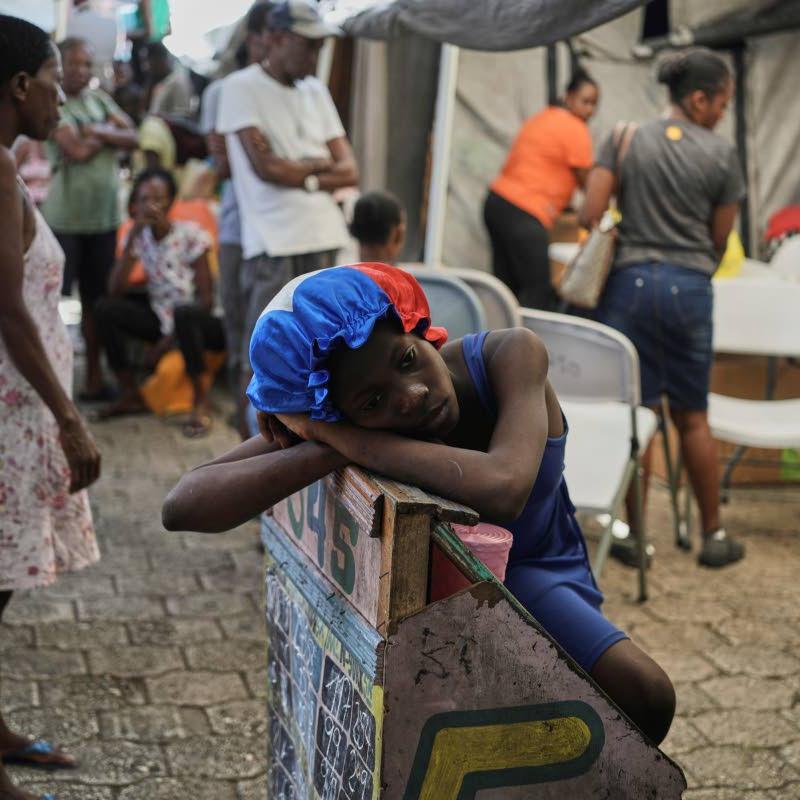
Haiti’s plight must not be forgotten simply because it no longer features regularly in international headlines. The suffering has not diminished. Between January and early June 2026, at least 2,310 people were killed, 1,106 were injured and 99 were kidnapped, according to the United Nations Office on Drugs and Crime (UNODC). It also reported that 699 women and girls were victims of sexual violence, and that almost 1.47 million people had been displaced within Haiti by May.
These figures should disturb the conscience of every nation. They also point to a truth that governments must now confront. Force alone cannot restore order. The gangs’ money, weapons and trafficking routes must be cut off, and those who finance, supply and protect them must be pursued.
Armed gangs retain effective control over large parts of Port-au-Prince. They have also expanded into critical roads, ports, coastal areas and commercial corridors. Their operations extend beyond terrorising communities. They control movement, extort money, seize goods and impose their own authority where the Haitian state is absent or too weak to resist.
In July, UNODC put the matter plainly before the United Nations Security Council. Haiti’s crisis, it said, should not be regarded as a security crisis alone. It is also a governance crisis sustained by organised crime.
A security crisis might be answered largely by superior force. A governance crisis driven by organised crime requires much more. It requires action against extortion, kidnapping, arms and narcotics trafficking, money laundering, corruption and those who provide political protection. It also requires courts, prosecutors, prisons and police institutions capable of enforcing the law.
No one should misunderstand this argument. The United Nations-authorised Gang Suppression Force is necessary. The Haitian authorities requested it, and people living under gang rule cannot be left defenceless. Yet, by July, just over 1,000 personnel had been deployed. That is 4,500 fewer than the approved number. The force requires the personnel, financing, equipment and logistical support necessary to carry out its mandate.
But the force cannot do everything. It may recover a road, a port or a police station. It cannot, by itself, stop new weapons from arriving, identify those laundering the proceeds of crime or prosecute the people who finance and protect the gangs. If those networks remain untouched, gang leaders will be replaced, weapons will be replenished and lost territory reclaimed.
This was the concern I raised as Antigua and Barbuda’s ambassador to the OAS General Assembly in Panama in June. We called for coordinated hemispheric action to disrupt drug trafficking, illicit financial flows and the cross-border movement of weapons and criminals. We also urged governments to identify, sanction and prosecute those who finance or materially support the gangs, whether they operate inside Haiti or beyond its borders. UNODC’s subsequent assessment reinforced the urgency of that position.
Haiti’s record of financial enforcement is particularly troubling. UNODC reports that the country’s financial intelligence unit received 1,254 suspicious transaction reports between 2019 and 2024. Only 19 were referred to the judicial authorities. None resulted in a conviction. The United Nations sanctions list for Haiti contains only nine individuals and two entities, both of them gangs. Canada, the United States, the United Kingdom and the European Union have sanctioned a wider group of political and economic figures. Even so, the broader networks have not yet been systematically investigated and punished.
The OAS General Assembly has called for intelligence-sharing and customs cooperation to prevent weapons and money from reaching the gangs. It has also supported SECURE-Haiti and closer coordination with the United Nations and CARICOM.
CARICOM continues to support the Gang Suppression Force, provide humanitarian assistance and encourage political dialogue through its Eminent Persons Group. CARICOM IMPACS and the Caribbean Firearms Roadmap have also improved regional cooperation against firearms trafficking.
However, these efforts remain fragmented among security assistance, political dialogue, humanitarian relief and weapons control. There is still no clearly identified body bringing together the financial intelligence officers, customs authorities, coast guards, firearms investigators, anti-narcotics agencies and prosecutors needed to pursue the networks as a whole.
What is required now is a practical arrangement involving the Haitian authorities, the OAS, CARICOM and UNODC in a common effort against the transnational organised criminal networks sustaining the gangs. Its work should combine financial intelligence, customs information, firearms tracing, maritime surveillance, anti-narcotics operations and prosecutorial cooperation. It should map financial and commercial links, trace seized weapons and ammunition, scrutinise suspicious cargo and maritime movements, prepare evidence for sanctions, support joint investigations, and pursue the freezing and lawful recovery of criminal assets.
Source and transit countries have a particular duty. The weapons and ammunition that sustain Haiti’s gangs are overwhelmingly drawn from external supply chains. Haiti cannot police cargo controls at foreign ports, trace money through overseas financial centres or prevent diversion before weapons enter illicit supply chains. Outbound cargo screening, tighter oversight of shippers, systematic weapons tracing and investigation of diverted legal purchases cannot be left to Haiti alone.
Sanctions should not end with the men who hold the guns. Where reliable evidence establishes involvement, they should also reach those who buy the weapons, arrange their shipment, conceal criminal proceeds or use political and commercial influence to protect the gangs.
Such action must be lawful and precise. Financial measures should be directed at identified persons, businesses and transactions, with proper safeguards and due process.
While external assistance is vital, Haitian institutions must also be strengthened. Haiti’s specialised judicial units for financial crimes must become fully operational. Investigators, prosecutors, judges, prison authorities and anti-corruption bodies need protection, resources and technical support. Financial intelligence must produce investigations; investigations must produce cases; and convictions should lead to the recovery of criminal assets.
The problem is no longer a lack of diagnosis. UNODC has provided it. The OAS and CARICOM have recognised important aspects of it. What is still lacking is coordinated execution. Force can create the time and space in which Haiti might recover. But, if the people who finance, arm, transport and protect the gangs remain untouched, the Haitian people will be forced to endure the same cycle again.
The international community must therefore act decisively to disrupt the financial networks that illegally sustain the gangs. Stopping the violence requires stopping the money that empowers it.
Sir Ronald Sanders is Antigua and Barbuda’s ambassador to the United States and the OAS. He is also chancellor of the University of Guyana. The views expressed are his own.