

Report alleges élite ties behind logging permits in Cameroon’s Ebo Forest
- A report by a Swiss advocacy group says a timber company logging Cameroon’s Ebo Forest is tied to a wider network of political élites in Yaoundé.
- The company, Sextransbois, is part of a network of logging and agriculture interests owned by prominent businessman Aboubakar Al Fatih.
- Corporate registry documents analyzed by the group show that Sextransbois was incorporated by relatives of President Paul Biya’s eldest son before being transferred to Al Fatih’s half-brother in 2014.
- Environmental groups have accused a number of companies owned by or linked to Al Fatih of breaking Cameroonian law.
A newly released report alleges that well-placed elites in Cameroon’s government are enabling a cluster of timber and agribusiness companies to log primary forest in the country.
These companies include Sextransbois, which was awarded a controversial 68,000-hectare (168,000-acre) logging concession in the Ebo Forest in 2023. The report by Swiss-based advocacy group Global Initiative Against Transnational Organized Crime (GI-TOC) also named SCIEB, which controls another concession in the Ebo Forest covering 65,000 hectares (161,000 acres).
The report used corporate registry documents, trade records, and sources in Cameroon’s forestry sector to link both companies, along with Boiscam and Camvert, to prominent businessman Aboubakar Al Fatih.
According to an “informal broker” who has worked to connect logging companies with forestry officials and was interviewed by GI-TOC, Al Fatih’s companies have benefitted from his ties to the minister of economy, Alamine Ousmane Mey. Mey is considered an ally of Cameroonian President Paul Biya’s eldest son Franck, who reportedly recommended him for a cabinet post in 2011.
Sextransbois was incorporated by relatives of Franck Biya’s in 2014, before being transferred to then-20-year-old Mahmoud Mourtada, Al Fatih’s half-brother.
The report implies that Al Fatih’s connections to figures in Franck Biya’s circle helped Sextransbois and SCIEB obtain their concessions in the Ebo Forest.

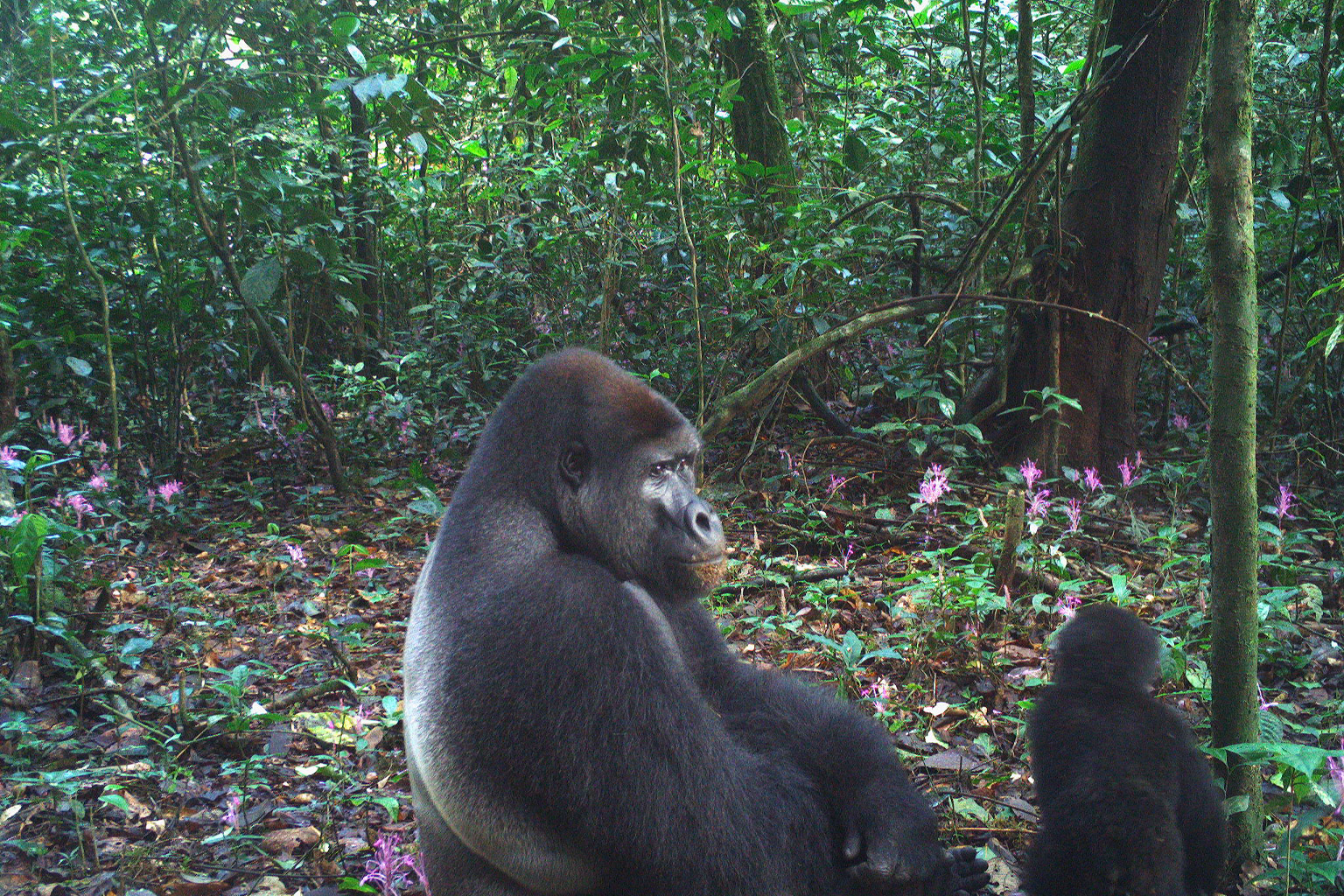
Those concessions were awarded despite a global campaign to protect the forest, which is a biodiversity-rich habitat for threatened gorillas and chimpanzees. After initially walking back its decision to reclassify the forest as government land in 2020, the government quietly reissued the two concessions to Al Fatih’s companies three years later.
“Al Fatih’s companies appear to have been granted favours to circumvent Cameroon’s forestry laws, benefiting from powerful backers that allow the companies to decimate the forest,” the report’s author, who requested anonymity due to the sensitivity of the research, wrote in an email to Mongabay.
Another company owned by Al Fatih, Camvert, was granted a 60,000-hectare (148,000-acre) oil palm concession near southern Cameroon’s Campo Ma’an Key Biodiversity Area, despite having no prior track record in the industry. Timber from the concession area is also allegedly being harvested by companies in his network, including Sextransbois and Boiscam, the report said.
Greenpeace Africa has previously accused Camvert of breaking Cameroonian law by failing to pay land royalties to communities near its concession. In a 2024 letter, a coalition of environmental groups described Camvert’s operations as “riddled with illegalities,” and said SCIEB and Sextransbois’s concessions in the Ebo Forest “are in flagrant violation of the laws of Cameroon.”
“This report exposes how poor governance, corruption and greed continue to plague Cameroon’s forest sector, fueling the destruction of some of Africa’s most precious habitats,” said Indra Van Gisbergen, a campaigner with U.K.-based advocacy group FERN.
Representatives of the Indigenous Banen group have challenged the awarding of the Ebo Forest concessions in court. According to GI-TOC’s researchers, Al Fatih himself tried to bribe traditional leaders to stop campaigning against logging in the forest.
Cameroon’s Ministry of Forests and Wildlife did not respond to Mongabay’s repeated requests for comment.
The report also analyzed trade data that suggest SCIEB is engaging in “transfer pricing,” masking its profits by selling timber to a shell company in Hong Kong for around half its value.
“SCIEB have sold much of their timber to a Hong Kong-based company with very little online presence and no physical address at an apparent low cost compared to the true market value,” said the author. “Experts consulted indicate this is an example of transfer pricing.”

According to customs data cited in the report, countries in the EU imported around $700,000 of lumber cut from timber harvested by SCIEB, including France, Belgium and Spain.
“The findings raise grave questions for the companies named — as well as the EU countries where their timber is being exported, apparently in breach of the EU Timber Regulation,” Van Gisbergen said.
GI-TOC called on Cameroonian forestry officials to cancel Al Fatih’s concessions inside the Ebo Forest.
“Under Cameroonian law, the Ministry of Forests and Wildlife should revoke the Forest Management Unit exploitation titles granted to Al Fatih’s companies given they appear to have breached the terms of their concessions and forestry regulations,” the author said.
Banner image: Camera trap image of an adult male and a baby gorilla in Ebo Forest. Image © EFRP/SDZWA.
Logging persists in Cameroon’s wildlife-rich Ebo Forest despite warnings
Feedback: Use this form to send a message to the author of this post. If you want to post a public comment, you can do that at the bottom of the page.

Credit: Source link