

REMEMBERING 9/11: How an unprecedented attack changed life along the border
The economic fallout
Time passed, and wait times at the ports decreased somewhat, but didn’t return to their pre-9/11 levels, Parra said.
Before 9/11, “there were hardly any lines,” said Torres, the accountant who commutes to Mexico for work.
“A very long waiting time at the border using a car would be an hour, hour and a half. But that would be a very, very, very long time,” he said. “Now that’s the norm: an hour.”
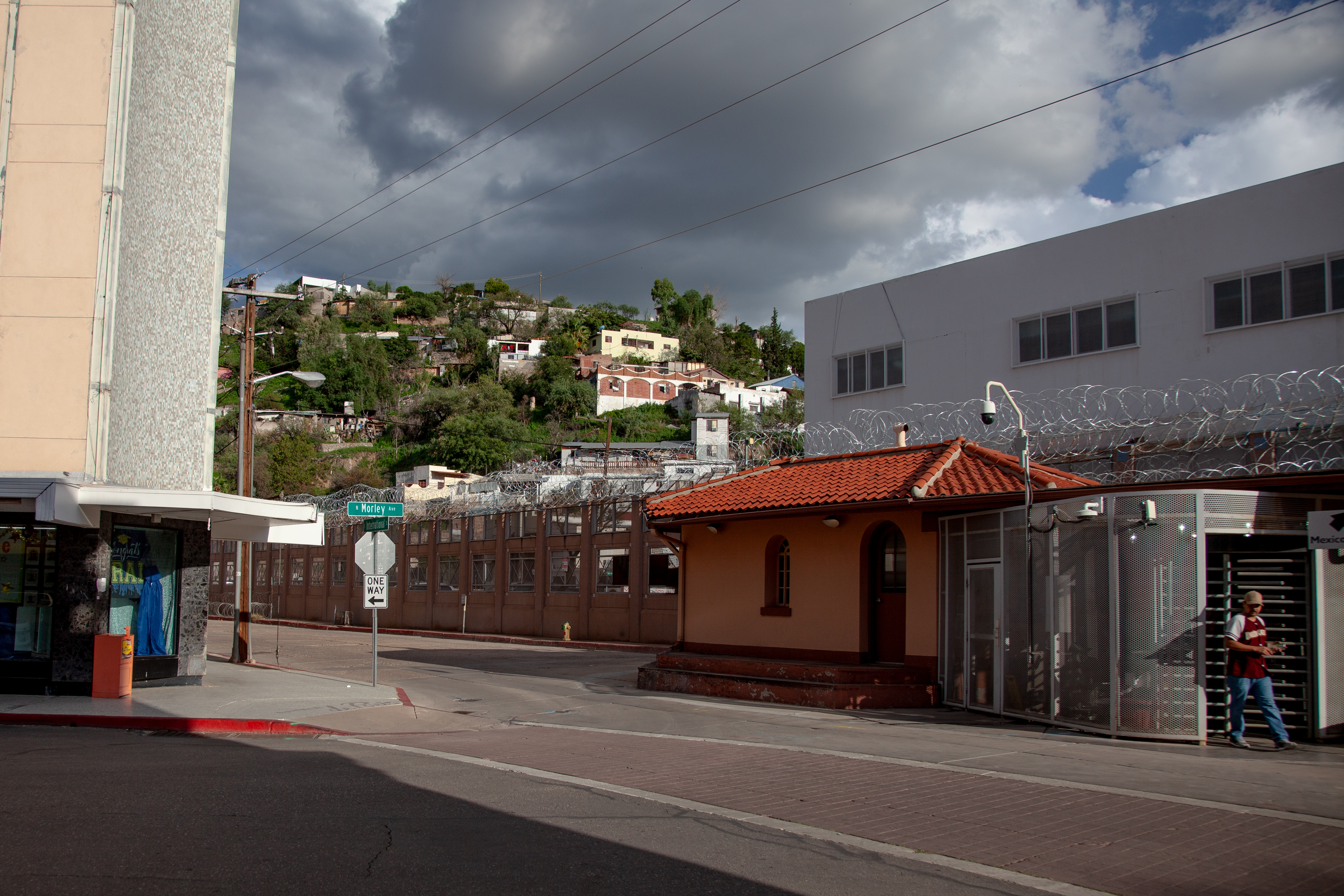
As crossing through the ports of entry became more difficult, the effects reverberated to small businesses on both sides of the border. For generations, departments in Nogales, Arizona, largely depended on shoppers from Mexico, who often traveled for hours to walk along the city’s downtown corridor. Since 9/11, many of those businesses have since closed – though other factors, like big box stores, and a weakened peso, likely came into play.
Meanwhile, Torres said, U.S. citizens became more hesitant to travel to Nogales, Sonora. The trend hurt the city’s “curios” — small businesses that sold Mexican art and other artisanal items. He added that a spike in cartel-related violence in the 2000s, along with subsequent media coverage, didn’t help.
‘They’ll build a 35-foot ladder’
Today, the southern edge of downtown Nogales is lined with a 30-foot-tall bollard fence, built in 2011. A cascade of razor wire clings to the fence — an addition from the first Trump administration in 2018. Twice in recent years, the Nogales City Council has asked the federal government to remove the wire. It remains.
Reflecting on the past 25 years, Torres said he missed the pre-9/11 days of quickly crossing the border. But he understood the rationale behind some of the border security measures.
“I’m not saying that I like the wall, but I mean, the country has to protect itself,” he said.
Still, Torres said, “people that want to cross eventually will find a way to cross the border. Build a 30-foot wall and they’ll build a 35-foot ladder. OK? Or a tunnel. Well, they’ll go under.”