

Record-Breaking Dust Storms In 2025 Sent Pollution Soaring In China And US-Mexico Border

Record-breaking dust storms sent pollution levels soaring in China and the US-Mexico border region in 2025, disrupting transport, shutting schools and airports, and sending thousands to emergency rooms, according to a new World Meteorological Organization (WMO) report.
Overall, average dust concentrations in 2025 were similar to the previous year, but the regional extremes were severe, the WMO Airborne Dust Bulletin found. It is the tenth in the annual series.
Around 2,000 million tonnes of dust enter the atmosphere each year, with dust storms now affecting more than 150 countries forcing schools, highways and airports to shut down.
“More than 80% of [global dust] originates from the North African and Middle Eastern deserts and can be transported for hundreds and even thousands of kilometres across continents and oceans,” WMO said. “Much of this is a natural process, but poor water and land management, drought and environmental degradation are increasingly to blame.”
The report also lands during a summer of extreme heat around the globe. June 2026 was western Europe’s hottest June on record and the second-warmest June globally, at 1.39°C above the pre-industrial 1850–1900 average, according to the EU’s Copernicus Climate Change Service.
While dust storms are known to worsen air quality, so do heatwaves. When combined, they are a recipe for disaster, previous WMO reports show.
“Sand and dust storms affect air quality and human health. They reduce agricultural productivity, disrupt transport and aviation, strain water and energy systems, and damage ecosystems. No country is immune to their impacts,” said WMO Secretary-General Celeste Saulo.
Natural process worsened by environmental degradation
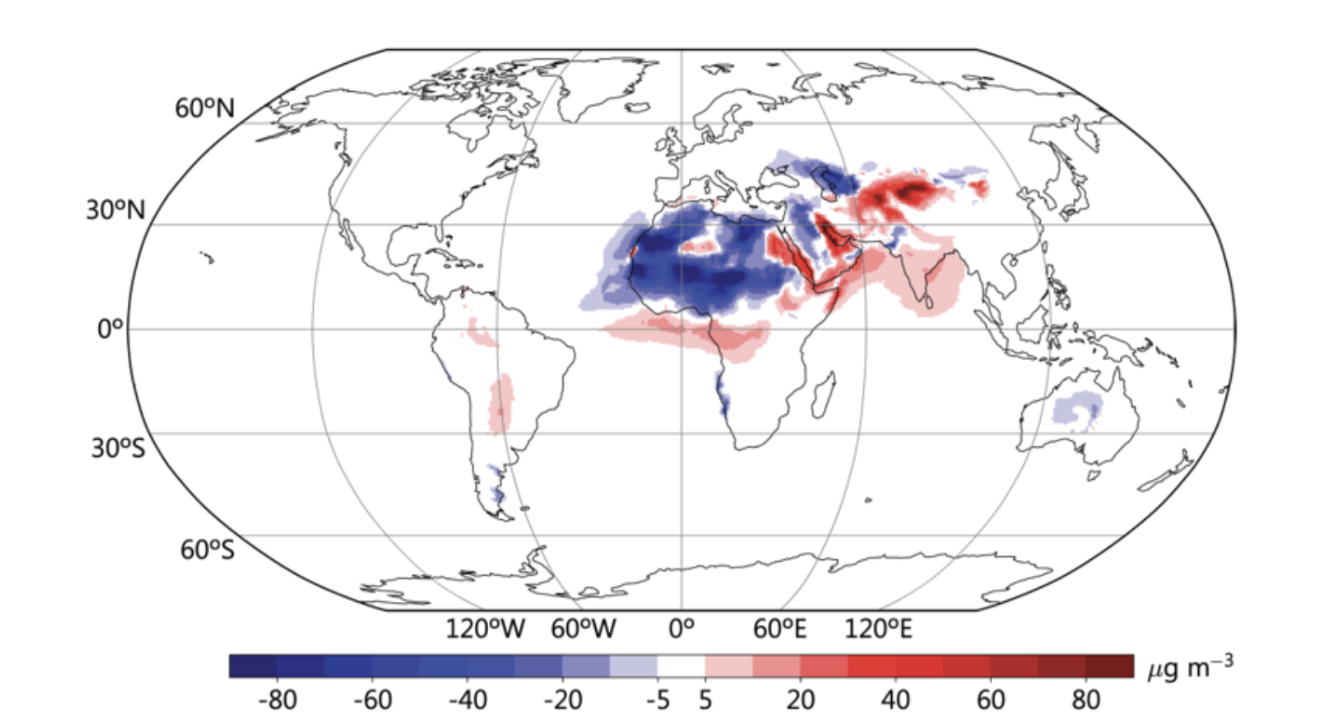
Dust and dust storms are a natural process. Major deserts such as the Sahara in Africa, the Gobi in Asia, and the Arabian Desert in the Middle East are the largest sources of dust. Dust is known to travel across countries and continents.
The highest annual mean dust concentrations worldwide remained centred on the Bodélé Depression in Chad, one of the world’s most active dust source regions.
North Africa and the Middle East were hit by a series of major storms between March and May 2025 that harmed air quality and reduced visibility across the region.
In mid-April, a cold front crossing Iraq created hazardous conditions that shut down several airports and resulted in nearly 4,000 people seeking treatment at emergency rooms for respiratory problems, the bulletin said.
A late-April storm in Egypt was more intense still, with visibility in affected areas dropping to just 300 metres, forcing the government to suspend school and university classes.
In East Asia, dust swept from Mongolia across most of China from 10 to 14 April in the country’s most extensive sand and dust storm in a decade, ranked by intensity, reach and duration, WMO said.
The desert border region of Mexico and the United States saw exceptionally frequent, intense and prolonged storms. El Paso, Texas experienced 50 days of dust weather in 2025, more than double the annual average as its 12 dust storms were the most since 1935, at the height of the Dust Bowl.
At the storms’ peak, dust conditions ran for more than six hours — the longest such period in Texas in at least 25 years — with hourly dust pollution readings at the highest measured in the state since hourly monitoring began.
Schools, highways and airports closed, public events were postponed, and blowing dust contributed to multiple fatal road accidents, including a multi-fatality chain-reaction crash at Lordsburg Playa in New Mexico, one of the deadliest stretches of highway in the country for dust.
WMO hopes that having more data and deploying Artificial Intelligence (AI) models will help countries prepare better for dust storms.
“Because sand and dust storms and droughts do not respect borders, international cooperation is essential,” Saulo said “Strengthening shared observations, data exchange, and regional forecasting capacity allows all countries, especially the most vulnerable, to benefit from advances in science and early warning.”
Combat the infodemic in health information and support health policy reporting from the global South. Our growing network of journalists in Africa, Asia, Geneva and New York connect the dots between regional realities and the big global debates, with evidence-based, open access news and analysis. To make a personal or organisational contribution click here.