

Reciprocity: Morocco Orders Spain’s EFE, TVE Journalists to Leave Fnideq
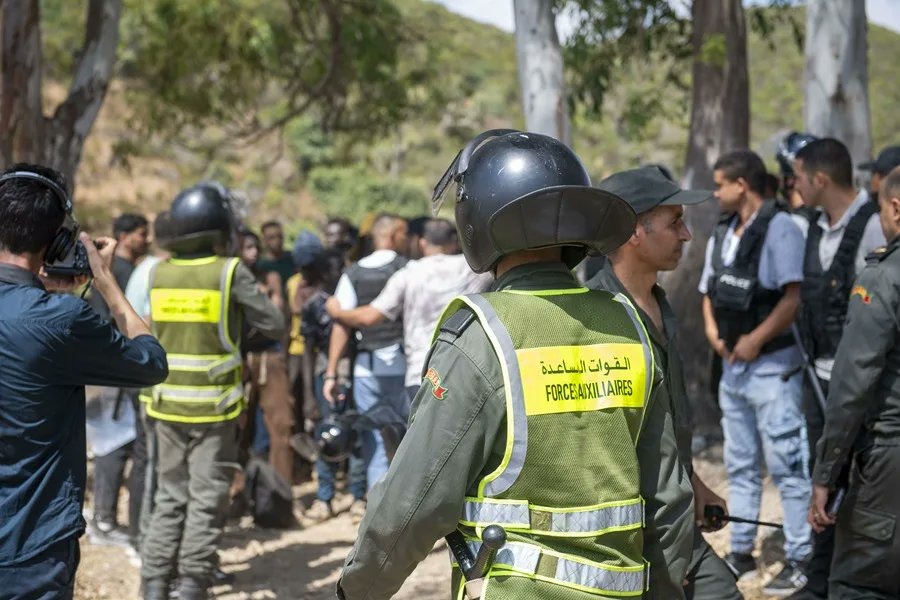
Rabat– Moroccan authorities on Saturday ordered journalists from Spain’s EFE news agency and public broadcaster TVE to leave Fnideq, where they had been covering developments along the border with occupied Ceuta.
According to EFE, the journalists were staying at local hotels when staff informed them that they had been instructed by local authorities to leave the city immediately.
An official reportedly told the journalists that he was “following instructions” and warned that their press credentials and equipment could be confiscated if they failed to comply with the order.
Earlier, a representative of Morocco’s Interior Ministry had instructed EFE and TVE journalists to leave the town, without publicly providing a reason for the decision.
The move came as tensions intensified around Fnideq, where Moroccan security forces were conducting large-scale operations to prevent a mass attempt to cross into Ceuta.
Moroccan authorities said 294 people had been intercepted by 2:45 p.m. on Saturday, including 248 migrants from sub-Saharan African countries and 46 Moroccan nationals. The figure remained provisional as security operations continued.
Hundreds of migrants, mostly from sub-Saharan Africa, attempted to move toward the Ceuta border on Saturday and clashed with Moroccan security forces in a mountainous area on the outskirts of Fnideq, around three kilometers from the border crossing.
The decision involving the Spanish media came against the backdrop of a broader dispute over media access on both sides of the border.
Morocco’s second public television channel, 2M, said Spanish authorities had previously restricted the entry of one of its camera crews into Ceuta earlier this month while the channel was attempting to cover the aftermath of a mass migration attempt.
While Spanish media have reported on the restrictions imposed on their journalists in Fnideq, the Moroccan side has also highlighted what it described as restrictions faced by Moroccan media seeking to cover developments from within Ceuta.
Author and political analyst Samir Bennis has criticized Spanish media coverage of Morocco’s decision to order journalists from Spain’s EFE news agency and public broadcaster TVE to leave Fnideq, arguing that concerns over press freedom should apply equally to Moroccan journalists.
Responding to EFE’s reporting on the expulsion of its journalists, Bennis questioned why similar concerns were not raised when Moroccan television channel 2M faced restrictions while attempting to cover developments in Ceuta.
“Excellent. But where were you when that same freedom of information was so flagrantly and insultingly denied to your colleagues at the Moroccan television channel 2M?” Bennis wrote.
He argued that Spanish journalists working in Morocco should not expect to receive treatment different from that faced by Moroccan journalists seeking to work in Ceuta.
Bennis said criticism of Morocco’s decision would have been more consistent if Spanish media had also condemned restrictions imposed by Spanish authorities on Moroccan journalists and expressed solidarity with them.
“Your position would have been legitimate and consistent if you had likewise condemned the decision by the Spanish authorities to prevent Moroccan journalists from exercising their right to report and had expressed solidarity with them,” he said.
Bennis concluded by accusing Spanish media of applying press freedom standards selectively.
“It sounds very hollow to champion freedom of information only when Spanish journalists are the ones affected,” he said.
The latest developments come as Moroccan authorities maintain a heavy security presence in Fnideq to prevent further mass crossings, while the situation around the border remains closely watched on both sides.
Credit: Source link