

Reasons behind slow pace of work on Benin–Onitsha road- FG – Daily Champion
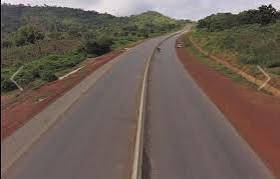
Akor Sylvester, Abuja
The Federal government has debunked the claims that the Benin–Onitsha Road has been deliberately neglected under President Bola Tinubu’s administration, insisting that the controversial corridor is subject to an existing 25-year concession agreement that imposes legal and contractual obligations on all parties.
The position was expressed in a statement by the Director of Information and Public Relations, Federal Ministry of Works, Mohammed A. Ahmed, issued in response to criticism of the condition of the Benin–Onitsha corridor and attributed to the position of the Minister of Works, Engr. David Umahi.
The statement said while the concerns of motorists and other road users over the condition of the highway were legitimate, presenting the situation as evidence of deliberate neglect by the Tinubu administration ignored the history of the road, inherited infrastructure deficits and the contractual status of the project.
It explained that the Benin–Asaba section of the corridor was incorporated into the Federal Government’s Highway Development and Management Initiative (HDMI) as a Value-Added Concession, with official records describing the 125-kilometre Benin–Asaba Expressway as a 25-year concession designed to attract private-sector investment for the development and management of the road.
According to the Ministry, the concession arrangement means the government cannot simply terminate the agreement and award the road to another contractor without considering the legal and financial consequences.
“The debate over the condition of the Benin–Onitsha corridor is legitimate. Nigerians have every right to demand good roads, safe journeys and value for public investment. But legitimate concern must not be distorted into a narrative that ignores history, contractual obligations, and the substantial road infrastructure intervention currently taking place across the South-East”, it said.
The article titled, “The Benin–Onitsha Road: A Monument to Neglect and the Insensitivity of Power” raises serious concerns, but its central argument requires important clarification.
“The first question the writer should answer is simple: How many times has he acknowledged the enormous number of Federal road projects being executed across the South-East under the Renewed Hope Infrastructure Renaissance of President Bola Ahmed Tinubu, GCFR?
“The second equally important question is: Was the Benin–Onitsha Road in its present condition only after President Tinubu assumed office?
“And the third question, which is germane to responsible public debate, is: Must every road in Nigeria be fixed within three years of a new administration assuming office, regardless of inherited contracts, concession agreements, funding constraints, and procurement laws?
“These fundamental questions do not dismiss the suffering of motorists and road users. Rather, they place the problem in its proper context.
“It is intellectually dishonest to present the present condition of the Benin–Onitsha road as though it was created by the Tinubu administration. It inherited a vast network of deteriorating 2,064 Federal roads and bridges projects after decades of accumulated infrastructure deficits. It is instructive to note that the condition of major highways across the country predates the present administration.
“Indeed, the Federal Government itself has acknowledged the historic deterioration of major South-East roads. On the Enugu–Onitsha Expressway, for instance, the Ministry has been undertaking substantial reconstruction works, including concrete pavement, and in April, 2026 reopened an initial 15-kilometre completed section.
“Therefore, the question should not merely be “Why is every kilometre not yet perfect?” But the more responsible questions should be: “What has this administration inherited, what is it fixing, what contractual constraints exist, and what is being done to accelerate delivery?”
“One of the most significant omissions in the criticism is the contractual status of the Benin–Asaba road project. The project was incorporated into the Federal Government’s Highway Development and Management Initiative (HDMI) as a Value-Added Concession. Official records of the Infrastructure Concession and Regulatory Commission (ICRC) describe the 125-kilometre Benin–Asaba Expressway as a 25-year concession involving the concessionaire, with the project designed to attract private-sector investment for development and management of the road”, the statement noted.
For a better society
_______________________________
Follow us across our platforms:
Instagram – https://www.instagram.com/championnewsonline/
Facebook – https://web.facebook.com/championnewsonline
LinkedIn – https://www.linkedin.com/company/champion-newspapers-limited/
https://x.com/championnewsng/
You can also like and comment on our YouTube videos.
https://youtu.be/QIBfD1tT80w?si=R4Qf3so2LxYu3GC2
Credit: Source link