

Rainfall fails to ease Iraq water crisis – Shafaq News
2026-07-02T23:13:25+00:00
Shafaq News- Baghdad
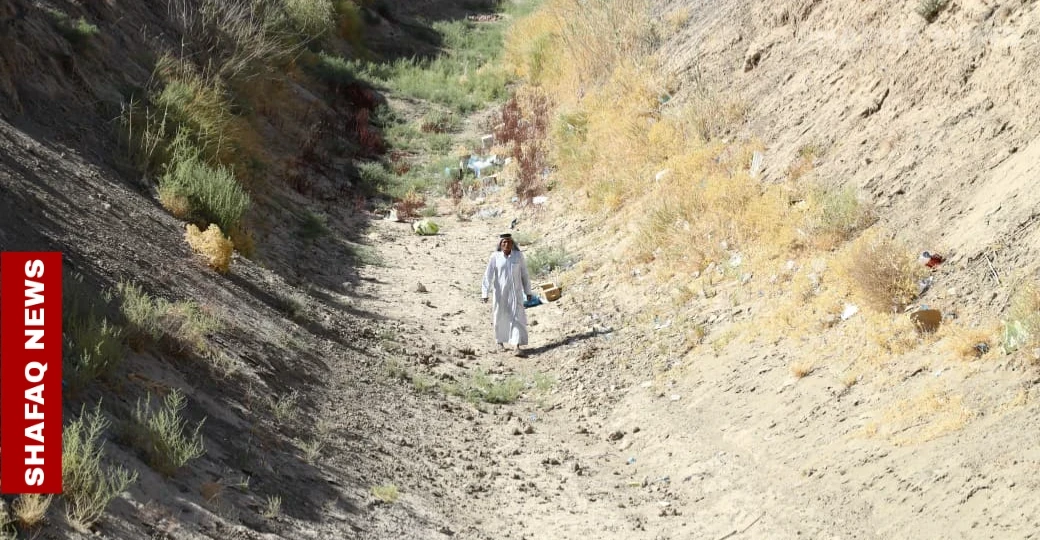
Iraq’s water crisis remains a strategic threat despite a relative rise in water levels after recent rainfall, with southern provinces still facing drought-driven displacement and agricultural decline, the parliamentary Agriculture and Water Committee declared on Thursday.
Committee member Bayz Zrari told Shafaq News that official reports, including those by the International Organization for Migration, show tens of thousands of rural residents and livestock breeders have moved from marshland areas to city centers after losing livelihoods and facing worsening environmental conditions. The displacement has increased pressure on infrastructure and basic services in receiving cities.
Addressing the crisis, Al-Zarari explained, requires three tracks: binding international agreements to protect Iraq’s water rights, modern scientific management through advanced irrigation systems, and wider reuse of treated water and sustainable groundwater investment.
He first called for stronger water diplomacy and new legal agreements with upstream countries, mainly Turkiye, Iran, and Syria, to protect Iraq’s legal rights in the Tigris and Euphrates rivers and their tributaries and secure a fair, stable water share. The federal government, the Water Resources Ministry, and relevant authorities should also intensify diplomatic efforts, set a “clear negotiation roadmap” with neighboring countries, modernize irrigation systems, support affected farmers, and revive the marshes to curb displacement and protect water and food security.
The United Nations previously estimated that Iraq’s above-average 2025-2026 rainfall brought the country its strongest water recovery in years but did not reverse long-term scarcity, with live storage at 20 billion cubic meters, below 20% of capacity. UN agencies also said 31,001 families, or 186,006 people, remained displaced by climatic factors as of September 2025, with 63% moving from rural to urban areas.
Iraq is among the five countries most vulnerable to climate change, according to UN assessments. Official data also shows the country loses about 10,000 hectares to desertification each year, while water shortages have cut farmland by 50%.
Read more: Floods vs. deficit: Did rain solve Iraq’s water problem?