

Rabiu overtakes Rupert to become Africa’s No. 2 billionaire
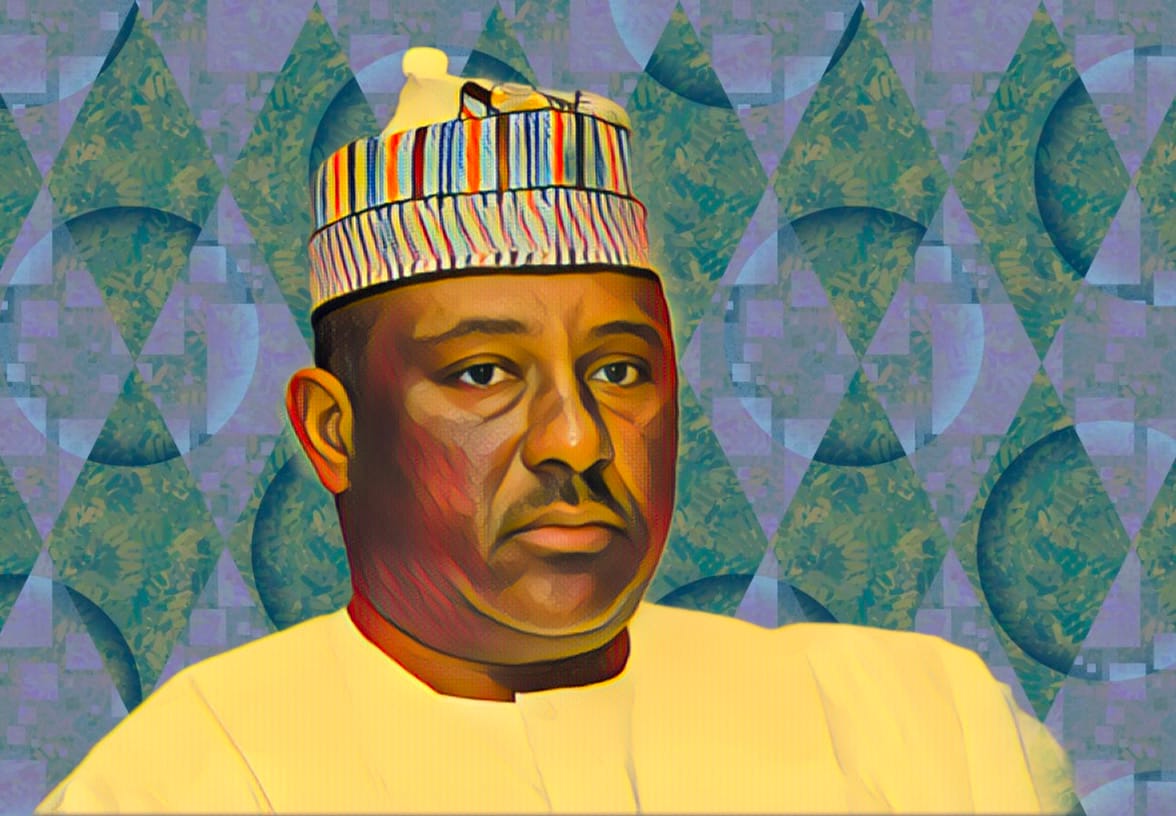
Two of the world’s most authoritative wealth trackers are looking at the same man and arriving at numbers that differ by nearly $4 billion, and both of them are arguably right.
Bloomberg’s Billionaires Index, which runs a daily mark-to-market calculation on the fortunes of the world’s wealthiest individuals, placed Abdul Samad Rabiu’s net worth at $19.1 billion on May 7, 2026, making him Africa’s second richest person behind only Aliko Dangote. That ranking puts him ahead of South African luxury goods magnate Johann Rupert, whose Bloomberg-tracked fortune has contracted to $17.7 billion.
Forbes, whose most recently published figures peg Rabiu at $15.3 billion, ranks him fourth on the African rich list, trailing Dangote, 96-year-old Israeli-British-Swazi billionaire Nathan Kirsh and Rupert.
The gap between the two estimates is $3.8 billion. Both organisations are credible. Neither is wrong. The difference is methodological, and understanding it tells you more about how African stock market wealth is counted than any single number on either list can.
The Bloomberg calculation
Bloomberg’s approach to Rabiu is transparent and specific. It values his stakes in BUA Cement and BUA Foods at the closing prices of the Nigerian Exchange every business day and updates his total wealth accordingly. Rabiu owns approximately 95.78% of BUA Cement and approximately 92.64% of BUA Foods, 2 of the most actively traded stocks on the NGX.
BUA Cement has been one of the most explosive performers on any African exchange in 2026. The stock has surged more than 134% year to date, rising from approximately N178.50 per share at the start of the year to a recent closing price of N418. On a market capitalisation basis that makes BUA Cement worth approximately N14.2 trillion. Rabiu’s near-total ownership of the company means his stake is worth approximately N13.6 trillion, or $9.9 billion, from cement alone.
BUA Foods has also rallied sharply. Its share price has moved from around N580 at end-2025 to N798 at its most recent close, driving the market capitalisation to approximately N14.4 trillion. Rabiu’s 92.64% stake is worth approximately N13.3 trillion, or $9.7 billion.
Add those 2 figures together and you get approximately $19.6 billion before accounting for debt, private holdings and other adjustments. Bloomberg’s $19.1 billion figure reflects that arithmetic after appropriate deductions.
Why Forbes arrives somewhere different
Forbes does not update its Africa rich list on a daily basis. Its most recent comprehensive African wealth rankings were published in March 2026, at a time when BUA Cement was trading at materially lower prices than today. BUA Cement at N300 per share versus N418 per share represents a $3-4 billion difference in the value of Rabiu’s stake alone, which goes a long way toward explaining the discrepancy.
There is also a structural reason why Forbes tends to apply more conservative valuations to positions in emerging market companies, particularly where the controlling shareholder owns 90% or more of the listed entity. The logic is straightforward: if Rabiu owns 95.78% of BUA Cement, he cannot sell that stake at the prevailing market price. The stock’s free float is only 2.31% of the total share count. Any attempt to sell even a small fraction of his holding into that thin market would move the price sharply downward. The market price multiplied by his shareholding overstates what his position is actually worth in a liquidation scenario.
Bloomberg’s methodology uses market price as the starting point and represents the most optimistic reading of his wealth. Forbes applies additional discounts for market concentration and illiquidity. Both approaches have valid theoretical foundations, and the truth of Rabiu’s actual realizable wealth almost certainly lies somewhere between the 2 figures.
The pace of the wealth surge
Whatever the precise figure, the direction is not in dispute. Rabiu started 2026 with a Bloomberg-tracked net worth of $10.4 billion and has added approximately $8.88 billion in 4 months. That is the largest year-to-date wealth gain of any billionaire in Africa in 2026, outpacing Dangote’s own significant increase and dramatically outpacing Rupert, Kirsh and every other billionaire on the continent.
The primary driver is operating performance that the market has chosen to reward aggressively. BUA Foods posted a 95% jump in profit after tax for the full year 2025, earning N518.39 billion, and declared a record dividend of N28 per share. BUA Cement posted N176.4 billion in profit after tax in Q1 2026 alone, more than double the N81.1 billion it earned in the same period a year earlier. Revenue across both companies has grown consistently, margins have expanded and both boards have demonstrated a willingness to distribute earnings aggressively rather than hoard them.
The market has responded accordingly. When companies genuinely double their earnings, their stocks tend to reflect it. BUA Cement’s 134% year-to-date gain and BUA Foods’ 37% rally are, in that context, not irrational. They are the market acknowledging that the underlying businesses have materially improved.
Where Rabiu stands in the Africa context
At $19.1 billion on Bloomberg, Rabiu now sits in the same bracket as some of the most globally recognised African fortunes. Dangote remains in a separate category at approximately $33.6 billion, and at $19.1 billion Rabiu is roughly $14.5 billion behind. But he is now meaningfully ahead of Rupert’s $17.7 billion and well past the $15.3 billion that Forbes currently assigns him.
The Bloomberg figure will move again tomorrow and every trading day thereafter. If BUA Cement and BUA Foods sustain their current prices or push higher, Rabiu’s Bloomberg ranking will move with them. If they correct, his position on the index will adjust accordingly. The Forbes figure will likely be updated during the next annual review cycle, at which point the full extent of the rally in his listed holdings will be captured in the methodology that the American wealth tracking institution applies.
In the meantime, the Kano-born industrialist who started as a commodity trader in 1988 with BUA International Limited has now been identified by the world’s most closely watched real-time wealth tracker as the second richest person on the African continent. Whether Forbes eventually agrees on the ranking, the arithmetic behind the Bloomberg number is real, and the operating performance driving it is verifiable in quarterly filings that any investor can read.
Crédito: Link de origem