

Putin Boosts Russian Military Staffing Amid Staggering Losses and Drone Threat
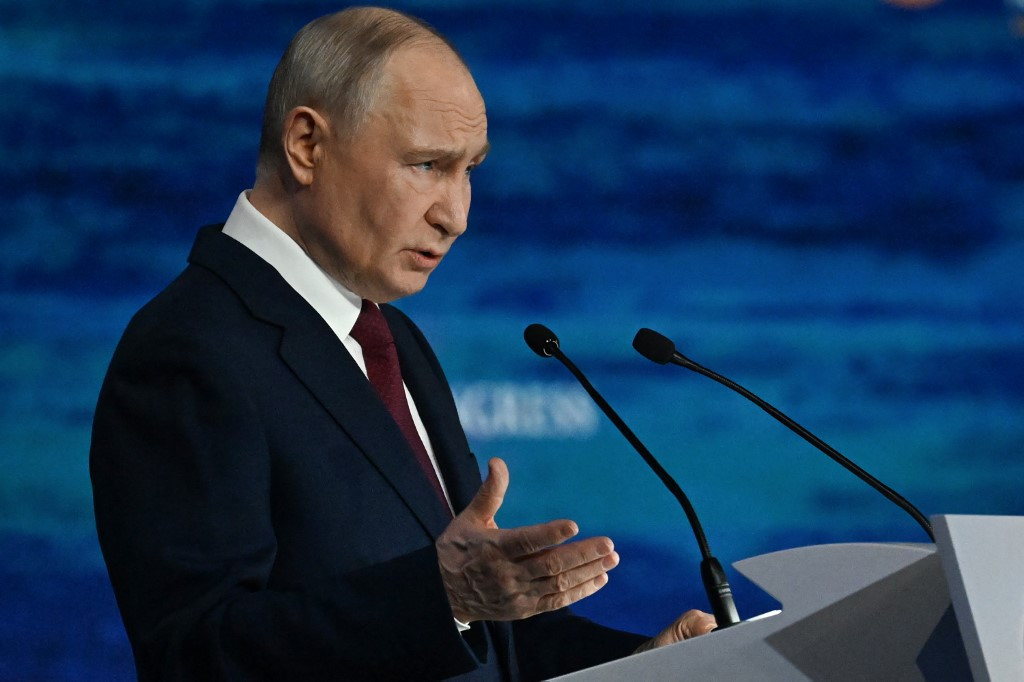
Russian President Vladimir Putin, on June 12, has signed an executive decree expanding the official staffing size of the Russian Armed Forces by nearly 10,000 personnel, Dozhd and Current Time reported.
The directive marks the second time in just four months that the Kremlin has expanded its military roster to offset heavy battlefield attrition.
JOIN US ON TELEGRAM
Follow our coverage of the war on the @Kyivpost_official.
The changing scope of the Russian military
According to the legal text, the total authorized staffing of the Russian Armed Forces has been elevated to 2,399,130 individuals – up from the previous cap of 2,391,770.
Within this broader bureaucratic structure, the number of active-duty military servicemen was increased to 1,510,000 personnel, representing a direct addition of more than 7,300 soldiers to the state’s active combat pool.
This administrative expansion follows a minor adjustment in March, when the Kremlin added approximately 2,000 personnel to its military framework. Security analysts view these incremental staffing boosts as a form of creeping mobilization, designed to quietly replenish Russia’s ranks as front-line losses hover near an estimated 30,000 troops per month.
An admission of vulnerability on Russia Day
The expansion coincided with a heavily orchestrated series of events marking Russia Day. In a telling break from long-standing tradition, the Kremlin canceled its annual large-scale public concert on Moscow’s Red Square, choosing instead to move festivities indoors for a closed-door meeting between Putin and active-duty servicemen.
Other Topics of Interest
Zelensky Signs Law Removing Russian Language From Minority Protection
President Volodymyr Zelensky has signed a law removing Russian from minority language protections under the European Charter for Regional or Minority Languages in Ukraine, with parliamentary speaker Ruslan Stefanchuk calling it a “fair decision.”
During the broadcasted conversation, Putin admitted to the severe operational toll being inflicted by Ukrainian technology, acknowledging that long-range unmanned aerial vehicles (UAVs) are causing daily crises for the Russian army.
“We fully understand the problems drones create for us,” Putin stated on camera. “Your commanders tell us about this all the time – every day. They repeat it to me every single day. I know what it means in some cases to raise your head when these drones are hanging there like flies.”
Technological superiority shifts the battlefield
The sudden willingness to publicly address drone vulnerabilities underscores a growing panic within the Russian high command. Front-line soldiers informed Putin during the meeting that advanced Ukrainian drone swarms have begun utilizing specialized signals operating at frequencies between 8 and 12 gigahertz.
As a result, standard Russian ground-based electronic warfare (EW) and detection arrays have “stopped seeing them” entirely.
Servicemen also highlighted Ukraine’s effective integration of AI-guided software and the Starlink satellite network, which allows Ukrainian operators to adjust precision fire seamlessly near border regions like Sumy. Conversely, Russia’s illicit use of Starlink terminals has been heavily restricted since February, driving up Russian casualties and helping Ukrainian forces reclaim occupied territory.
While Putin insisted that Russia is developing flexible, alternative technologies to stay “one step ahead,” he offered no concrete names, timelines, or specifications. Instead, he shifted rhetorical tactics, claiming that Russia is standing “practically alone” against a “collective West” that unleashed a hostile war against Moscow.
Observers noted that throughout the event, both Putin and his soldiers repeatedly abandoned the Kremlin’s mandatory “special military operation” euphemism, explicitly using the word “war“ to describe a conflict that Ukrainian innovation has made increasingly difficult to control.