

Pricing Democracy? | News | liberianobserver.com
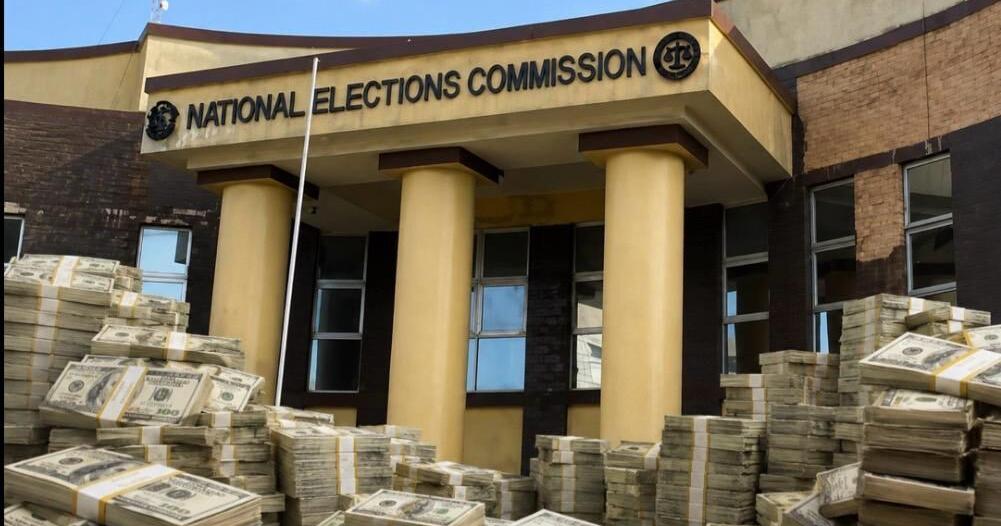
The National Elections Commission’s (NEC) proposal to substantially increase candidate registration fees ahead of the 2029 general elections has ignited what could become one of the country’s most consequential electoral reform debates in recent years.
Far beyond the question of how much presidential, senatorial or representative hopefuls should pay to contest elections, the proposal raises a deeper constitutional and democratic question: Should access to elected office depend increasingly on one’s financial capacity, or should democracy remain broadly accessible to citizens regardless of economic status?
The answer now rests largely with the 55th Legislature, which must determine whether the proposed fees strike an appropriate balance between financing electoral administration and protecting the constitutional right of Liberians to participate in public affairs.
The decision lawmakers ultimately make could shape not only the cost of contesting elections but also the future composition of the Liberian political leadership.
Under the proposal reportedly before policymakers, registration fees would increase dramatically: President: US$2,500 to US$10,000, Vice President: US$1,500 to US$7,000, Senator: US$750 to US$5,000, and Representative: US$500 to US$3,000.
These represent increases ranging from 300 percent to more than 560 percent, making them among the most significant proposed adjustments since the current statutory framework was established.
Supporters of higher fees have reportedly argued that the increases could discourage frivolous candidacies and reduce overcrowded ballots, allowing the NEC to administer elections more efficiently.
Yet critics contend that registration fees should not become an instrument for filtering political participation based on wealth.
Because changes to statutory registration fees require legislative approval, the House of Representatives and Senate now find themselves at the center of an emerging national conversation over the future of democratic participation.
Lawmakers are expected to review whether the proposed increases are justified, proportionate and consistent with Liberia’s constitutional commitment to inclusive governance.
The Legislature’s options extend beyond simply approving or rejecting the proposal. It may reduce the proposed amounts, establish a phased implementation schedule, request further justification from the NEC, or explore alternative approaches that preserve broad political participation while addressing the Commission’s administrative needs.
That makes this more than an electoral matter—it is a policy choice about who should realistically be able to seek public office.
Is Democracy Becoming More Expensive?
Perhaps the most significant concern emerging from the proposal is whether the increased fees could gradually transform electoral competition into an arena primarily accessible to the wealthy.
Democratic systems generally encourage broad participation because public office is intended to remain open to all qualified citizens rather than a privileged class.
When the financial threshold for entering politics rises sharply, the first people likely to be excluded are not necessarily unserious candidates—they are often professionals, teachers, civil servants, community leaders, entrepreneurs and grassroots activists who possess leadership qualities but lack substantial financial resources.
Political experts frequently distinguish between screening candidates and pricing them out of politics.
While governments may legitimately impose modest administrative fees to cover election costs, excessively high charges risk creating what constitutional scholars describe as an “economic qualification” for public office—a barrier not expressly provided for in constitutional eligibility requirements.
The Constitution sets age, citizenship and residency qualifications for elective office. It does not prescribe wealth as a prerequisite for political participation.
The emerging concern, therefore, is whether steep registration fees could indirectly accomplish what the Constitution deliberately avoided.
Perhaps no group stands to feel the impact more acutely than the young people.
With one of Africa’s youngest populations, Liberia has repeatedly emphasized youth participation as central to democratic renewal, peacebuilding and national development.
Successive governments, development partners and civil society organizations have invested heavily in leadership training, civic engagement and youth entrepreneurship, encouraging young Liberians to become active participants in governance.
Yet economic realities tell a different story.
Youth unemployment and underemployment remain persistent challenges. Many young Liberians work in the informal economy, operate small businesses with limited capital, rely on short-term contracts, or are still establishing professional careers. Even university graduates often face prolonged periods before securing stable employment.
“This proposal we are hearing about is unfair and is meant to keep the powerful in their elective position,” Cllr. Oscar Bloh, Country Manager of Netherlands Institute for Multi-Party Democracy (NIMD), noted at a youth political leadership event in Buchanan a few months ago. “This should not be happening. And you, the young people, will be the victims of this policy…that is if you are not even the target.”
For many aspiring young leaders, raising US$3,000 merely to register for a House of Representatives race—or US$5,000 for the Senate—would likely require support from political patrons, wealthy sponsors or established party financiers.
Critics argue that this could inadvertently reinforce patronage politics by making emerging leaders more financially dependent on influential benefactors before campaigns even begin.
Instead of broadening leadership opportunities, higher registration costs may narrow them.
The proposal may have broader implications for women and independent candidates.
Women’s participation in Liberian politics has historically been constrained by unequal access to campaign financing, party structures and fundraising networks.
Independent candidates often face similar challenges because they lack institutional support available through major political parties.
Registration fees represent only one component of election costs.
Candidates must also finance nomination processes, campaign logistics, transportation, media engagement, polling agents, campaign materials and community outreach.
Research on Liberia’s cost of politics has consistently shown that campaign financing already presents one of the greatest obstacles to political participation.
Increasing registration fees significantly may therefore amplify existing inequalities rather than merely increasing administrative revenue.
From the Commission’s perspective, the proposal may reflect legitimate institutional concerns.
Conducting credible elections is expensive.
Electoral administration involves voter registration, logistics, polling materials, technology, staff recruitment, voter education, security coordination and dispute resolution.
The NEC may also believe that higher fees discourage non-serious candidates who unnecessarily complicate ballot design, voter education and election management.
Some democracies around the world require substantial registration fees or signature thresholds to ensure that candidates demonstrate a minimum level of public support.
However, those systems often include balancing mechanisms such as refundable deposits tied to electoral performance, lower fees for certain categories of candidates, or strong public financing arrangements.
Liberia currently provides no comprehensive system of public campaign financing to offset high entry costs.
That distinction is likely to become central to legislative deliberations.
Political economists often observe that barriers to entry shape the quality and diversity of political leadership.
When political participation becomes increasingly expensive, those most likely to contest elections are individuals with considerable personal wealth, access to powerful financial networks or backing from influential political interests.
While financial success does not preclude effective leadership, critics argue that democracy benefits when teachers, lawyers, journalists, healthcare professionals, entrepreneurs, academics, youth advocates and community organizers can compete on relatively equal footing.
A political system that gradually favors financial capacity over public service credentials risks narrowing the diversity of leadership available to voters.
That concern is particularly relevant in Liberia, where many respected community leaders have historically emerged from modest backgrounds.
The Legislature therefore faces a complex balancing act.
On one hand, lawmakers may acknowledge the need for the NEC to adequately finance electoral administration and discourage unserious candidacies.
On the other hand, they must also ensure that financial requirements do not undermine the constitutional principles of equal political participation and representative democracy.
Some governance experts have suggested alternative approaches, including graduated fees, refundable deposits for candidates who meet minimum vote thresholds, expanded signature requirements, or differentiated fee structures that recover administrative costs without creating prohibitive financial barriers.
Such options could preserve electoral integrity while maintaining openness in the democratic process.
As Liberia prepares for the 2029 elections, the debate over registration fees is evolving into a broader conversation about the nature of democracy itself.
At stake is not merely how much candidates should pay, but what kind of political system Liberia intends to build.
If the financial threshold for contesting elections rises dramatically without corresponding safeguards, critics warn that politics could increasingly become the preserve of those with economic influence rather than those with ideas, competence and public support.
Supporters, however, maintain that stronger candidate requirements may enhance the seriousness and credibility of elections.
Ultimately, the Legislature’s decision will determine whether the proposed reforms are remembered as a practical modernization of Liberia’s electoral framework—or as the moment when the cost of seeking public office became a defining test of who can realistically aspire to lead the nation.
Credit: Source link
Comments are closed.