

PIND connects Niger Delta youths to jobs, emerging career opportunities
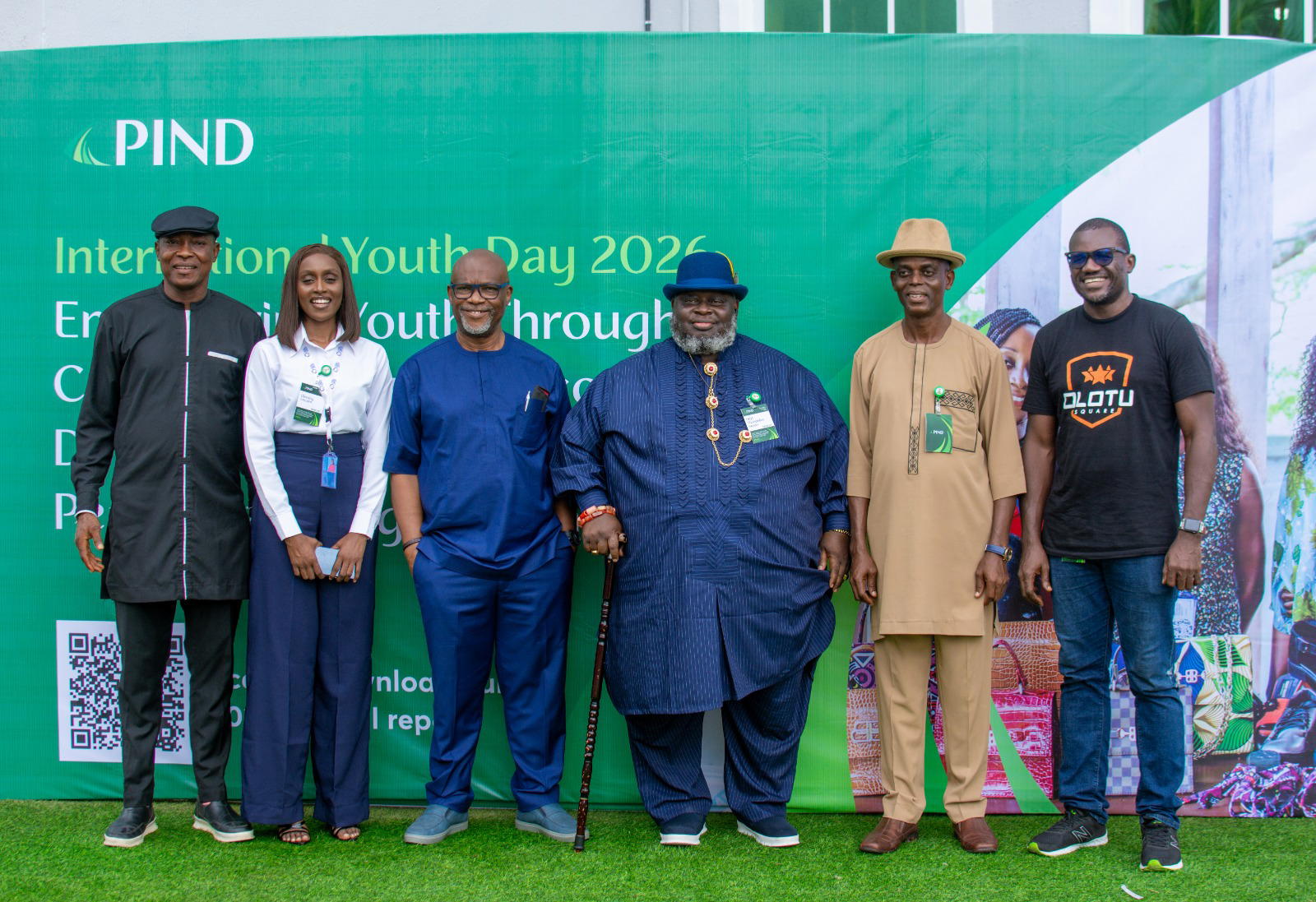
From left: Mr. Uboboso Shalom Abilo, Deputy Director, Bayelsa State Manager, SMEDAN; Miss Blessing Chukwuka, Curator, Warri Hub Global Shapers; Mr. Patrick Ekpe, Youth Employment Pathways Manager, PIND Foundation; HRH Theophilus Moses, BOT Chairman, KEFFESO HCDT; Prof. Ogaga Augustine Aghoghovwia, Dean, Faculty of Agriculture, Niger Delta University; and Mr. Bruce Lucas, Olotu Square Innovation Hub, at PIND’s International Youth Day 2026 event in Yenagoa, Bayelsa State.
By Matthew Johnson
The Foundation for Partnership Initiatives in the Niger Delta (PIND) has connected young people across the Niger Delta region with employers, mentors, training providers and enterprise-support organizations as part of activities marking International Youth Day 2026.
Held in Yenagoa under the theme, “Youth Empowerment for a Sustainable Future,” the forum focused on “Empowering Youth Through Career Pathways for Economic Development and Sustainable Peace in the Niger Delta.”
The event convened more than 200 young people from Bayelsa, Abia, Delta, Edo and Rivers states alongside representatives of government institutions, private companies, academia, technical and vocational training institutions, Host Community Development Trusts and development organizations.
Participants explored career opportunities in information and communication technology, agriculture and agribusiness, renewable energy, construction and technical trades, hospitality and the digital economy. They were also connected to available jobs, internships, apprenticeships, mentorship, training and enterprise-support opportunities through a Career Opportunities and Support Fair.
PIND’s Executive Director, Mr. Sam Ogbemi Daibo, said empowering young people requires more than providing training; it requires functional systems that connect skills to economic opportunities. “Young people do not need training that ends with a certificate. They need pathways that connect learning to jobs, markets, mentorship and enterprise opportunities. When young people can build sustainable livelihoods, they contribute to stronger local economies and more peaceful communities,” Daibo said.
The forum featured a “Voices of Impact” session, during which beneficiaries of PIND’s Youth Employment Pathways programme shared their journeys from skills acquisition to employment and entrepreneurship.
Mr. Patrick Ekpe, PIND’s Youth Employment Pathways Manager, said the event was designed to create practical connections that would continue beyond the celebration. “The measure of success is not simply the number of young people who attended. It is the number who leave with useful contacts, apply for opportunities, enter mentorships, secure internships or take concrete steps towards employment and entrepreneurship,” Ekpe said.
A panel discussion titled “From Learning to Earning: Connecting Youth to Real Economic Opportunities” examined employer expectations, workplace readiness, alternative career pathways and the role of youth employment in advancing sustainable peace.
The event also showcased opportunities in the cassava value chain through the Women and Youth Economic Empowerment for Sustainable Livelihoods project, as well as employment and entrepreneurship pathways in Nigeria’s growing renewable-energy sector. Participants were introduced to PIND’s NDLink platform, which provides continuing access to jobs and career-development opportunities.
For Otobotekere Cephas, a youth participant from Bayelsa State, the forum provided the practical direction and connections often missing from conventional empowerment programmes. “I came looking for clearer direction and left with people and organizations I can follow up with immediately. I now understand the skills employers require and the opportunities available in my area of interest. This was not just another discussion—it gave me a practical next step,” Cephas said.
PIND will track commitments made by participating employers, mentors, training institutions and development organizations. Follow-up assessments will determine how the connections established translate into internships, mentorships, apprenticeships, jobs and enterprise-support opportunities.
Credit: Source link