

Paul Biya’s prolonged Switzerland stay raises questions over Cameroon’s leadership
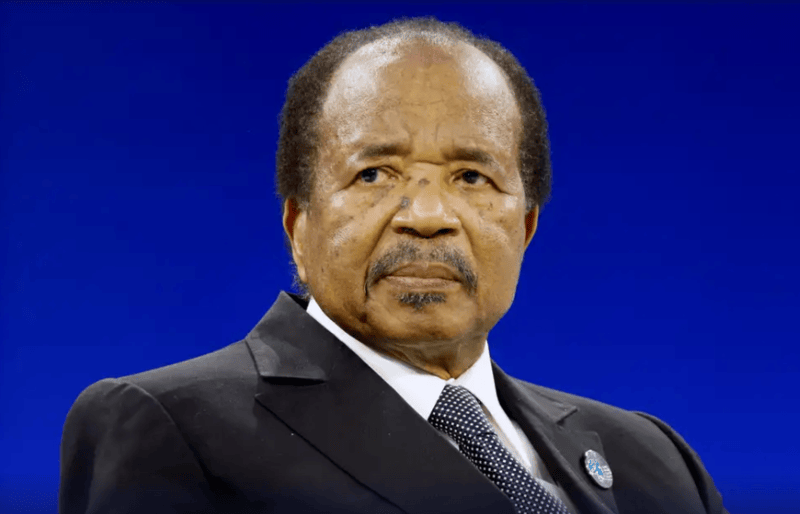
Cameroonian President Paul Biya has remained outside the country for a record 53 days, renewing questions over the 93-year-old leader’s prolonged stay in Switzerland as government officials and opposition figures offer sharply contrasting accounts.
Biya left Cameroon on June 7 for Switzerland with his wife, Chantal Biya, in what government officials described as a private visit. More than seven weeks later, authorities have yet to say when the president is expected to return.
His prolonged absence has fuelled speculation about his health and ability to govern, despite a government ban introduced during a previous extended stay abroad in October 2024 that prohibits public discussion of the president’s health.
Government officials, however, maintain that Biya remains in charge of state affairs from Switzerland. Communications Minister René Emmanuel said the president is in good health and continues to work from the European country.
“Reports claiming otherwise are pure fantasy and malicious manipulation aimed at destabilising opinion,” Sadi said in a past statement.
Other senior officials have offered different explanations for Biya’s prolonged absence. Labour Minister Grégoire Owona, for instance, described the stay abroad as an annual leave.
Opposition leaders, however, argue that the government has failed to explain why a trip initially described as brief has stretched into Biya’s longest recorded absence from Cameroon.
“A country cannot be governed by remote control while critical socioeconomic challenges go unaddressed,” said Mamadou Mota, vice president of the opposition Cameroon Renaissance Movement.
Other opposition parties have also demanded greater transparency over the president’s whereabouts and the duration of his stay. They argue that the issue is not Biya’s constitutional right to travel, but the government’s failure to explain the extension of his trip. Some have also called for an independent assessment of the president’s capacity to govern.
Biya’s prolonged absence comes months after he was sworn in for an eighth consecutive seven-year term following a disputed presidential election in October 2025.
The timing has drawn further attention as Cameroon prepares for parliamentary and municipal elections expected in 2027. Since beginning his latest term, Biya has not announced a new Cabinet, while the vice-presidential position created under recent constitutional changes remains unfilled.
Credit: Source link