

Opposition Leader Demands Full Account of Guinea Border Crisis | Politics
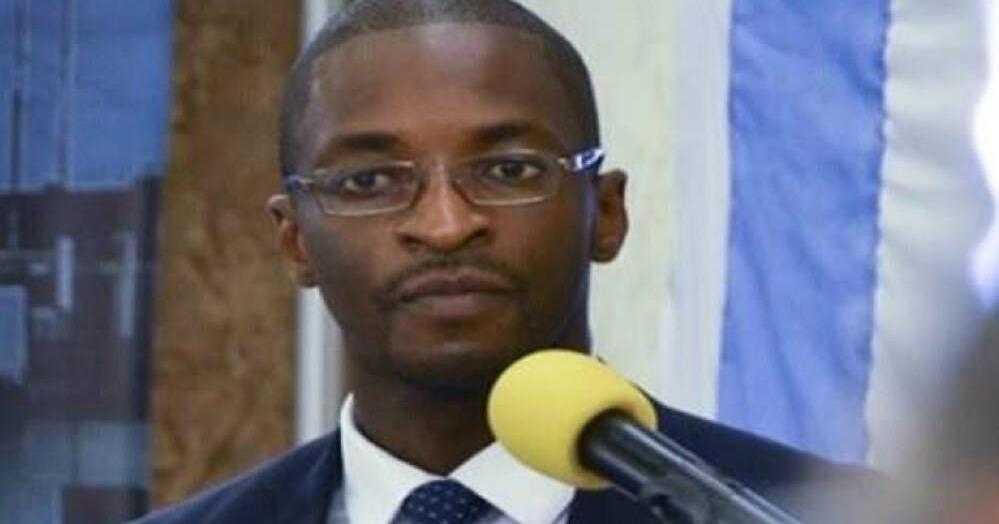
Opposition political leader Clarence K. Moniba is demanding a full public account of Liberia’s months-long border dispute with Guinea, questioning what the government has achieved through diplomatic engagements while tensions over disputed territory remain unresolved.
Moniba, political leader of the Liberia National Union (LINU), says Liberians deserve clear answers on the status of the disputed area in Lofa County, the presence and movement of Guinean security personnel near the border, and the outcome of several diplomatic missions undertaken by the Boakai administration.
His comments come nearly six months after tensions escalated along the Liberia-Guinea border, particularly around Sorlumba in Foya District, Lofa County, where questions over the location of the international boundary triggered a series of confrontations and diplomatic engagements.
“Because diplomacy and negotiations have one basic rule, status quo, meaning no foreign armed forces should remain on Liberian soil as the diplomacy is being conducted,” Moniba said.
“But we know that is not the case. We know Guinean soldiers are still on our soil. So what exactly has been achieved and what is the truth?”
The government has consistently maintained that it is addressing the matter through diplomacy and has urged citizens to remain calm, emphasizing that Liberia and Guinea should resolve the disagreement peacefully.
The current dispute emerged in March 2026 around Sorlumba, a border crossing in Foya District, Lofa County, amid heightened concerns over the precise location of the Liberia-Guinea boundary.
The Liberian Government acknowledged the situation in March and said it was working with Guinea and regional partners to prevent escalation.
On March 10, the Ministry of Information said the government had taken charge of the situation and was engaging Guinea through established diplomatic channels. Two days later, the government announced plans to dispatch a high-level delegation to Conakry following earlier discussions with Guinean officials at the border.
On March 13, Liberia sent a high-level delegation to Guinea to discuss the dispute and prevent further incidents.
The diplomatic engagements subsequently expanded to the highest political level.
President Joseph Nyuma Boakai later traveled to Conakry with Sierra Leonean President Julius Maada Bio to meet Guinean President Mamady Doumbouya. Liberia said the engagement was intended to address the border situation and strengthen regional peace and stability.
The governments of Liberia, Guinea and Sierra Leone also issued a joint communiqué reaffirming their commitment to peace and stability along their shared borders and calling for a return to the established status quo.
Liberia subsequently said Guinea had directed its military forces to withdraw to their previous positions along the border.
The Boakai administration has repeatedly rejected confrontation as a solution to the dispute.
In June, Information Minister Jerolinmek Piah said Liberia remained committed to resolving the crisis through dialogue, diplomacy and established regional and international mechanisms.
“The Liberia-Guinea border situation is not a matter for confrontation, but for calm, facts and sustained engagement,” Piah said.
The government has argued that the border dispute must be handled carefully because of the longstanding relationship between Liberian and Guinean communities and the potential consequences of a military confrontation.
However, Moniba says the diplomatic approach has left too many questions unanswered.
He wants the government to explain what was established during the diplomatic meetings, whether the disputed territory is officially considered Liberian or Guinean, and what measures have been taken to ensure that Liberia’s territorial integrity is protected.
“Was there illegal mining? Is the land for Liberia? Is the land for Guinea?” Moniba asked.
The dispute has not completely disappeared despite the earlier diplomatic engagements.
In August, another confrontation was reported at the Sorlumba border crossing involving Guinean military personnel and Liberia’s Joint Security over the location of checkpoints.
Liberian authorities subsequently said the situation had been brought under control following high-level discussions between officials from both countries.
Information Minister Piah said the two sides agreed to remain calm and avoid confrontation while diplomatic efforts continued.
Independent reporting has nevertheless described the situation as fragile, with local officials repeatedly intervening to prevent tensions from escalating.
A recent report from Sorlumba said Guinean and Liberian officials continued to rely on local and ad hoc negotiations to prevent fresh confrontations, while questions over permanent border demarcation remained unresolved.
Another August report said tensions resurfaced after Guinean soldiers allegedly attempted to move toward a Liberian checkpoint amid reported plans to construct a customs facility near the crossing.
The border crisis also triggered a major political controversy in Monrovia following comments by former Montserrado County District #10 Representative Yekeh Kolubah.
Kolubah was accused of publicly suggesting that the disputed territory belonged to Guinea, prompting a complaint and investigation by the House of Representatives.
The House subsequently expelled him in April after 49 lawmakers voted in favor of his removal.
The House Rules, Order and Administration Committee said Kolubah’s statements undermined Liberia’s sovereignty and territorial integrity.
The expulsion has since become part of the broader political debate over how the government and Legislature have handled the border crisis.
Moniba sharply criticized what he considered an imbalance in the government’s priorities.
“At the same time, more effort and energy was spent expelling Yekeh Kolubah instead of talking about the real issues facing our country,” he said.
“Five months later, Yekeh Kolubah is gone and Guinean soldiers are still here. Guinean soldiers are still on Liberian soil.”
Kolubah’s expulsion was formally tied to his statements about the disputed territory, with lawmakers describing them as unpatriotic and damaging to Liberia’s territorial integrity.
At the heart of the controversy is a fundamental question: Where exactly does Liberia’s border with Guinea lie in the disputed area?
The government has referred to the issue as a border dispute requiring dialogue and technical and diplomatic engagement. But the lack of a publicly detailed explanation of the precise territorial claim has fueled criticism from opposition figures.
Moniba argues that Liberians should not have to rely on rumors or competing political claims to understand whether the disputed land falls within Liberia’s internationally recognized territory.
He is also questioning whether mining or other economic activities have occurred in the disputed area and whether the government has conducted an assessment of the territory and its resources.
These questions are particularly sensitive because Liberia’s northern border with Guinea has historically been characterized by movement, trade and close relationships among communities on both sides.
The dispute extends beyond Liberia and Guinea because the area sits within the wider Mano River region, where Liberia, Guinea and Sierra Leone share extensive historical, economic and social ties.
Liberia’s government has therefore sought to prevent the disagreement from becoming a broader regional security problem.
The March joint communiqué involving Liberia, Guinea and Sierra Leone underscored the importance of maintaining peace and returning to the established status quo.
Liberia has also indicated that regional mechanisms, including the Mano River Union and ECOWAS, have been involved in efforts to support a peaceful resolution.
But Moniba says regional diplomacy must ultimately produce a clear outcome for Liberia.
He is calling on the government to provide the public with a comprehensive account of the crisis, including the findings of presidential engagements, border assessments, diplomatic missions and lawmakers’ visits.
“How much did those trips by both the executive and the lawmakers cost the Liberian people?” he asked. “And what do we have to show for it?”
The Boakai administration has so far emphasized restraint, diplomacy and peaceful resolution rather than confrontation.
That approach has helped prevent the dispute from escalating into a broader armed confrontation, according to government statements.
Yet the persistence of tensions at Sorlumba means the underlying questions have not disappeared.
For Moniba, the issue is no longer simply about diplomatic meetings but about accountability, sovereignty and transparency.
He says Liberians deserve to know what happened when the reported border incursion occurred, what the government established about the disputed territory, whether Guinean forces have withdrawn from areas Liberia considers its territory, and what agreement—if any—has been reached with Conakry.
As Liberia and Guinea continue their efforts to manage the dispute peacefully, the pressure on the Boakai administration is likely to center increasingly on whether diplomacy can produce a clearly defined and publicly understood resolution.
For now, the government maintains that the situation is under control and that diplomatic channels remain the appropriate avenue.
But Moniba’s demand underscores the central challenge confronting the administration: maintaining peace with a neighbor while convincing Liberians that their territory, sovereignty and national interests are being fully protected.
Credit: Source link